
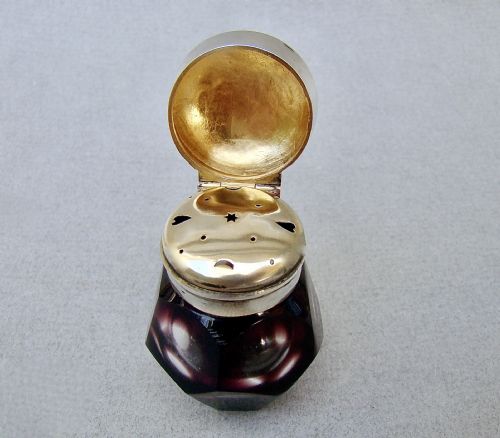
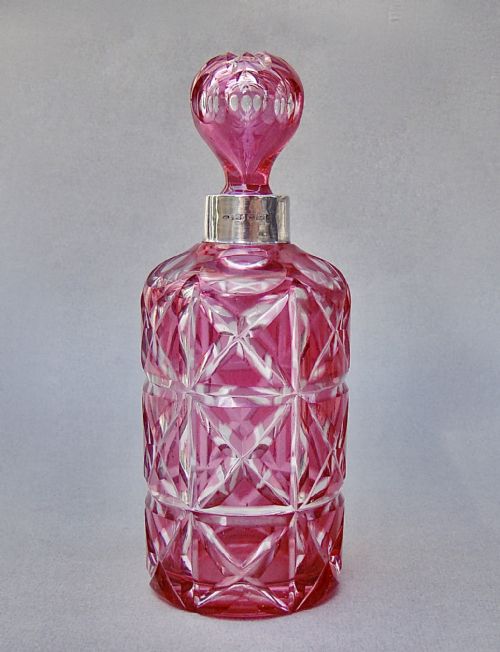
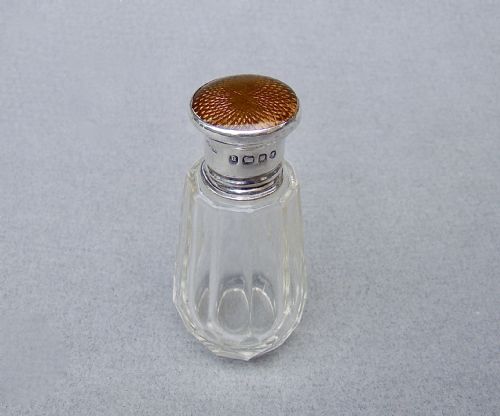


Silver Cut Glass Scent Bottle
Discover a silver cut glass scent bottle, combining precious metal mounts with brilliant crystal or coloured glass to hold fine fragrances on a dressing table.
Silver Cut Glass Scent Bottle
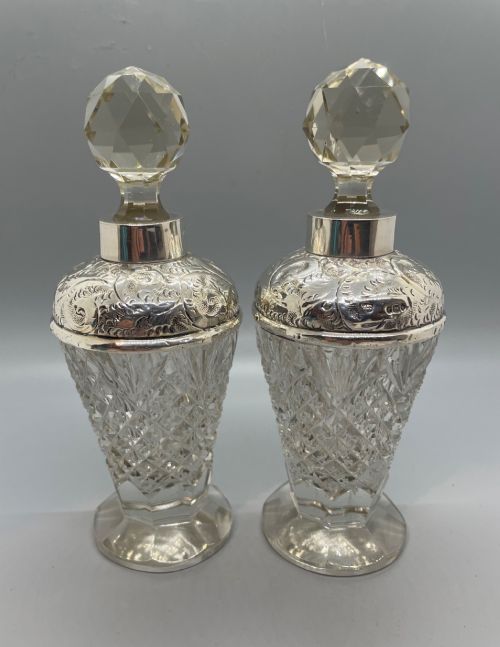
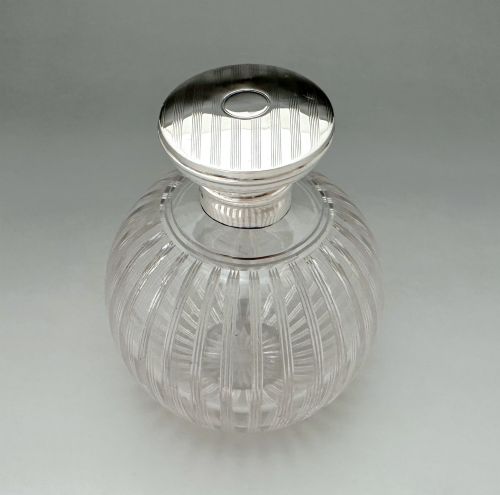
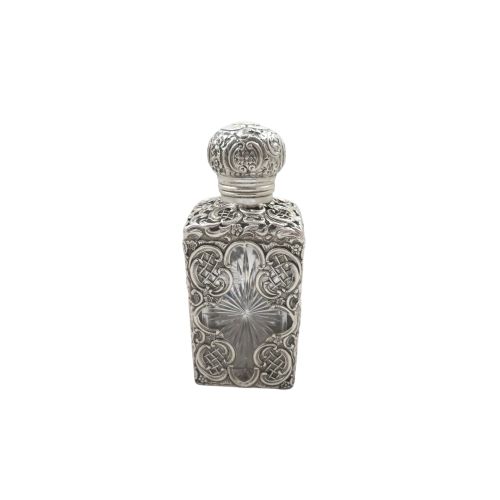
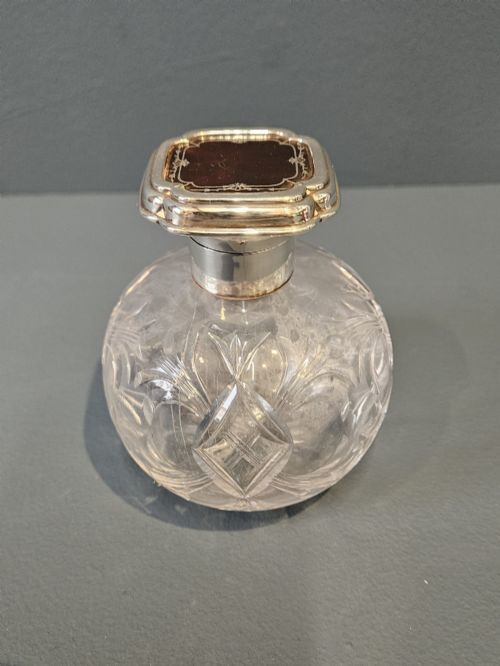
A silver cut glass scent bottle represents personal vanity and portable luxury from the nineteenth and early twentieth centuries. These vessels were manufactured to store concentrated perfumes safely while adding elegance to dressing tables and travel bags. Buyers search for this phrase to find functional containers housed in sterling silver collars, caps, or intricate external overlays.
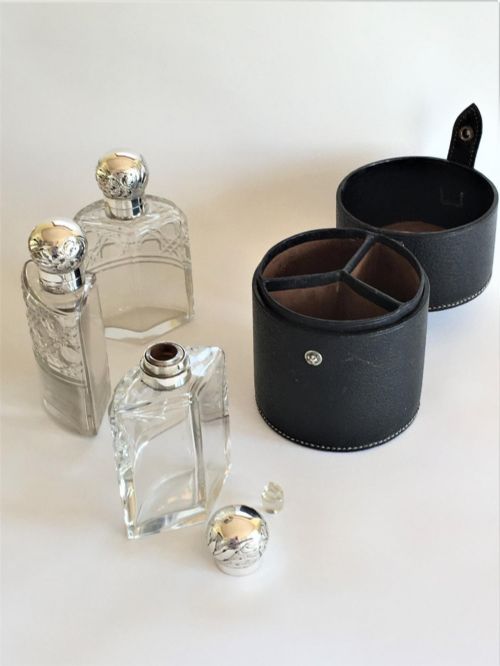
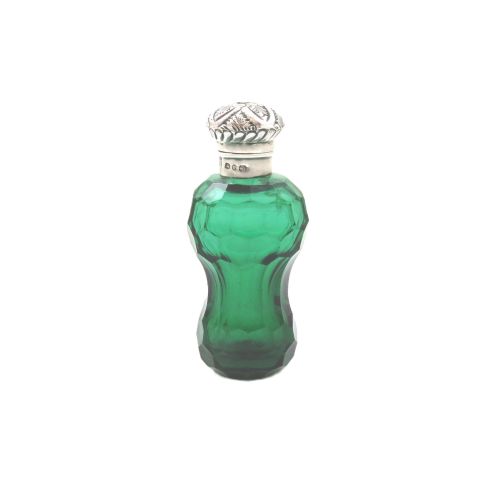
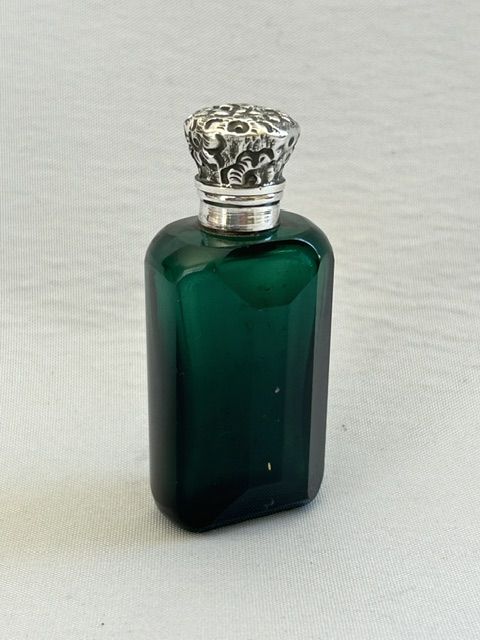
The most common examples on this marketplace date from the Victorian and Edwardian eras, alongside later Art Deco specimens. Pieces frequently appear as upright faceted decanters, pocket-sized travelling flasks, or miniature chatelaine versions designed to hang from a belt. Coloured glass variants in cranberry, green, amethyst, and blue frequently emerge alongside clear cut crystal.
How They Were Made
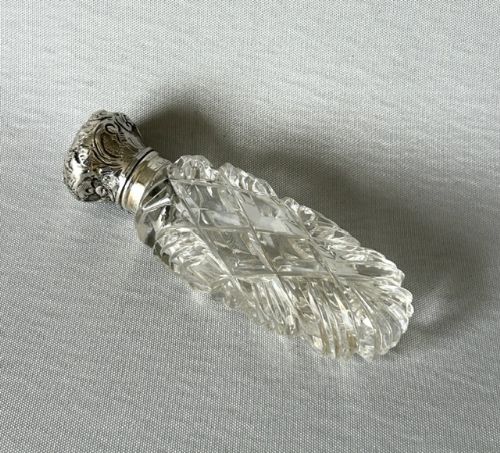
Artisans produced the glass bodies through blowing and pressing, followed by intensive hand-cutting and polishing to create sharp geometric facets or smooth sliced panels. Coloured glass was achieved by adding metallic oxides to the molten batch, resulting in rich hues like amber, ruby, and teal. Overlay techniques involved casing a clear or coloured glass core within a contrasting outer layer before cutting through it to expose the base colour.
Silversmiths formed the mounts, collars, and hinged lids from sterling silver, frequently applying embossed floral decoration, engraved monograms, or engine-turned guilloche enamel. Glass bodies and silver necks were joined permanently using specialised adhesives or secure internal threaded collars. Many lids contained internal glass stoppers or cork seals designed to prevent evaporation of volatile perfumes.
What Varies in Quality
Quality rests upon the precision of the glass cutting and the weight of the sterling silver components. Superior items display deep, crisp facets that refract light cleanly, paired with substantial silver mounts bearing legible hallmarks. Simpler specimens utilise thin machine-moulded glass and lightweight silver electroplate or stamped collars.
Harold Bushell and Co·Henry Perkins·Karl Palda·Barnsley and Co·George Unite·The Mousley Brothers·Charles May·Mappin and Webb·Drew and Sons·Bentjemann and Sons·Sampson Mordan and Co·J Grinsell and Sons·Levi and Salaman
The Silver Cut Glass Scent Bottle Glossary
- Chatelaine scent bottle
- A miniature vessel equipped with a chain or hook designed to suspend directly from a waist belt. These portable pieces allowed Victorian women to carry smelling salts or perfume during social outings.
- Guilloche enamel
- A decorative technique where translucent enamel is layered over mechanically engraved metal. This process creates repeating geometric patterns visible beneath vibrant coloured glass-like surfaces.
- Overlay glass
- A method where a vessel receives one or more exterior layers of contrasting coloured glass. Craftsmen then cut away portions of the outer layer to reveal patterns and underlying tones.
- Sliced-cut glass
- A style featuring broad, flat angular cuts across the body of the bottle rather than fine criss-cross diamond patterns. This technique creates large reflective planes that highlight coloured glass interiors.
- Hallmark
- A stamped official mark indicating the metal purity, assay office, and year of manufacture on silver mounts. These tiny punches allow precise dating of the silver collar or lid.
Silver Cut Glass Scent Bottle: Frequently Asked Questions
Were these used for perfume or smelling salts?
These versatile containers held both liquid perfumes and volatile smelling salts depending on their internal configuration. Vinaigrettes usually featured internal pierced grilles to hold scented sponges rather than liquid.
Standard scent bottles relied on ground glass stoppers or cork seals to contain alcoholic fragrances safely during daily transport.
How do I clean old glass safely?
Wash glass bodies in lukewarm water using mild dish soap and a soft bottle brush to remove internal residue. Avoid soaking silver-mounted pieces in water for extended periods, as moisture can damage internal adhesives and cork linings.
Dry the glass completely and polish the sterling silver components gently with a specialised microfibre cloth.
Can I still use antique scent bottles today?
Many surviving examples remain fully functional and can store modern perfumes if the internal stoppers seal correctly. Inspect the neck seals and stoppers carefully to ensure volatile oils will not leak or evaporate rapidly.
Displaying them upright on a mirrored dressing tray protects the fragile antique glass and ageing silver mounts from accidental knocks.