
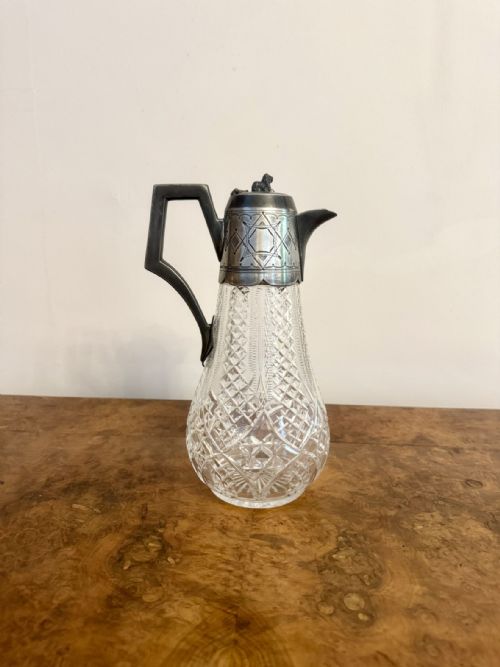
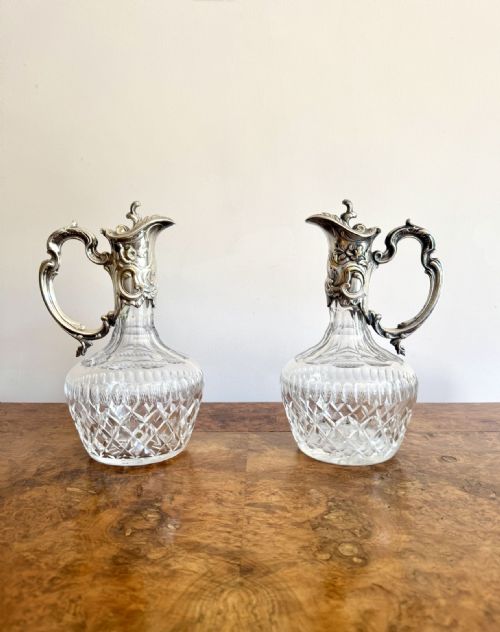


Silver Cut Glass Pitcher
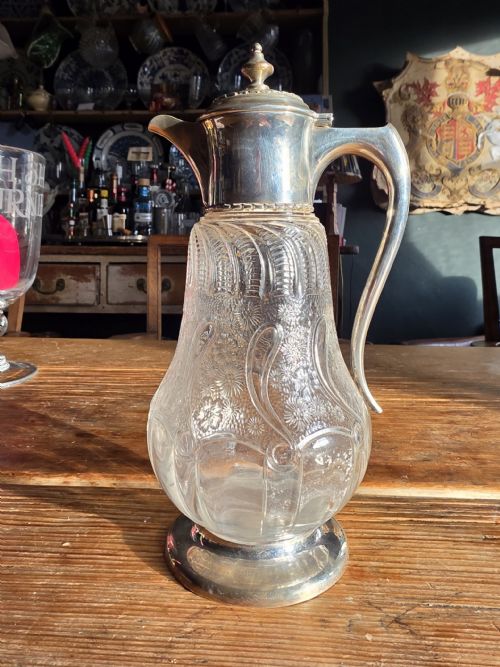
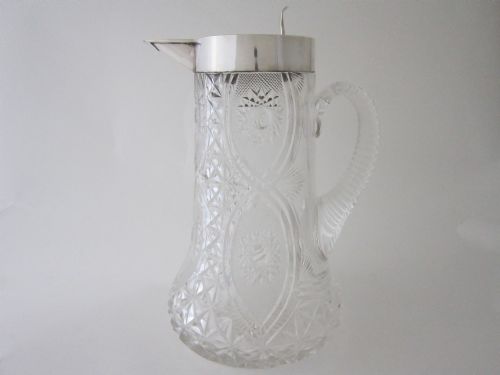
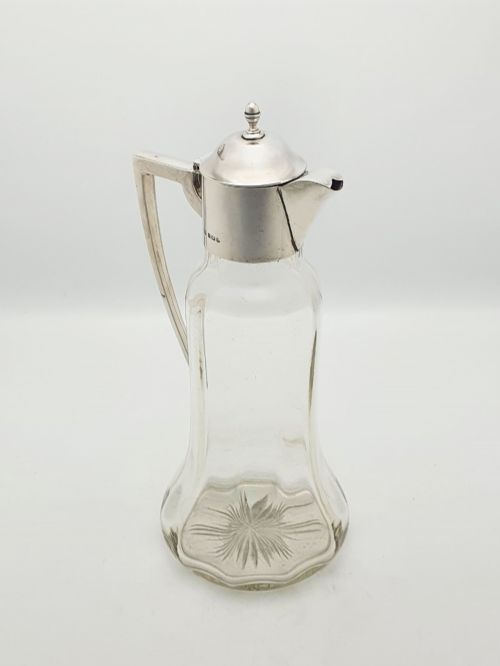
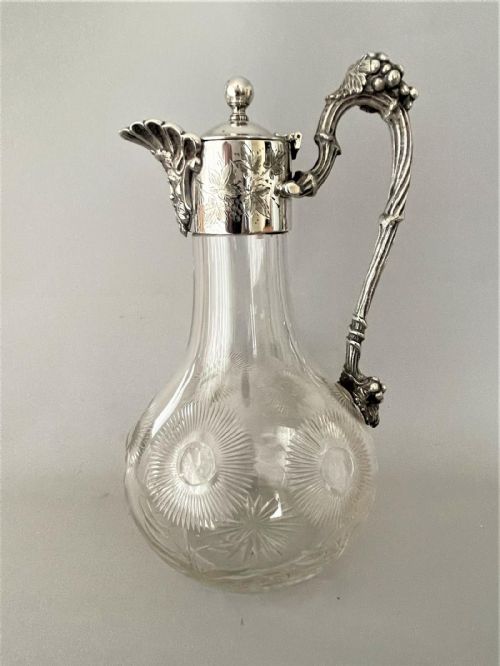
These silver cut glass pitchers combine heavy faceted glass bodies with gleaming metal mounts, serving wine and mixed drinks with formal dining elegance.
Silver Cut Glass Pitcher
A silver cut glass pitcher is typically encountered on this page in forms such as claret jugs, water vessels, and lemonade servers dating from the Victorian and Edwardian eras. These serving pieces combine functional liquid storage with ornamental metalwork, ranging from tall wine ewers to compact whisky noggins.
The objects span periods from the 1860s through the 1920s, showing stylistic influences from the Arts and Crafts movement to French Rococo Revival. Buyers find both sterling silver mounts and silver plated examples paired with clear, etched, or cranberry glass.
Materials and construction
Makers fashioned the bodies from heavy cut glass or crystal, often utilising deep geometric wheel-cutting to catch the light. Some vessels incorporate internal ice tubes or engraved floral patterns into the glass body.
Mounts, handles, and hinged covers were formed from sterling silver or silver plate, sometimes secured directly to the glass neck with collars. These metal components frequently carry hallmarks indicating the year of assay and the maker's mark.
Distinguishing quality
Quality rests in the crispness of the glass cutting and the substantial weight of the metal mounts. Finer examples display intricate wheel-engraving on the glass and robust, well-balanced silver handles.
The integration between the metal collar and the glass body indicates higher manufacturing standards. Pieces designed by notable makers or incorporating functional additions like internal ice tubes demonstrate superior craftsmanship.
Mappin & Webb·Elkington & Co·Tiffany·William Davenport·Hukin & Heath·Karl Palda
The Silver Cut Glass Pitcher Glossary
- Claret jug
- A specialised vessel designed for serving red wine at the table. These pitchers typically feature a pouring spout and a hinged metal lid.
- Ewer
- A large pitcher with a wide spout and a curved handle, often ornamental in design. They trace their form back to classical washing vessels.
- Hallmark
- An official stamp applied to precious metals indicating the standard of purity, the assay office, and the date of manufacture. Sterling silver mounts frequently display these stamps.
- Noggin
- A small drinking vessel or mug, often used for spirits like whisky. In this context, it refers to miniature pitchers with silver mounts.
- Silver plate
- A base metal, such as copper or Britannia metal, coated with a thin layer of pure silver. Many Victorian and Edwardian serving jugs utilised this technique to achieve the look of solid silver at a lower cost.
Silver Cut Glass Pitcher: Frequently Asked Questions
What were silver cut glass pitchers used for?
These vessels served wine, claret, lemonade, and water during formal dining and social gatherings. The inclusion of hinged lids kept contents covered while pouring at the table.
Certain models featured internal ice tubes to chill beverages without diluting the liquid. Others functioned as cocktail jugs or dedicated spirit decanters.
How do I clean and care for a silver cut glass pitcher?
Wash the glass body gently by hand using warm soapy water and a soft bottle brush to avoid scratching the surface. Keep harsh abrasives away from both the glass and the metal mounts.
Polish the sterling silver or silver plate components periodically with a dedicated metal cloth while avoiding contact with the glass. Ensure the vessel is dried thoroughly before storage to protect the hinged mechanisms.
How can I tell the date of a silver cut glass pitcher?
Examine the metal mounts for hallmarks or maker marks, which provide exact assay years for sterling silver pieces. Stylistic cues also help narrow down the period.
Heavy geometric cutting often points towards Victorian production, while lighter floral motifs or specific maker attributions align with Edwardian and Art Deco periods. Aesthetic Movement and Arts and Crafts pieces display characteristic geometric simplicity.
What is the difference between sterling silver and silver plated mounts?
Sterling silver mounts consist of solid precious metal meeting a specific legal purity standard, usually confirmed by assay office hallmarks. These components are heavier and hold intrinsic metal value.
Silver plated mounts utilise a base metal core covered in a layer of silver. This technique allowed manufacturers to produce ornate pitchers during the Victorian and Edwardian eras at a more accessible price point.