

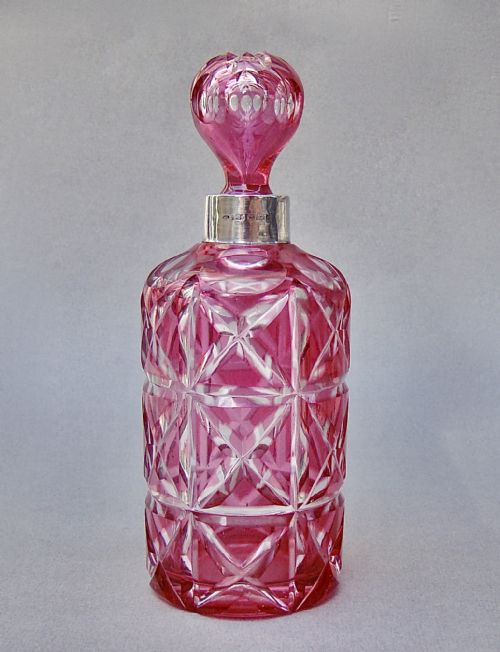


Silver Cut Glass Flask
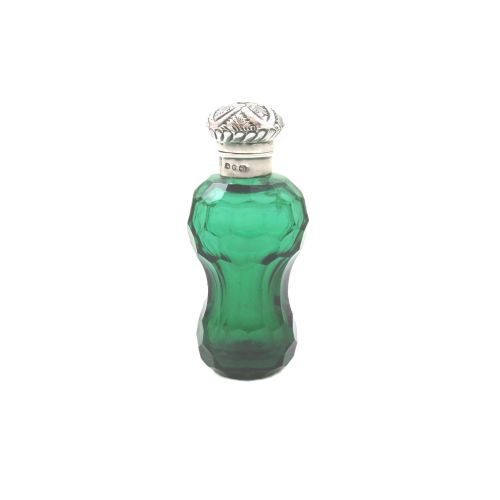
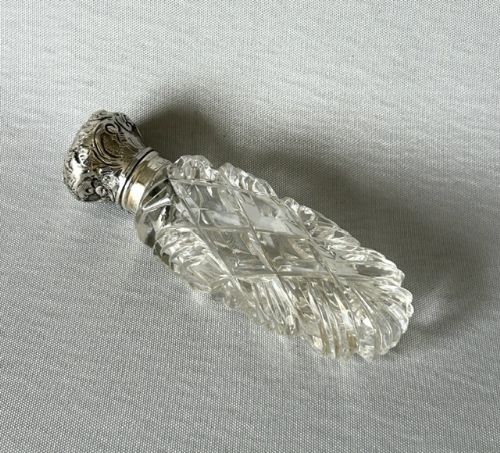
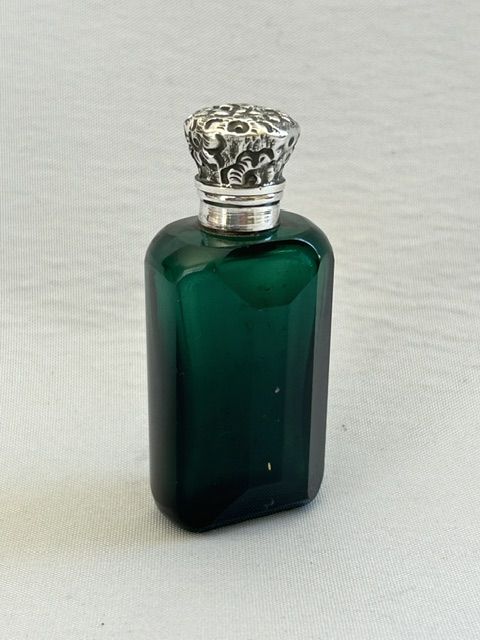
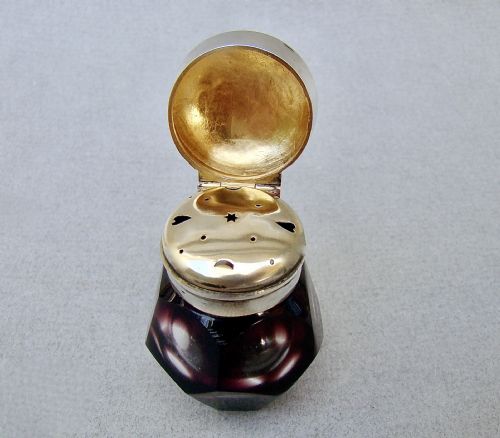
A silver cut glass flask combines heavy lead crystal with solid sterling silver mounts to hold perfume or spirit securely.
Silver Cut Glass Flask
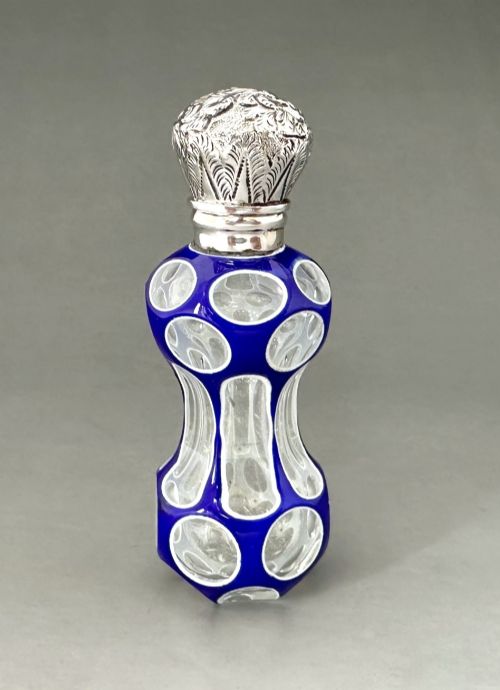
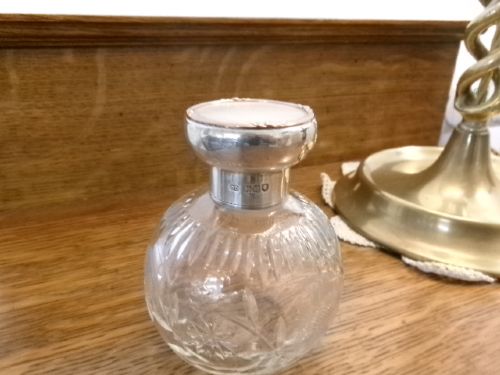
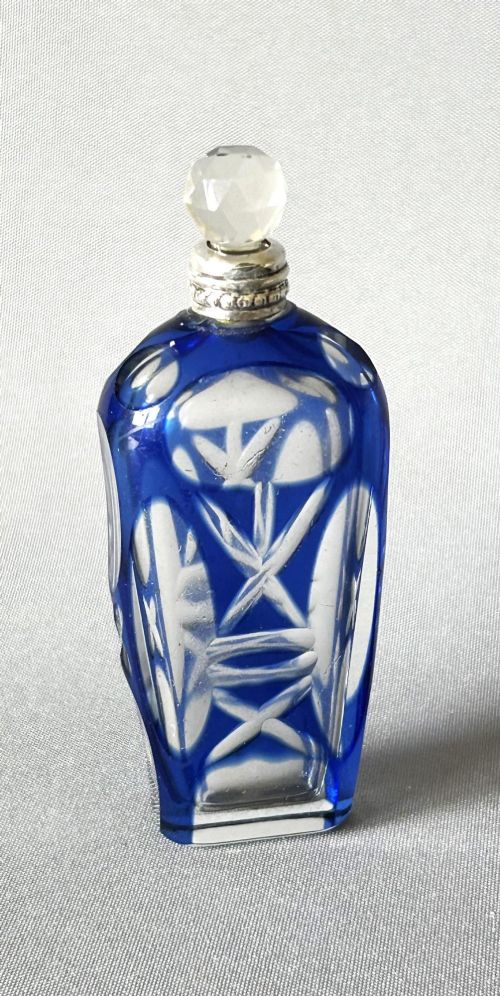
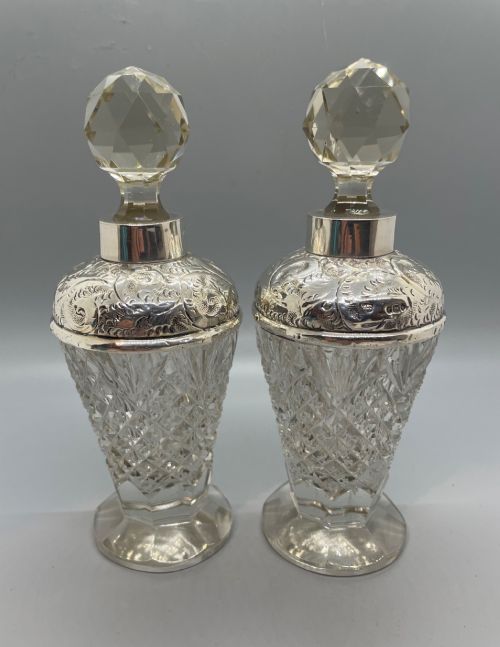
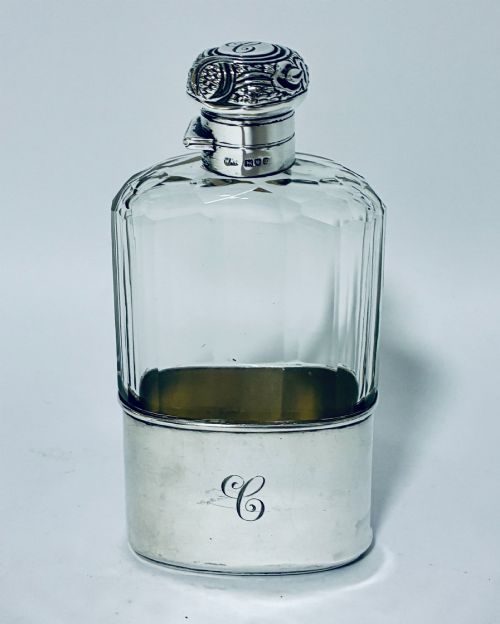
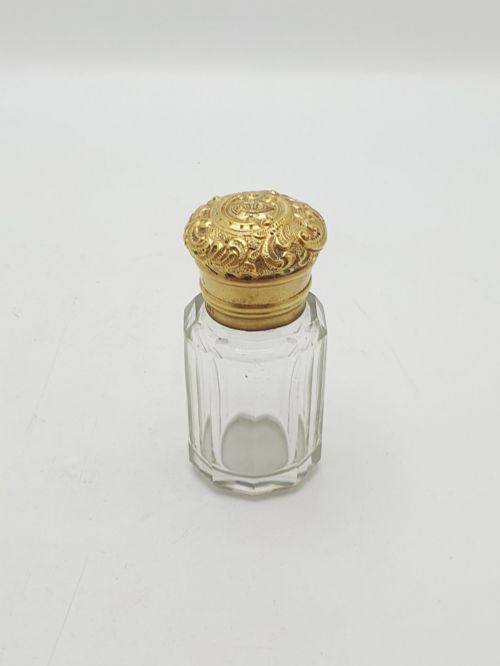
A silver cut glass flask is typically found in forms such as pocket hip flasks, pocket scent bottles, and larger spirit flasks. The selections here span the Victorian, Edwardian, and Art Deco periods, encompassing English and continental work.
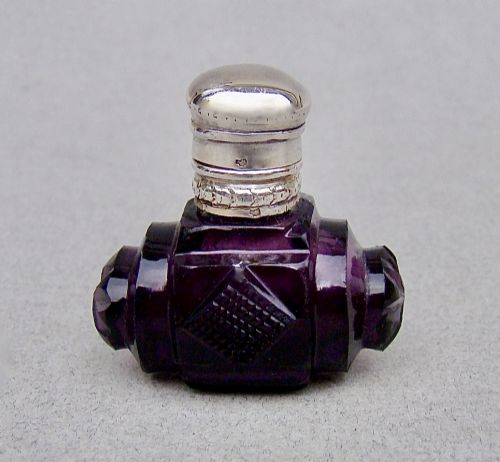
Makers utilised various coloured glasses alongside clear crystal, including ruby, green, amethyst, and cranberry hues. These objects served both as gentleman's barware and ladies' vanity accessories, designed for personal travel or domestic use.
Materials and construction
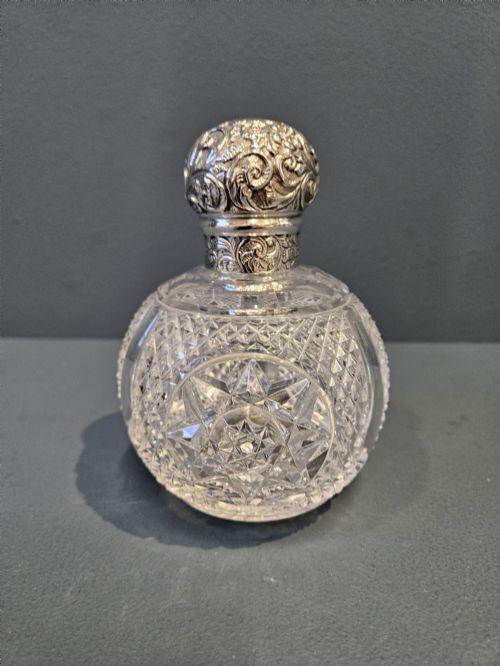
The bodies utilise heavy cut glass, cut crystal, or coloured glass, sometimes layered with glass overlays or decorated with guilloche enamel. Molten or moulded glass received deep geometric cuts by hand on a wheel before polishing.
Mounts, screw caps, and hinged lids consist of sterling silver, silver-gilt, or silver plate, frequently bearing hallmarks from assay offices in London, Birmingham, and Chester. Tortoise shell and gold elements occasionally appear alongside the primary silver and glass components.
Silver Cut Glass Flask Retail Price Guide 2026
Typical asking prices for silver cut glass flask among the pieces listed under this phrase on Sellingantiques today, from the lower quarter to the upper quarter. They describe what is for sale here now, not the wider market.
Listings feature Victorian, Edwardian, and Art Deco eras, employing sterling silver, cut crystal, and coloured glass.
Distinctions in craftsmanship
Quality rests on the crispness of the glass faceting and the thickness of the silver mounts. Deeper, sharper hand-cut flutes on the crystal and heavier gauge sterling silver indicate superior manufacture.
The precision of the hinged mechanisms, the integrity of internal cork or glass stoppers, and the complexity of decorative work such as enamel or overlay glass set finer examples apart.
Harold Bushell & Co·Karl Palda·Henry Perkins·Barnsley & Co·Elkington·Asprey·S. Morden & Co
The Silver Cut Glass Flask Glossary
- Cut Glass
- Glass decorated by grinding facets or patterns into the surface using a rotating wheel. This technique creates sharp geometric edges that catch the light.
- Silver-Gilt
- Sterling silver that has been coated with a thin layer of gold. This process provides the rich warmth of gold while utilising a silver base.
- Guilloche Enamel
- Decorative technique where precise patterns are mechanically engraved into metal beneath a translucent enamel layer. It produces a shimmering, patterned colour effect.
- Overlay Glass
- Glass formed of two or more distinct layers of different colours. Artisans cut through the outer layer to reveal the contrasting colour beneath.
- Hallmark
- Official stamp applied to precious metals indicating the standard of purity, the assay office, and the date of testing. It proves the authenticity of the silver mount.
Silver Cut Glass Flask: Frequently Asked Questions
How do I clean a silver cut glass flask safely?
Use warm soapy water and a soft bottle brush for the interior glass, avoiding harsh abrasives on any coloured or overlay sections. Polish the silver mounts gently with a specialist silver cloth while keeping moisture away from glued or historic stoppers.
Ensure the flask dries completely before reinserting the stopper to prevent trapped humidity from affecting the interior surfaces.
Were these flasks meant for perfume or alcohol?
Smaller examples with tight stoppers were designed as scent and perfume bottles for vanity tables or chatelaines. Larger pocket versions functioned as spirit or hip flasks for carrying whisky, brandy, or liqueurs.
Heavier spirit flasks often included detachable silver cups at the base for drinking on the move.
How can I date my silver cut glass flask?
The most reliable dating method is reading the hallmarks stamped on the silver mounts, which indicate the specific assay office and year letter. Stylistic markers such as Edwardian proportions or geometric Art Deco enamel also help place the piece in its era.
Comparative details like the depth of the glass cutting provide additional context for nineteenth-century production periods.
Can I still use a vintage flask for drinks?
Many antique spirit flasks remain functional if the interior glass is clean and the stopper seals correctly. Checking the condition of the original cork or washer inside the silver cap is essential to prevent leaks.
Acidic contents should not be stored in older glass for extended periods, but they work well for short-term use.