



Edwardian Glass Hip Flask
An edwardian glass hip flask is a pocket companion of glass and silver, combining utility with portable elegance for the field or journey.
Edwardian Glass Hip Flask
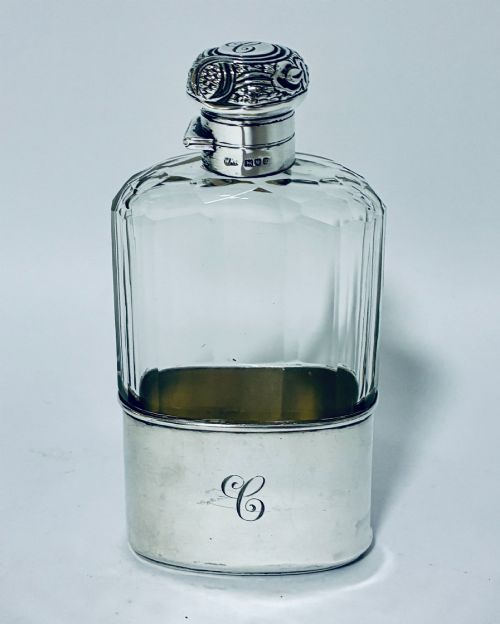
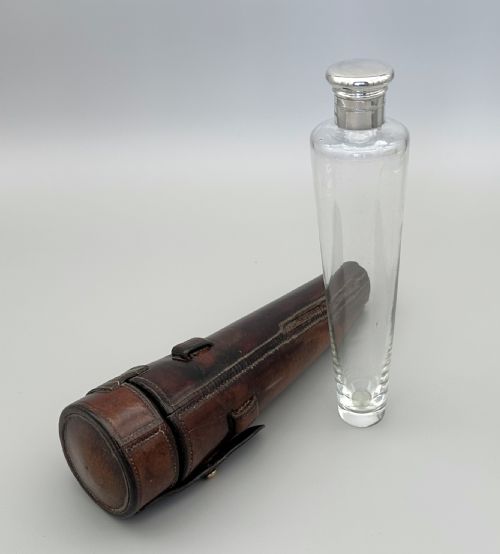
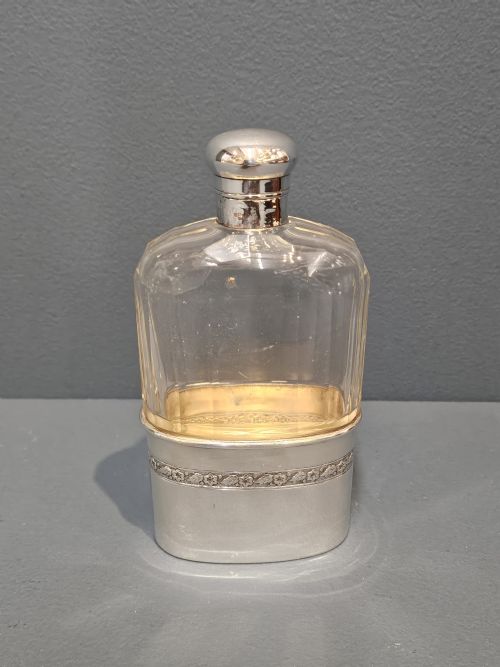
When searching for an edwardian glass hip flask, collectors encounter portable spirit containers that span from the late Victorian era through to the Art Deco period, with Edwardian examples dominating the selection. These objects combine clear or cut glass bodies with precious or plated metalwork, often paired with protective leather or crocodile skin casings. The forms range from pocket-sized ovals to larger hunting flasks equipped with detachable cups.
The pieces on this page originate predominantly from the opening decades of the twentieth century, alongside select items from the late nineteenth century and the interwar years. Makers utilise materials such as sterling silver, silver plate, and cut crystal to build these functional items. Buyers find both plain glass bodies and deeply cut patterns designed to catch the light during use.
Materials and Construction
Makers combine blown glass with sterling silver or silver-plate mounts, fastening threaded caps and hinged cups securely to the necks. The glass bodies are frequently moulded with facets or deep cut crystal patterns to provide grip and visual depth.
Outer coverings of leather, crocodile skin, or crocodile style embossing are fitted tightly around the glass central chambers. Silversmiths shape metal caps and cups using traditional hammering, chasing, and hallmarking techniques across workshops in London, Sheffield, and Chester.
Some flasks wear crocodile skins so convincing they prompt double-takes at the dining table.
Factors of Quality
Quality rests upon the weight and purity of the metal mounts, the clarity of the cut glass, and the integrity of any leather or crocodile skin wrapping. Pieces bearing crisp hallmarks and maker marks from established firms command greater interest from collectors.
The inclusion of original fitted cases, matching gilt interiors within cups, and fully functional screw caps with intact cork seals elevate certain examples. Finer specimens display precise hand-cut glass facets and unblemished metal surfaces free from excessive denting.
Asprey London·W A Ellwick Ltd·James Dixon·Mosley Flowers And Co
The Edwardian Glass Hip Flask Glossary
- Sterling silver
- A silver alloy containing 92.5 percent pure silver by mass, standard for quality British metalwork. It frequently carries assay office hallmarks.
- Cut crystal
- High-clarity glass shaped by grinding and polishing facets on the exterior surface. This technique adds weight and brilliance to the flask body.
- Silver plate
- A base metal layer coated with a thin layer of pure silver. It offered a brilliant finish at a lower cost than solid sterling items.
- Mary Gregory glass
- Glass decorated with white enamel figures, often depicting children in landscape settings. This technique appears on select liquor and spirit flasks.
Edwardian Glass Hip Flask: Frequently Asked Questions
What is an edwardian glass hip flask?
An edwardian glass hip flask is a pocket container designed to hold spirits during travel, hunting, or outdoor pursuits. These pieces combine a glass body with metal mounts and often protective leather coverings.
They reflect the social habits of the early twentieth century, where portable refreshment was part of gentlemanly and sporting equipment.
How do you use a hip flask safely?
These historical flasks are primarily collected for display or gentle use, requiring careful cleaning of the interior glass and metal components. Modern use requires checking that the original cork seal inside the cap remains watertight.
Strong spirits should not be stored within antique silver vessels for extended periods to preserve the metal interior.
How are periods and dates identified?
Dates on these pieces are determined through metal hallmarks stamped by British assay offices such as London, Sheffield, and Chester. Date letters within the hallmarks point to specific years of manufacture.
Stylistic cues like cut glass patterns and leather casing types also help distinguish Edwardian items from later Art Deco pieces.
Why do some flasks have cups?
Hunting flasks feature a removable cup fitted over the lower portion of the glass body to allow drinking in the field. These cups often slide off the base and may feature gilt interiors.
Such additions made the flask a complete unit for sharing a dram during outdoor sports.