




Silver Cup Flask
A silver cup flask combines a portable spirit container with a clever integrated drinking vessel for outdoor use.
Silver Cup Flask
A silver cup flask is an essential piece of antique barware designed to carry spirits discreetly during travel or field sports such as hunting. When searching for a silver cup flask, buyers encounter robust pocket companions that feature a secure screw cap alongside a lower section that detaches to serve as a drinking cup.
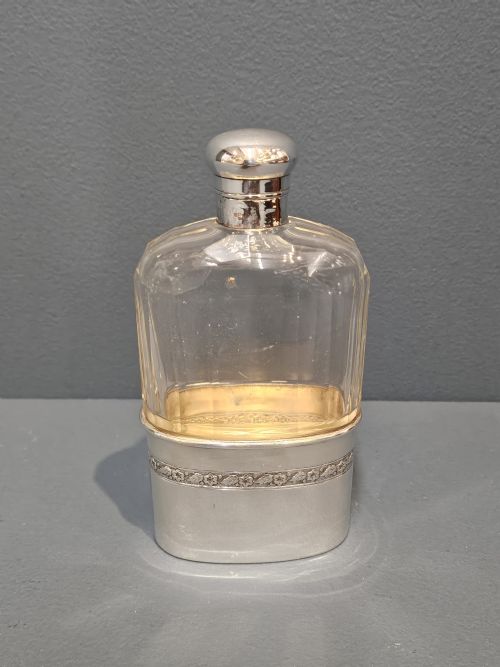
The versions most commonly met on this page span the Victorian, Edwardian, and Art Deco periods, encompassing both solid sterling silver and silver-plated constructions. Many examples integrate cut glass bodies or leather-bound exteriors alongside their precious metal cups, reflecting the practical demands of nineteenth and early twentieth-century gentlemen.
Materials and Construction
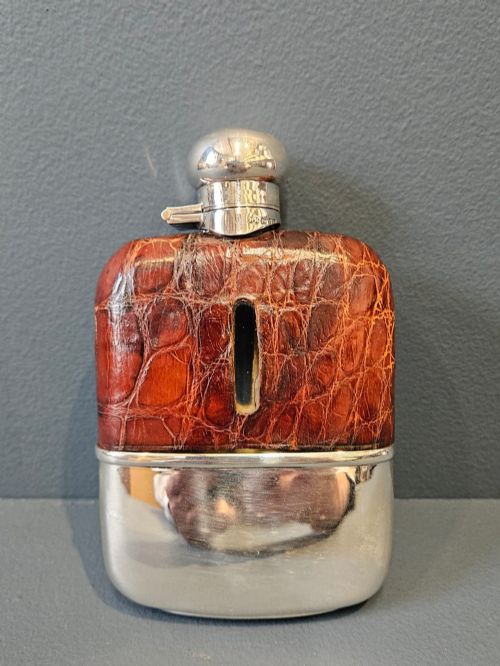
Makers constructed these vessels using combinations of sterling silver, silver plate, and clear or textured cut glass, frequently pairing them with genuine crocodile skin, crocodile leather, or plain bridle leather sleeves. The metal components often received a gilt interior finish to protect the silver from corrosive alcohol.
Craftsmen shaped the metal through silver-smithing techniques like hammering or casting, engineering the removable bottom cup to fit snugly against the main flask body via precise friction fits or bayonet mounts. Leather elements were hand-stitched around the glass or metal cores to provide a secure grip in cold or wet conditions.
Some Victorian flasks arrived with a tiny chain attached to the cap so nobody dropped it in the mud during a hunt.
Assessing Quality
Quality in a silver cup flask rests upon the weight of the metal and the precision with which the detachable cup fits the base. Superior examples exhibit substantial gauge silver and crisp hallmarks, whereas lesser items rely on thinner plating over base metal.
The integrity of the internal glass or metal container and the tightness of the screw cap seal further separate ordinary utilitarian pieces from luxury workshop productions designed by notable silversmiths.
James Dixon & Sons·Hukin & Heath·Asprey London·Alfred Taylor·Walker & Hall·W A Ellwick Ltd
The Silver Cup Flask Glossary
- Gilt
- A thin layer of gold applied to the interior of the silver cup to prevent the spirit from tarnishing the metal. This traditional finish adds a warm hue to the drinking vessel.
- Hallmark
- An official stamp impressed into the metal indicating the standard of silver, the assay office, and the year of manufacture. It provides a reliable date for the piece.
- Bayonet mount
- A fastening mechanism requiring a quick push and twist to secure the removable cup to the base of the flask. This design prevents accidental detachment during transit.
- Cut glass
- Glassware shaped and patterned by abrasive wheels to create faceted surfaces that catch the light. It forms the robust central reservoir of many combination flasks.
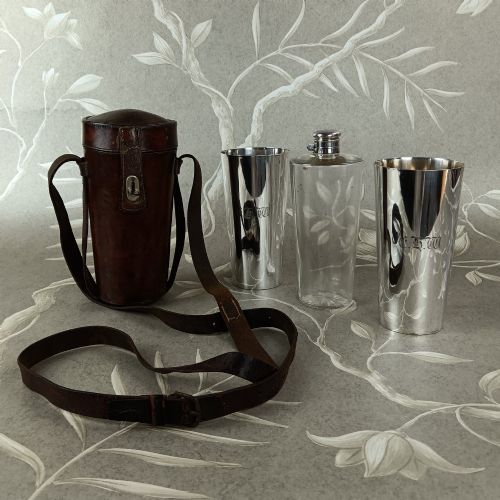
- Field campaign set
- A portable collection of drinking vessels and flasks housed together for travel. These comprehensive kits were built for outdoor dining and shooting parties.
Silver Cup Flask: Frequently Asked Questions
How do I use a silver cup flask?
Fill the main glass or metal body with your preferred spirit using a small funnel, ensuring the screw cap is tightly fastened to prevent leaks. When you wish to take a drink, simply slide or twist the lower cup free from the base.
After use, rinse both the flask interior and the cup thoroughly with warm water and dry them completely before storage. Leaving spirits inside for extended periods can damage the metal or taint the taste of the liquor.
How do I date my flask?
Look closely at the metal surfaces for stamped hallmarks, which typically include a maker's mark, a purity standard mark, an assay office symbol, and a date letter. Consulting a standard British assay guide will translate that specific letter into an exact year.
If the piece is silver-plated rather than solid silver, look for registration numbers or maker's stamps on the base. Stylistic clues such as leather coverings and cut glass patterns also point towards specific decades like the Victorian or Edwardian eras.
How should I display my flask?
Display your piece on a sideboard, within a drinks cabinet, or alongside other antique barware to showcase its metallic gleam and textured leather or glass body. Keeping the cup detached slightly or resting beside the flask can highlight the dual-purpose nature of the design.
Position the item away from direct sunlight and damp environments to protect leather bindings from drying out and to minimise silver tarnish.