
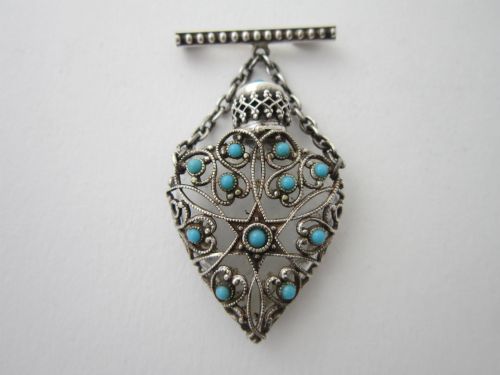


1920s Silver Flask
A 1920s silver flask brings pocket-sized luxury from the decade, built to hold spirits or scent with undeniable style.

1920s Silver Flask
A 1920s silver flask encompasses practical pocket vessels intended for spirits or perfume, shaped by the design movements of the era. Buyers seeking these items encounter hip flasks and scent bottles produced across the decade.
The selections on this page bridge traditional forms and modern aesthetics, originating from English and continental workshops. Many examples pair sterling silver with cut glass, enamel, tortoiseshell, crocodile leather, or turquoise.
Art Deco and George V styles dominate the physical evidence, alongside occasional Edwardian influences. These pieces reflect the tastes of the period, ranging from plain sterling forms to complex enamelled or leather-wrapped designs.
How they were made
Craftsmen utilised sterling silver and continental silver for caps, collars, and body mounts, often working in hubs such as Birmingham and London. Metal components were shaped, hinged, and frequently polished or engraved.
Glass bodies relied on heavy moulding and precise wheel-cutting to create textured surfaces that caught the light. Where leather or tortoiseshell featured, artisans stitched crocodile skin or fitted shell panels directly to the metal or glass frames.
Every pocket vessel carries the quiet echo of clandestine sips taken during jazz age dances.
What varies in quality
Subtlety in design and precision of manufacture separate standard items from superior works. Weight of the metal, thickness of the glass, and tightness of the screw cap or hinged top indicate the maker's original investment of time and material.
The integration of secondary materials such as enamel, turquoise, or genuine crocodile leather defines the upper tier of execution. Better examples retain crisp hallmarks, clean glass interiors, and unblemished surface decoration.
Henry Perkins·William Neale·Barnsley and Co·James Dixon·Finnigans
The 1920s Silver Flask Glossary
- Sterling Silver
- An alloy containing 92.5 percent silver by mass, forming the primary metal standard for British pieces of this period. Hallmarks stamped into the metal verify its purity and origin.
- Art Deco
- A design style characterised by sleek geometric lines, stylised motifs, and modern industrial influences. It flourished during the period represented on this page.
- Cut Glass
- Glass shaped and patterned through abrasive wheel grinding to produce deep, light-refracting facets. This technique appears frequently on perfume and liquor bottles.
- Hallmark
- Official marks stamped onto precious metals by an assay office to indicate purity, maker, and year of manufacture. Birmingham and London offices frequently feature in these records.
- Hip Flask
- A slim container curved to fit a pocket, designed for carrying potable spirits discreetly. These objects often combine metal bodies with captive caps.
1920s Silver Flask: Frequently Asked Questions
What is the difference between a hip flask and a scent bottle?
A hip flask is constructed to carry liquor, featuring a captive screw cap or hinged lid suited for pocket use. These vessels generally rely on solid metal or leather-wrapped bodies.
Scent bottles are designed for perfume, utilising glass bodies paired with silver collars and stoppers. They often incorporate decorative elements like enamel, tortoiseshell, or turquoise.
How do I identify the date of a silver flask?
British silver pieces carry hallmarks that include a date letter indicating the exact year of assay. Records from offices in cities such as Birmingham and London decode these stamps.
Stylistic markers also help determine age, as Art Deco geometric forms and George V designs align directly with the decade's manufacturing output.
Were all flasks made of solid silver?
Many pieces combine sterling silver mounts with bodies formed from cut glass, Mary Gregory glass, or plain crystal. The precious metal provides the functional collar and cap while the glass holds the liquid.
Other variations include silver-plated base metals or bodies wrapped entirely in crocodile leather and tortoiseshell.
How should I clean a vintage silver flask?
Silver components require gentle polishing with a non-abrasive cloth formulated for precious metals to preserve the original hallmarks. Avoid harsh chemical dips that strip away the natural patina accumulated over the decades.
Glass interiors can be rinsed with warm water, while leather or tortoiseshell sections need to remain dry to prevent material degradation.