


Silver Covered Bowl
A silver covered bowl brings grace to a table, offering a vessel for sauces, soups and sweets that keeps its contents warm and protected.
Silver Covered Bowl
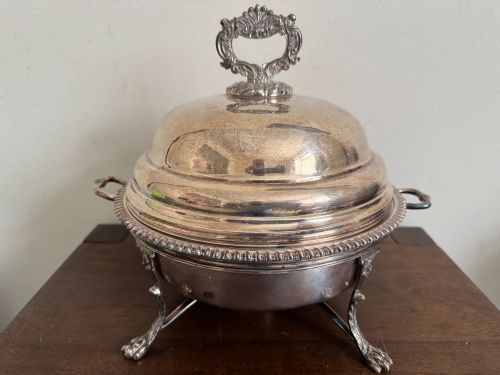
A silver covered bowl encompasses a broad range of vessels designed for dining and display, spanning centuries of craftsmanship from the Georgian and Regency eras through to the Art Deco period. When searching for a silver covered bowl, buyers encounter everything from modest porringers and sauce tureens to grand entree dishes and punch bowls.
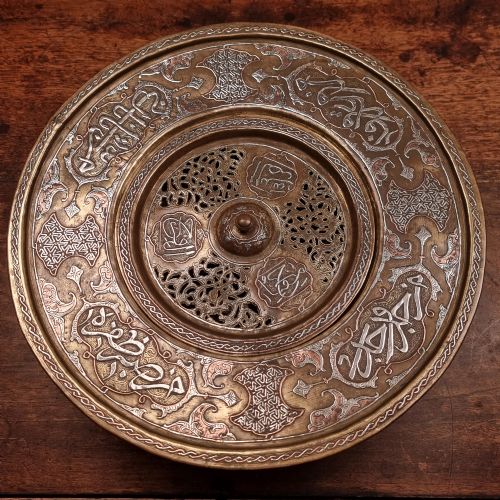
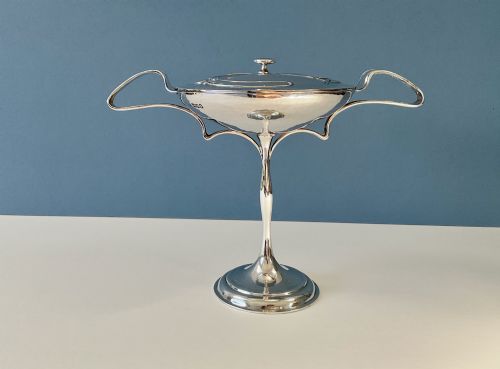
The pieces listed on this page originate from diverse workshops and design movements, including Victorian, Edwardian, Art Nouveau and Mamluk Revival styles. Form follows function closely, with many examples featuring secure lids, matching stands and handles tailored for practical service on the dining table.
Materials vary widely across the selection, ranging from solid sterling silver and French vermeil to Sheffield plate, silver plate and electroplated nickel silver. Buyers also find pieces combining precious metals with cut glass, crystal, brass, copper and pewter, reflecting the shifting tastes of makers across Britain, Europe and beyond.
Materials and Techniques
Makers fashioned these vessels using solid sterling silver or by fusing thin sheets of silver to a base metal core in Sheffield plate. Electroplating later superseded older methods, allowing workshops to deposit silver onto nickel silver, brass or copper substrates.
Decoration often involved hand chasing, engraving, piercing and silver inlay, particularly on Islamic and Indian colonial pieces. Glass components were frequently hand cut or moulded to fit snugly within metal frames, paired with secure lids and cast handles.
Measures of Quality
Quality rests in the weight of the metal, the crispness of chased or engraved ornament, and the integrity of soldered joints and hinges. Substantial gauge silver and well-balanced forms indicate superior execution by skilled silversmiths.
The prominence of the maker and the precision of hallmarks or maker's marks add distinct weight to a piece. Secondary elements such as matching ladles, cut glass inserts and intact plating further separate standard utility wares from exceptional examples.
Mappin and Webb·Hamilton and Inches·Daniel and Arter·Dan Holy·William Bennett·Birchall and Hayne·Henri Lapeyre·GORHAM
The Silver Covered Bowl Glossary
- Porringer
- A small, shallow vessel with one or two flat ears or handles, used historically for broths and soft foods. It often includes a fitted cover to retain heat.
- Entree Dish
- A shallow lidded vessel designed to hold and serve individual courses at a formal dinner. These pieces frequently feature removable handles for versatile arrangement.
- Sheffield Plate
- An early composite material made by fusing a sheet of silver to a copper ingot before rolling them together into plates. Edges often reveal subtle traces of the underlying copper.
- Vermeil
- Sterling silver that has been heavily gilded with a thin layer of fine gold. This technique provides a rich, warm yellow finish while maintaining a solid silver base.
- Tureen
- A large, deep serving bowl with a cover, traditionally used for soups, stews or sauces. They often rest upon fixed or detachable matching stands.
Silver Covered Bowl: Frequently Asked Questions
What were silver covered bowls used for?
These vessels served functional roles on formal dining tables, containing soups, sauces, vegetables, entrees, stews and sweet delicacies. The covers were essential for keeping food warm and protected between the kitchen and the dining room.
Over time, many of these pieces also functioned as decorative display items on sideboards and buffets. Their ornamental covers and refined metals allowed them to signal the wealth and status of the household.
How can I tell Sheffield plate from electroplate?
Sheffield plate was made by fusing silver and copper together, which often leaves a tiny visible seam of reddish copper along exposed rims or edges. Under magnification, the surface texture may also appear slightly different from later machine-plated items.
Electroplate, introduced in the mid-19th century, deposits silver evenly across a base metal like nickel silver without creating the characteristic fused copper edges. Makers' marks and stamps on electroplated items typically indicate the plating method used.
Can I use these bowls for daily dining?
Many solid silver and robust silver-plated pieces remain entirely suitable for everyday use and modern entertaining. Solid sterling silver handles regular service well, provided it is washed by hand rather than placed in a dishwasher.
For older plated items, particularly antique Sheffield plate, gentle handling preserves the remaining silver layer. Using them for dry foods or sweets minimises wear and tear on the delicate historic surfaces.