
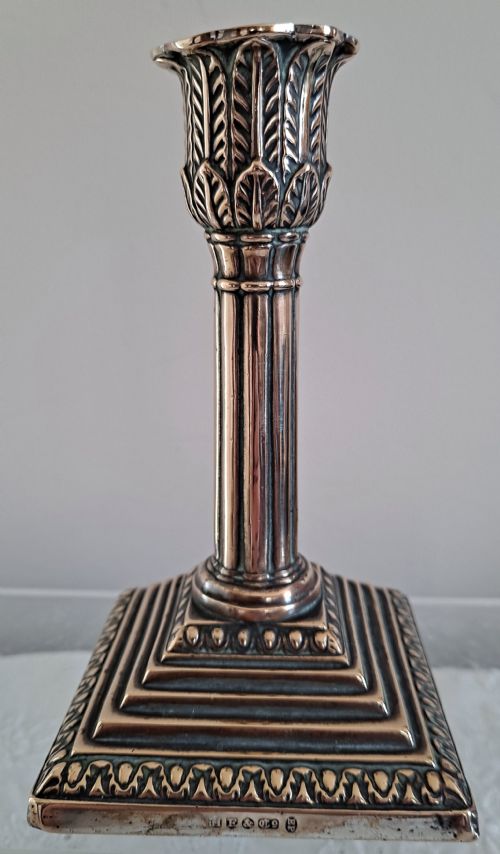


Silver Column Candle Sticks
Silver column candle sticks bring classical architecture to the dining table, offering upright metal shafts topped with decorative capitals.
Silver Column Candle Sticks
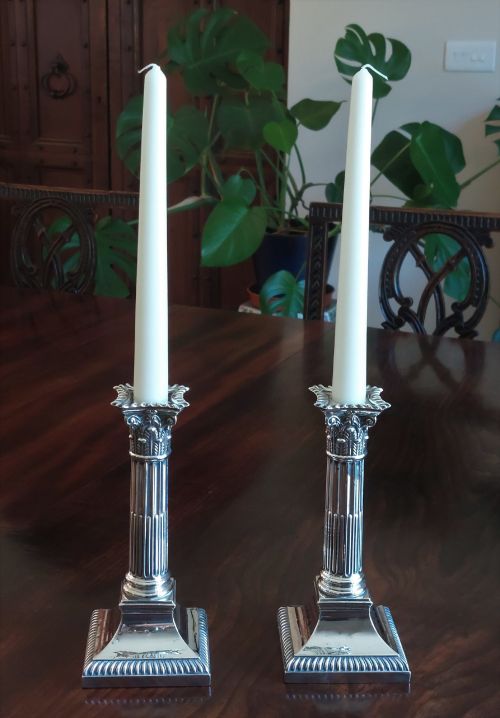
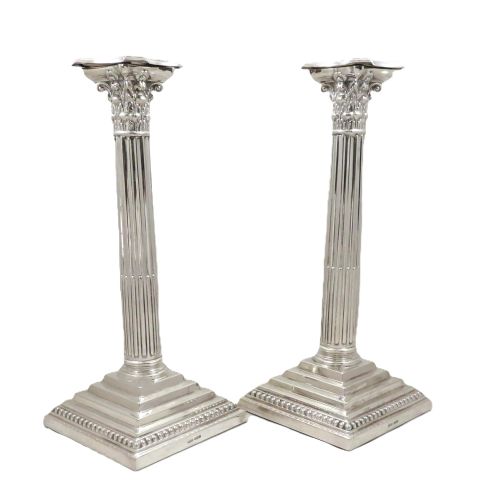
Silver column candle sticks follow architectural orders, most frequently taking the form of Corinthian columns with acanthus leaf capitals. These pieces appear across the eighteenth, nineteenth, and twentieth centuries in forms ranging from tall dining table pairs down to smaller taper and desk versions.
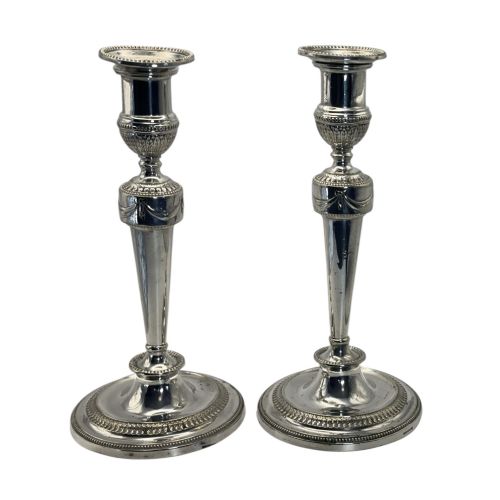
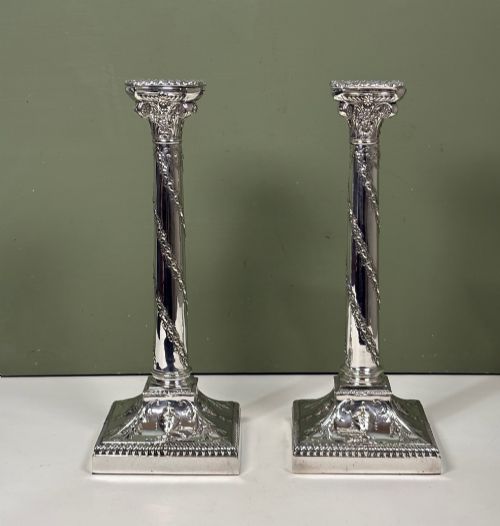
Makers fashioned these objects in sterling silver, Sheffield plate, and standard silver plate, alongside variations involving copper, brass, stone, and silvered bronze. Styles span Georgian, Victorian, and Edwardian periods, frequently drawing upon neoclassical design principles and French neoclassical aesthetics.
Buyers encounter single desk pieces, mantlepiece variants, and matched pairs or sets of four. The column form remains consistent across these configurations, rising from stepped or square bases to support the candle socket above.
How they were made
Silversmiths and metalworkers built these objects using sterling silver and silver plate over supportive base metals, incorporating copper and brass beneath the surface. Certain workshops utilised silvered bronze or combined metal columns with stone elements to add weight and stability.
Old Sheffield plate techniques fused a thin sheet of silver to a thicker copper ingot before shaping, while later Victorian and Edwardian manufacturing applied electroplating over base metals. Cast decorative elements such as Corinthian capitals were soldered onto drawn or formed tubular shafts.
Listings feature candlesticks spanning from the eighteenth century through to the Edwardian period and the 1940s.
What varies in quality
The distinction between standard items and superior examples lies in the crispness of the cast detailing on the capital and base. Fine casting preserves the sharp contours of acanthus leaves and fluted shafts, whereas lesser pieces show softened edges from worn moulds.
Weight and structural integrity also separate tiers of production, as superior candlesticks utilise heavier gauge metals and weighted bases that prevent tipping. The quality of the silver or plating layer determines longevity, with thicker applications resisting base metal exposure through decades of cleaning.
Conrad Eduard Mappe·Garrard & Co·Mappin & Webb·John Pound & Co·Ferdinand Barbedienne
The Silver Column Candle Sticks Glossary
- Corinthian column
- A classical architectural column style featuring an ornate capital decorated with carved acanthus leaves. This motif appears frequently on the upper portion of these candlesticks.
- Old Sheffield plate
- An early form of silver plating created by fusing silver to a copper base before rolling them into sheets. This technique results in a rich surface texture unique to eighteenth and early nineteenth century production.
- Taper candlestick
- A small candle holder designed specifically for thin wax tapers used to melt sealing wax on correspondence. These pieces often feature compact proportions suitable for desks and writing tables.
- Silvered bronze
- A bronze alloy treated with a surface coating of silver to give the appearance of solid precious metal. Makers utilised this method to achieve intricate sculptural definition.
- Neoclassical
- A decorative style inspired by the art and architecture of classical antiquity, emphasising symmetry, proportion, and classical column forms. This aesthetic defines the majority of these candlesticks.
Silver Column Candle Sticks: Frequently Asked Questions
How do I clean silver column candle sticks?
Clean sterling silver items with a soft cloth and a reputable silver polish, taking care to avoid abrasive materials that can wear away raised details on the column capitals.
Silver plated items require extra caution to prevent removing the thin metal layer, meaning gentle liquid cleaners and non-abrasive cloths are the most appropriate choice.
How can I tell the period of a candlestick?
Dating relies upon stylistic markers such as the presence of Georgian neoclassical proportions, Victorian elaboration, or Edwardian manufacturing traits. Hallmarks stamped into the metal provide the most definitive evidence of origin and date for sterling pieces.
Unmarked silver plated examples require evaluation of construction methods, base materials, and design motifs to place them within the eighteenth, nineteenth, or twentieth centuries.
How were these candlesticks used historically?
Larger pairs illuminated dining tables and formal rooms during evening meals, placed strategically to reflect light off silver and glassware. Smaller taper and desk variants served private chambers, providing localized illumination for reading and sealing letters.
Their architectural columns matched the interior decoration of neoclassical rooms, functioning as decorative mantelpiece ornaments when not holding lit candles.