



Corinthian Column Candleholders
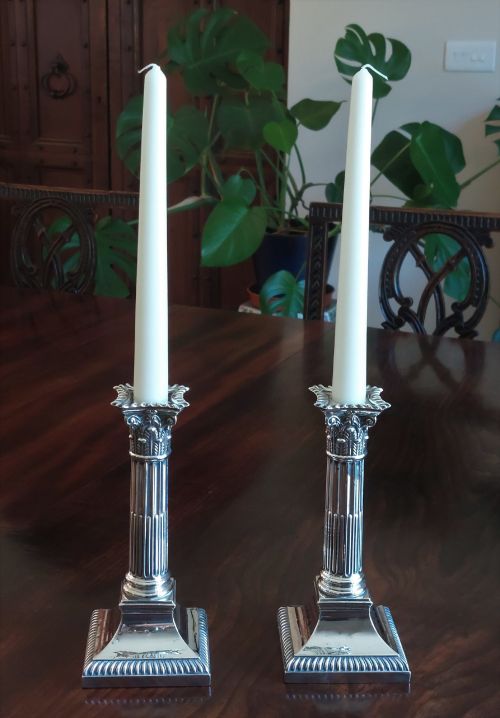
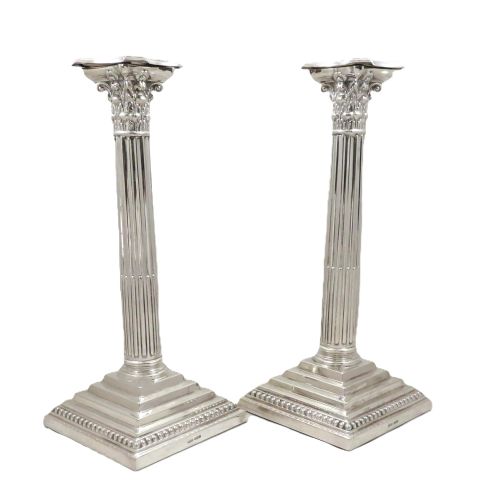
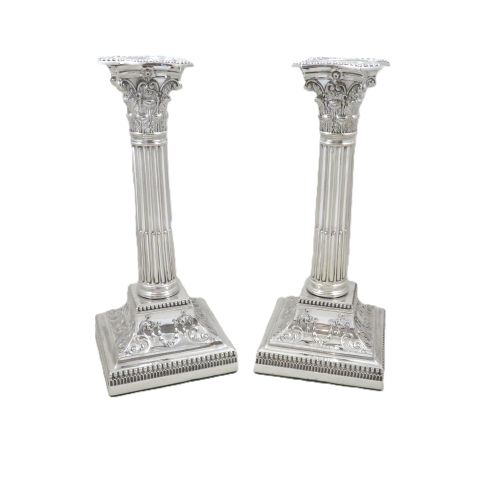
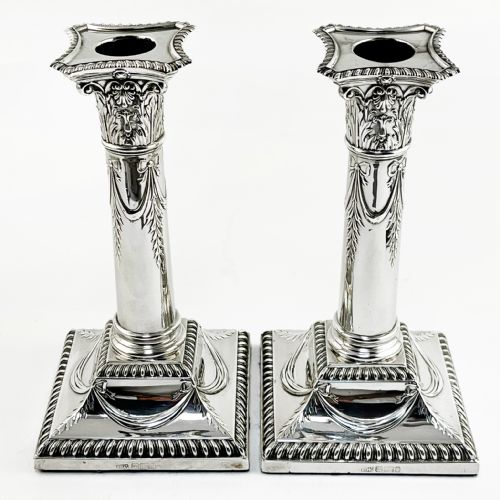
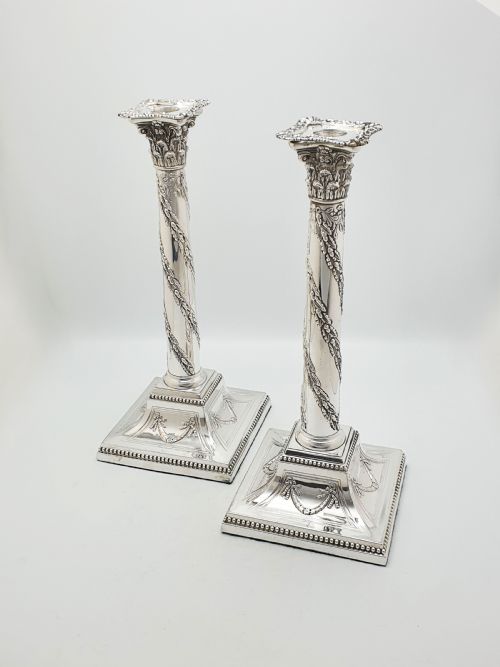
These corinthian column candleholders bring classical architecture to the dining table, pairing fluted shafts with ornate capitals.
Corinthian Column Candleholders
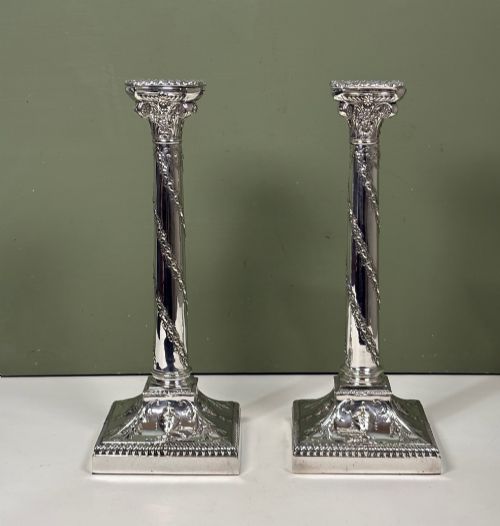
Corinthian column candleholders stand as miniature classical columns, adapting ancient architectural orders for domestic illumination. Buyers hunting for these pieces encounter pairs dating from the eighteenth century through the mid-twentieth century, with Victorian and Edwardian examples appearing most frequently.
The inventory on this page consists entirely of candlesticks, ranging in height from modest eight-inch domestic pieces to taller eleven-inch display pairs. Neoclassical and Revival styles dominate the design vocabulary, reflecting a persistent Victorian and Edwardian taste for classical symmetry.
Materials and construction
Makers utilised sterling silver, silver plate, and old Sheffield plate alongside brass, copper, and nickel silver to build these architectural forms. Many examples incorporate glass sections into the column shafts, combining transparency with metallic capitals and bases.
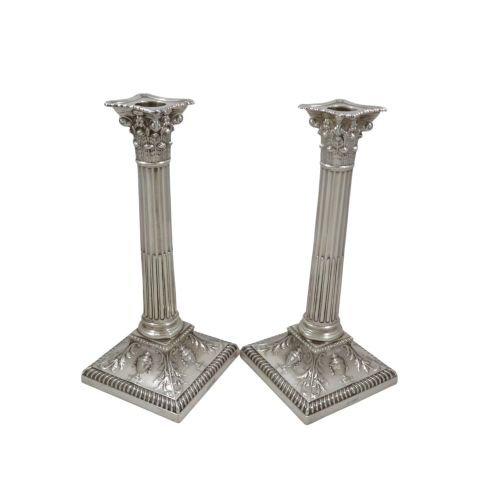
The capital requires careful casting to define the characteristic acanthus leaves and volutes of the Corinthian order. Columns are typically weighted internally to provide stability, supporting the heavy drip pans and nozzles above.
Periods represented span from the eighteenth century through the Victorian and Edwardian eras up to nineteen-forty.
Judging quality
The crispness of the casting on the capital separates fine work from softer, worn examples where details of the acanthus foliage have become blurred. Sharp definition in the fluting along the column shaft also indicates superior production standards.
Substantial gauge metal and well-balanced proportions distinguish better pairs from lighter, more utilitarian items. Maker marks and clear hallmarks on silver pieces provide reliable markers of quality and origin.
Garrard & Co London·Thomas Bradbury & Sons Ltd·William Hutton & Sons
The Corinthian Column Candleholders Glossary
- Capital
- The topmost decorative member of a column, featuring carved acanthus leaves and scroll-like volutes in the Corinthian order. This part demands the highest sculptural skill from the metalworker.
- Fluting
- The vertical rounded grooves cut into the shaft of the column. It creates play of light and shadow along the height of the candlestick.
- Old Sheffield plate
- A material made by fusing a thin sheet of silver to a thicker copper base before rolling. This technique produces distinct edges where the copper base metal subtly shows through.
- Drip pan
- The flat collar situated beneath the nozzle designed to catch wax before it runs down the column. It protects the decorative surface of the candlestick.
- Volute
- The spiral scroll ornament forming the corner of a Corinthian capital. These delicate projections frame the central floral motifs.
Corinthian Column Candleholders: Frequently Asked Questions
How do I date silver candlesticks?
Silver pieces usually carry hallmarks that indicate the assay office, date letter, and maker. Comparing the architectural style and weight also helps place the piece within the Victorian or Edwardian periods.
Unmarked silver plate and brass examples rely more heavily on construction techniques, base weighting methods, and stylistic cues to determine their approximate age.
Are these candlesticks safe to use?
Most antique candlesticks accommodate standard taper candles, though base sockets can occasionally vary slightly in diameter. Checking that the candle sits upright and secure prevents tipping.
Using drip guards or removing candles before they burn down to the metal protects the antique finish from heat damage and wax accumulation.
What is the difference between sterling and plate?
Sterling silver consists of solid precious metal throughout the piece, usually stamped with standard purity marks. Silver plate applies a thin layer of silver over a base metal such as copper or brass.
Old Sheffield plate represents an early fusion method where silver and copper sheets were bonded together prior to shaping the candlestick.
How should I clean antique metal?
Silver requires gentle polishing with a soft cloth and a reputable silver cream to preserve the hallmarks and avoid wearing thin plating. Avoid abrasive dips that strip away desirable historical patination.
Brass and copper pieces respond well to mild soapy water and careful drying, leaving natural tarnish intact if an aged appearance is preferred.