
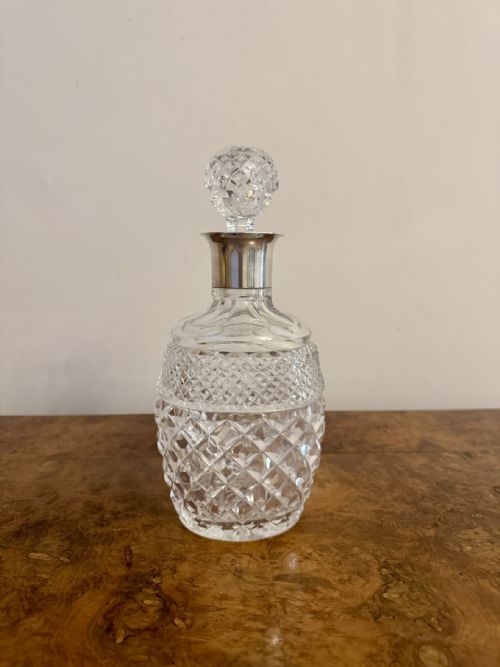
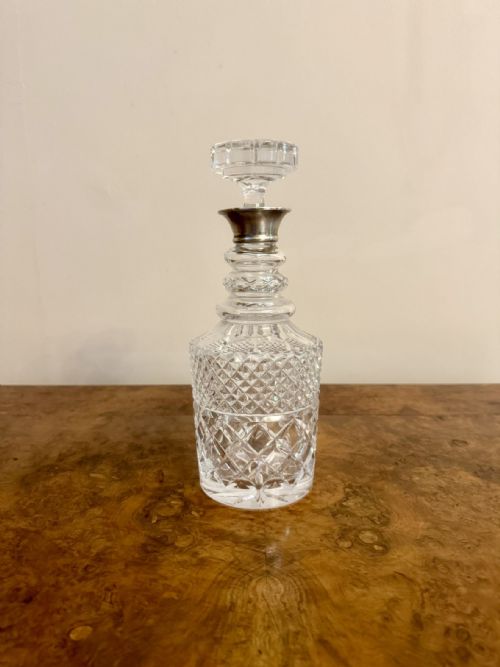


Silver Collared Decanter
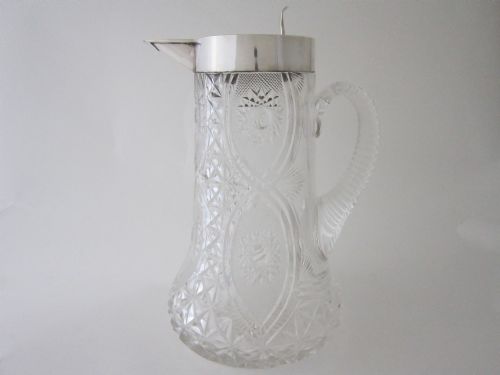
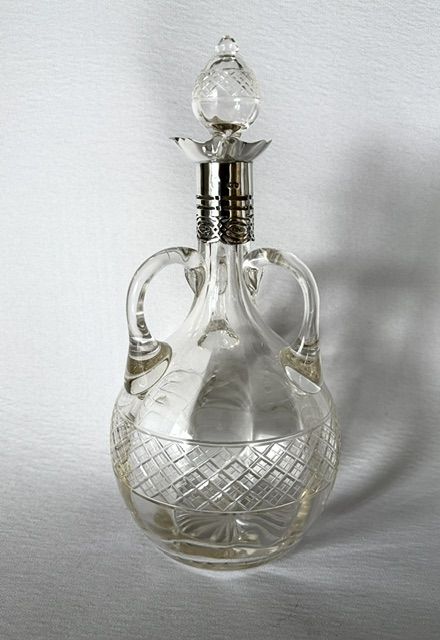
A silver collared decanter pairs heavy cut glass with a bright metal neck, holding spirits on a sideboard with traditional British weight.
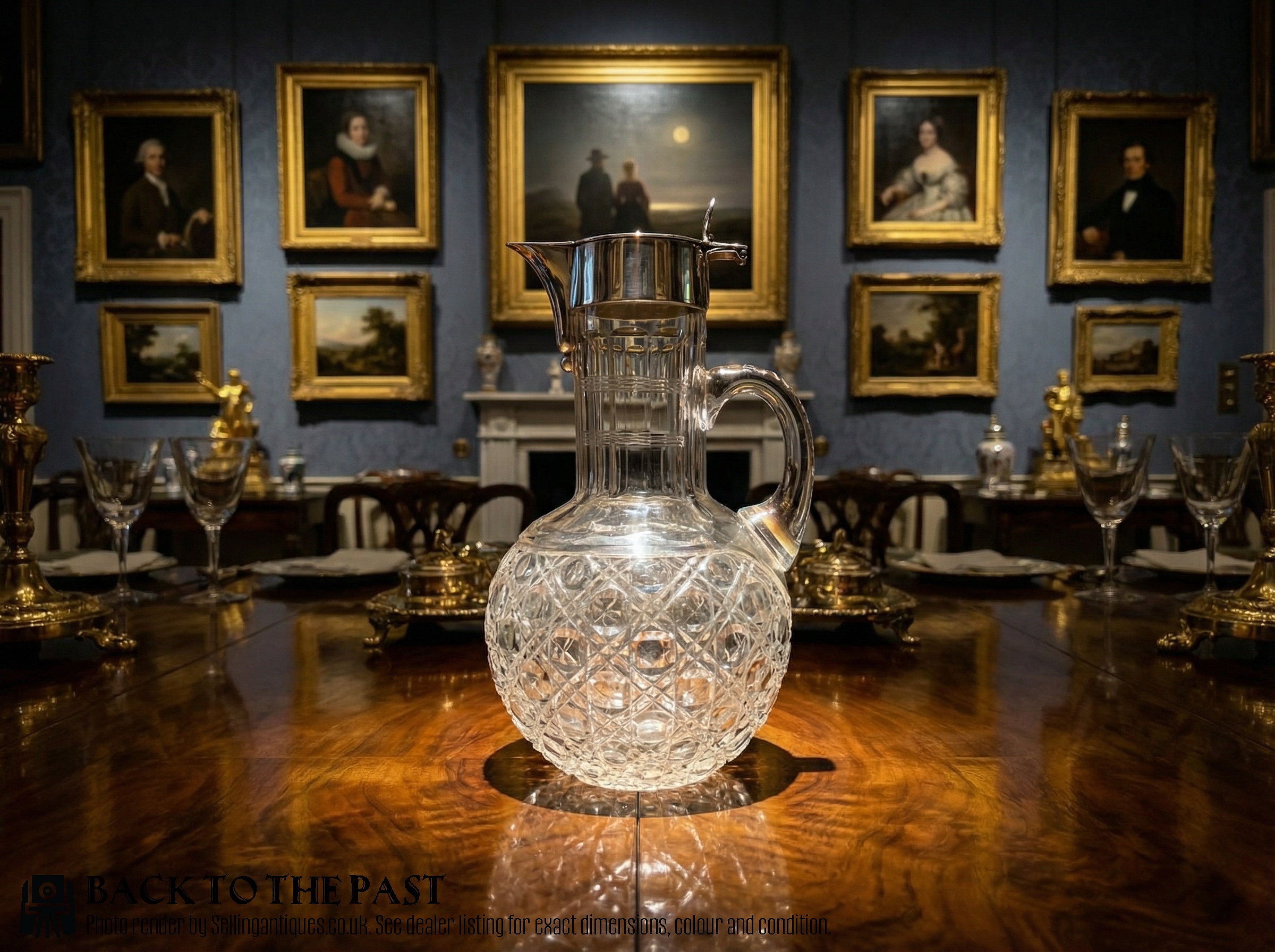
Silver Collared Decanter
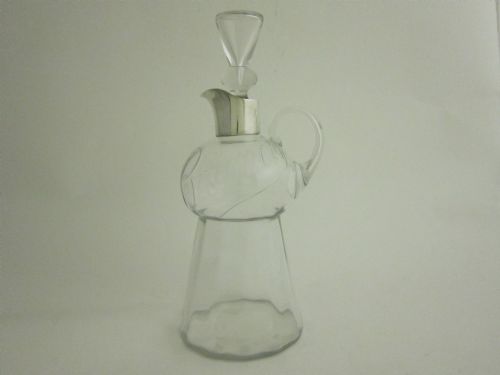
A silver collared decanter combines a glass or crystal body with a fitted metal neckband, appearing frequently across Edwardian and Victorian eras. These vessels range from tall spirit bottles to bulbous whisky jugs and slender scent containers, often paired with matching bottle labels. The search phrase covers functional barware designed to serve port, brandy, and whisky alongside decorative table service pieces.
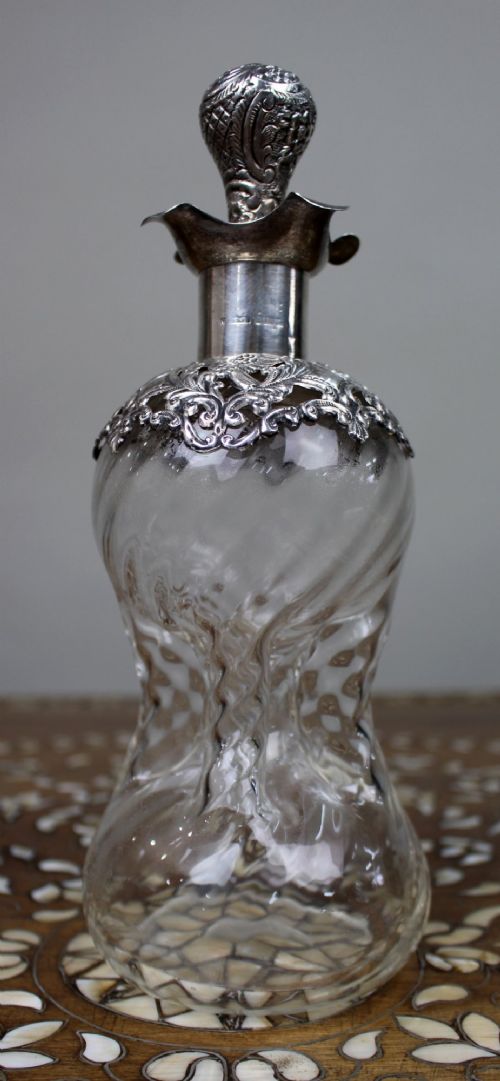
Edwardian and Victorian examples dominate the selection, showing cut glass bodies paired with hallmarked sterling silver mounts. Formats span straightforward ring-necked bottles to more sculptural novelty shapes and glug glug decanters that produce a distinctive sound when poured. Most specimens date between the late nineteenth century and the early decades of the twentieth century.
Materials and construction methods
Makers formed the bodies using lead crystal or clear glass, frequently decorated with deep wheel-cut patterns, fluting, or floral etching. Coloured variants in cranberry and blue glass also appear, shaped through traditional blowing techniques before receiving their fitted metal elements. Silver plate or solid sterling silver was then fashioned into collars, mounts, and stoppers, often secured to the glass neck with specialist adhesives.
Silversmiths stamped hallmarks directly onto the metal collars to indicate the assay office, date letter, and maker's mark. Cut glass surfaces required meticulous hand-polishing to achieve clarity, while mounts were cast or spun to fit the exact contours of the glass bottleneck.
One novelty decanter takes the literal form of a Scottish thistle ready to pour a dram.
Distinguishing quality across examples
Quality rests in the crispness of the glass cutting and the weight of the metal collar. Superior vessels feature heavy lead crystal with sharp geometric facets, paired with substantial sterling silver mounts carrying clear, legible hallmarks. Lesser pieces utilise thinner glass with softer moulding and lightweight silver plate that shows wear over time.
The integration between the glass neck and the metal collar indicates manufacturing standard. Finely made pieces align the collar flush with the glass rim and retain matching original stoppers, whereas lower-tier examples may exhibit loose mounts or replacement stoppers that alter the silhouette.
Hukin & Heath·Archibald Knox for Liberty·Barnsley & Co·Freeman & Son Ltd·William Davenport·Mappin & Webb·Asprey and Co.
The Silver Collared Decanter Glossary
- Collar
- The metal band fitted around the neck of a decanter, usually made from sterling silver or silver plate and bearing hallmarks.
- Glug glug decanter
- A vessel with a multi-channel neck designed to restrict liquid flow and create a characteristic gurgling sound when poured.
- Claret jug
- A pouring vessel designed specifically for red wine, featuring a handle and a hinged silver mount over a glass body.
- Sterling silver
- An alloy containing ninety-two point five percent silver by mass, standard for quality British decanter mounts.
- Whisky noggin
- A small spirit decanter or jug, historically used for individual servings of whisky.
Silver Collared Decanter: Frequently Asked Questions
How do I clean a cloudy decanter?
Residue inside vintage glass requires gentle treatment using warm water and specialist cleaning beads rather than harsh abrasives.
Avoid submerging silver-collared pieces entirely in water to protect the adhesive securing the metal mount to the glass.
Are these decanters safe for daily use?
Most antique spirit decanters function well for serving wine and liquor during dinner or on a sideboard.
Check that the silver collar remains firm and the glass shows no internal fractures before pouring liquids.
How do I date a silver collar?
British silver collars carry hallmarks that include a date letter indicating the exact year of assay and manufacture.
Matching these stamps against official assay office records confirms the period of the piece.
Why do some decanters have matching labels?
Decanter labels identify specific contents like port or whisky, hanging from chains around the bottle neck.
Original matched sets combining the jug and label from the same silversmith carry particular interest for collectors.