
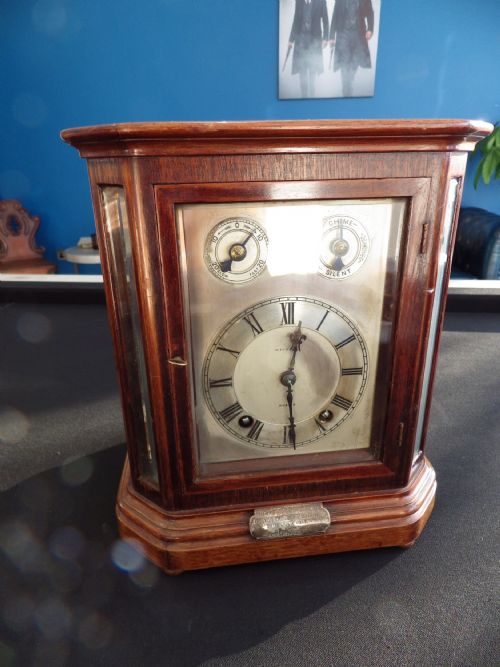


Silver Cased Clock
A silver cased clock brings precision engineering into a protective outer housing, combining functional timekeeping with precious metal craftsmanship.
Silver Cased Clock
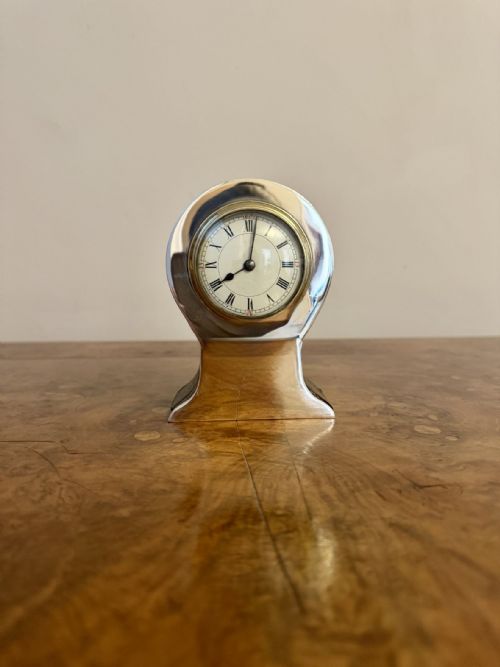
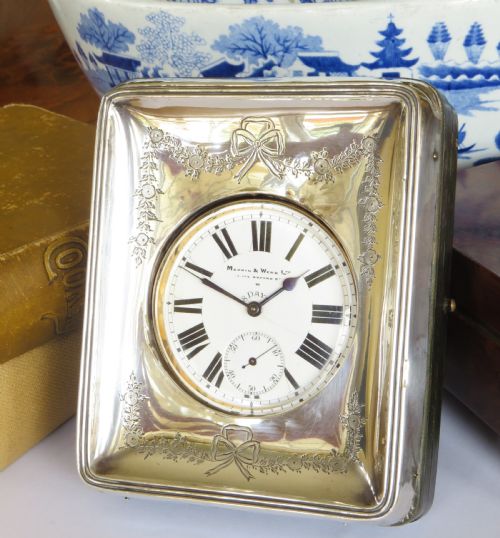
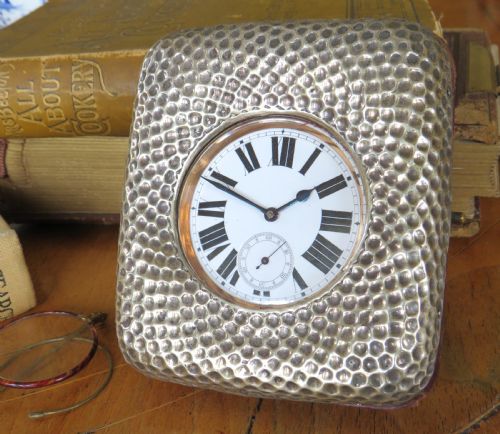
A silver cased clock encompasses a diverse range of horological pieces housed in silver or sterling silver exteriors, spanning compact pocket travel clocks to larger desk and boudoir timepieces. Buyers searching for a silver cased clock frequently encounter portable folding travel designs from the Edwardian and Art Deco eras alongside miniature carriage clocks.
The selection extends from late Victorian boudoir pieces adorned with chased decoration to sleek 1930s modernist easel designs. These objects served utilitarian daily needs for travellers and professionals while displaying decorative taste through hallmarked precious metal housings.
Originating predominantly from British and European workshops, these pieces bridge the gap between portable utility and domestic ornamentation. Their survival depends heavily on the durability of the outer metal case protecting the delicate movement within.
Materials and Construction
Makers housed precision brass and steel mechanical movements inside protective cases formed from sterling silver, often supported by internal wooden frameworks or glass panels. Enamel dials, silvered metal chapter rings, and glass crystals protected the inner faces of library and travel clocks.
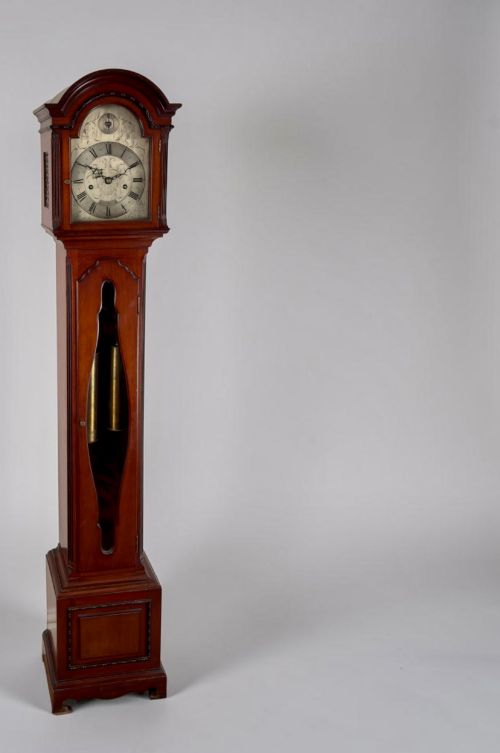
Exterior silver cases utilised techniques such as repoussé, chasing, and smooth polishing over solid sterling plates or protective metal cores. Structural elements relied on hardwood cases like mahogany or ebonised timber in larger bracket and longcase variations, complemented by precious metal bezels and dials.
Listings feature 19th-century and 20th-century silver cased clocks incorporating brass movements, glass panels, and mahogany structures.
Evaluating Quality and Execution
Quality rests upon the crispness of the hallmarking, the depth of hand-chased ornamentation on the silver exterior, and the complexity of the internal movement, such as fusee mechanisms or platform escapements. Superior examples display unrubbed hallmarks, tight case hinges, and unblemished enamel or silvered dials.
Maker reputation heavily influences distinction, with pieces signed by established London retailers or renowned horologists commanding greater regard. The integration between the precision movement and the bespoke metal casing separates standard production items from masterworks.
Gillett and Johnston·Mappin and Webb·Winterhalder and Hofmeier·William Allam·James Tregent·Archibald Collier
The Silver Cased Clock Glossary
- Fusee
- A conical pulley used in mechanical clocks to maintain even tension on the gear train as the mainspring unwinds. This mechanism improves timekeeping accuracy throughout the daily cycle.
- Hallmark
- An official stamp applied by an assay office indicating the purity of the silver, the maker, and the year of production. British sterling silver standard marks provide definitive dating evidence.
- Carriage Clock
- A small, portable spring-driven clock with a carrying handle, originally designed for travelling officers and gentry. They frequently feature glass panels allowing the escapement to be viewed.
- Repoussé
- A metalworking technique where the silver is hammered from the reverse side to form a raised design in relief. This method creates decorative floral and scroll patterns on desk clock cases.
- Platform Escapement
- A self-contained escapement unit fitted to portable clocks that allows them to keep accurate time regardless of orientation. It replaced the traditional pendulum in travel and carriage designs.
Silver Cased Clock: Frequently Asked Questions
How do I wind a travel clock?
Most travel clocks utilise an attached key or a thumb-turn integrated into the back plate to wind the mainspring barrels. Care must be taken not to overwind the movement, stopping firmly when resistance is felt.
Older mechanisms require gentle handling to preserve the tension of the springs inside their silver housings.
Can these clocks be repaired today?
Qualified horologists with experience in antique spring-driven movements can service and repair these mechanisms. Replacement parts are often hand-turned to match original specifications.
Maintenance preserves both the precision timekeeping and the structural integrity of the precious metal case.
How should I clean the silver case?
Silver cases benefit from gentle cleaning with a soft microfibre cloth and specialised non-abrasive silver polish, avoiding contact with the clock dial or glass. Masking tape can protect delicate enamel or engraved areas during the process.
Regular light polishing prevents tarnish accumulation without wearing down hallmarks or chased details.
Were travel clocks used daily?
Edwardian and Art Deco travel clocks were designed specifically for packing into luggage or placing on hotel dressing tables. Folding leather or silver cases protected the glass dial during transit.
Owners relied on them for portable timekeeping before quartz movements became standard.