


Silver Bird Condiments
Silver bird condiments bring character to the table, taking the form of owls, chicks, pheasants and cockatoos in sterling silver.
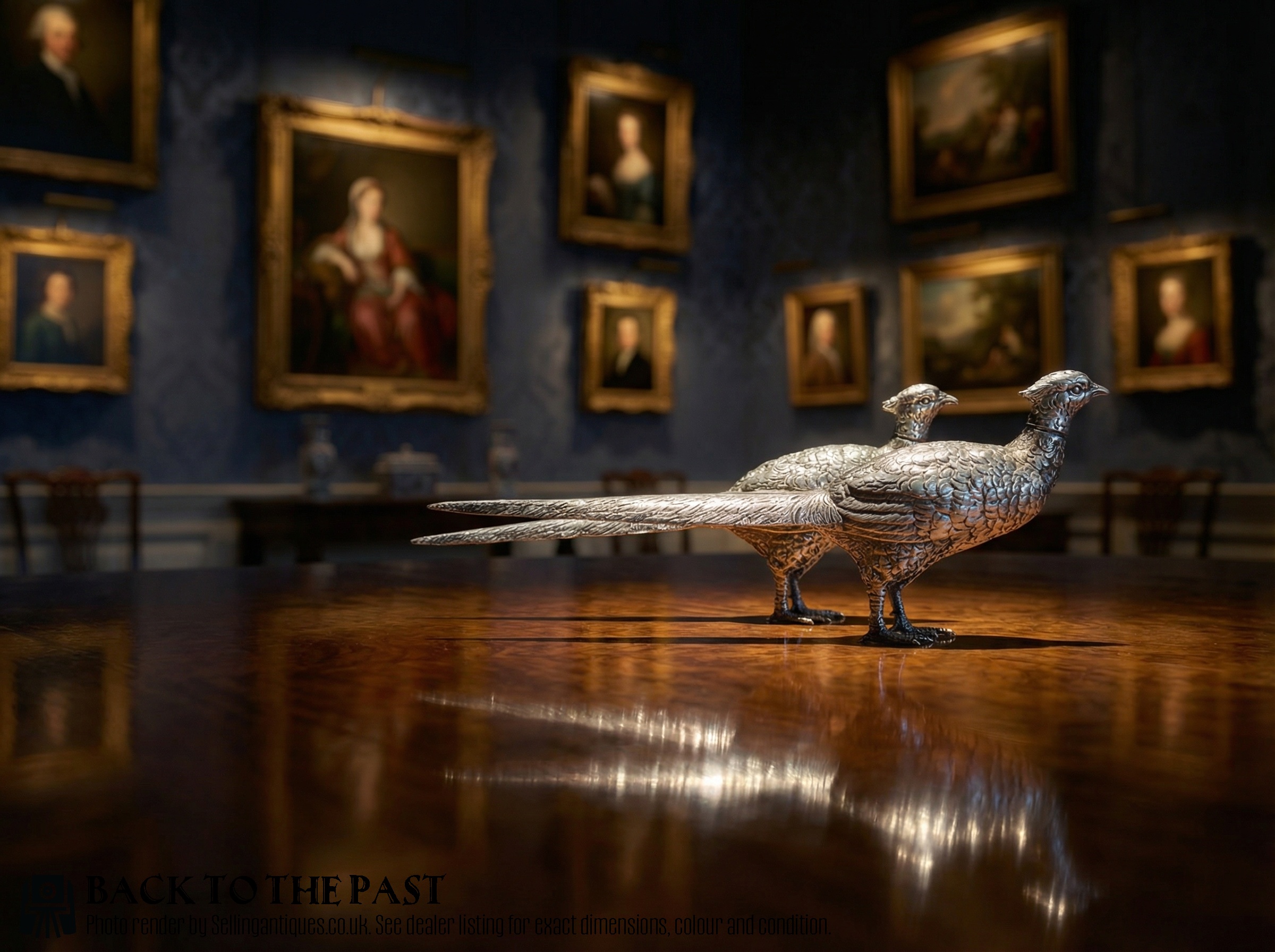
Silver Bird Condiments
Silver bird condiments comprise novelty salt cellars, mustard pots and pepper pots modelled as creatures including owls, chicks, pheasants and cockatoos.
The pieces on this page span the Victorian and Edwardian eras through to the Art Deco period, with items originating from English workshops and the Netherlands.
Forms range from single pepperettes and matching salt and pepper pairs to cased sets complete with spoons, often featuring glass liners or gilt interiors.
How they were made
Silversmiths utilised sterling silver and cast silver techniques to shape realistic or grotesque bird bodies, occasionally applying silver gilt for interior contrast.
Many items incorporate functional elements such as removable heads for filling pepper pots or hinged lids on mustard pots, paired with glass inserts where required.
Silver Bird Condiments Retail Price Guide 2026
Typical asking prices for silver bird condiments among the pieces listed under this phrase on Sellingantiques today, from the lower quarter to the upper quarter. They describe what is for sale here now, not the wider market.
Materials extend beyond plain sterling silver to include ebonised wood bases, silk linings in presentation cases and velvet accents.
What varies in quality
Quality rests upon the crispness of feather chasing and the anatomical convincingness of the bird form, from naturalistic pheasants to playful Victorian novelties.
Maker marks, clear hallmarks and the preservation of original components like glass liners or fitted cases elevate individual pieces above standard production.
Frederick Brasted·Sampson Mordan·Berthold Muller
The Silver Bird Condiments Glossary
- Pepperette
- A small container pierced with holes specifically designed for dispensing ground pepper at the dining table. These often take the form of standing animals in novelty silver.
- Silver Gilt
- Silver that has been coated with a thin layer of gold on the interior surface. This protects the metal from corrosive food salts and mustard.
- Salt Cellar
- An open vessel used to hold loose salt before the invention of the spring-loaded shaker. They frequently feature removable blue glass liners to protect the silver.
- Novelty Silver
- Functional tableware shaped to resemble familiar objects, animals or figures. The Victorian period saw a particular surge in the popularity of these humorous pieces.
Silver Bird Condiments: Frequently Asked Questions
How do I fill a silver bird pepper pot?
Most bird pepper pots feature a removable head or a threaded base plug that allows access to the interior cavity.
Carefully detach the upper section to pour in ground pepper, ensuring the mechanism fastens securely before use.
Are these silver bird condiments safe for everyday dining?
These silver items serve well at the table, though mustard pots often include glass liners to prevent the condiment from tarnishing the metal.
Hand washing with mild soap and warm water keeps the sterling silver and silver gilt in proper condition.
How do I distinguish a Victorian piece from an Edwardian one?
Hallmarks stamped directly onto the silver provide the exact year of assay and the city where the piece was registered.
Stylistic cues also help, as Victorian makers favoured detailed grotesque novelties while Edwardian silversmiths often produced naturalistic pairs.
What is the purpose of the glass inserts in salt cellars?
Glass liners act as a protective barrier between corrosive salt and the sterling silver body of the cellar.
Original blue glass liners remain particularly desirable for collectors preserving the complete ensemble.