


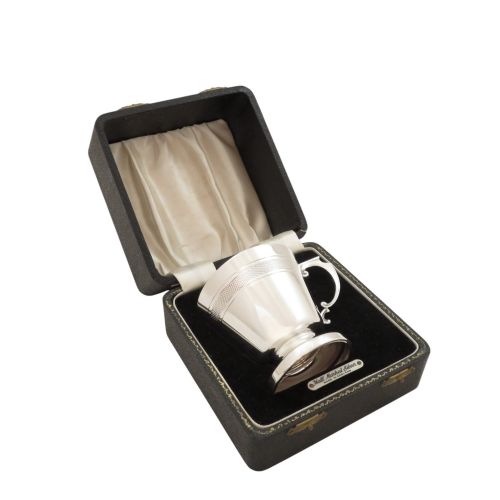

Silver Baptism Gift Cup
A silver baptism gift cup is a cherished heirloom marking a child's entry into the world, offering enduring metalwork from the Victorian era to the mid-century.
Silver Baptism Gift Cup
When you search for a silver baptism gift cup, you encounter small drinking vessels and sets intended to mark early milestones. These objects appear in forms such as mugs, tankards, porringers, and bowls.
The selections span the Victorian period, the Edwardian era, and the reigns of George V, alongside mid-century British pieces. You find them presented simply or housed in fitted boxes lined with leather, velvet, and silk.
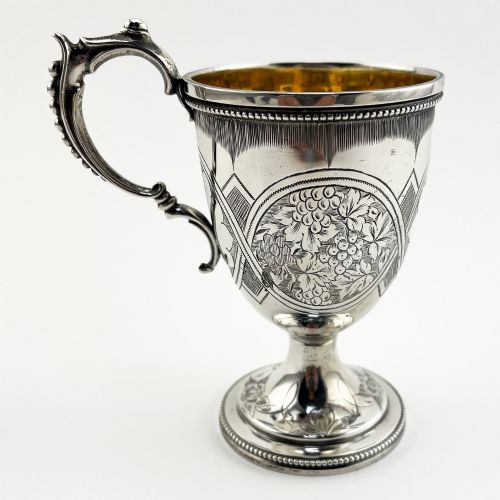
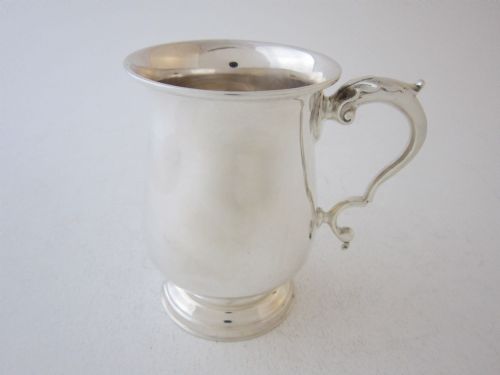
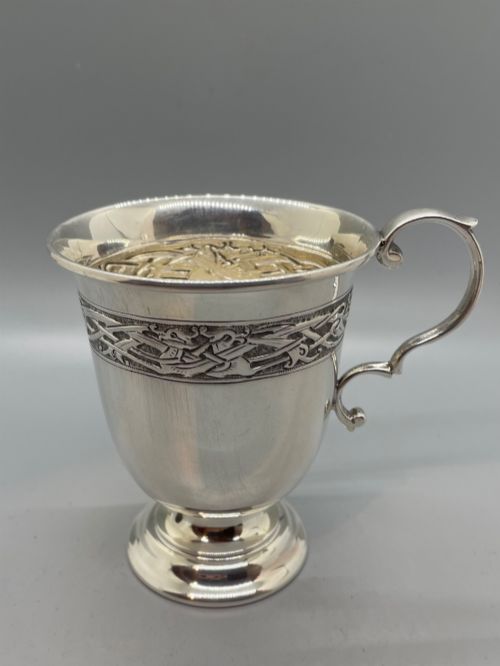
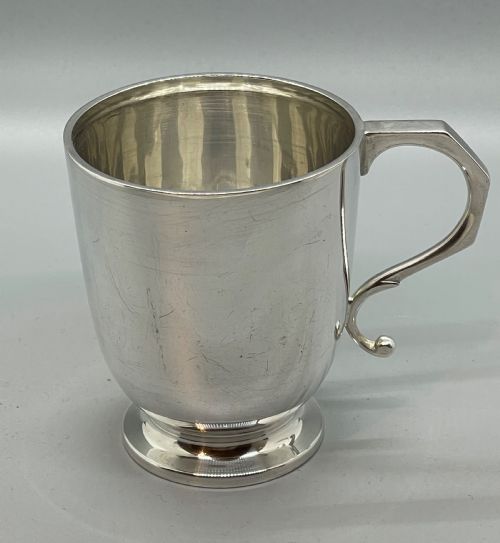
Makers fashioned these works in sterling silver and solid silver, occasionally incorporating silver gilt and gold gilt. Their shapes range from straightforward baluster forms to pieces decorated with rococo scroll handles.
Materials and construction
Silversmiths constructed these vessels primarily using sterling silver and solid silver, working metal into substantial weights for daily handling. Workshops in assay towns like Birmingham and Sheffield stamped the metal to verify its standard.
Surface decoration relies on techniques suited to handling, from plain polished finishes to intricate rococo revival scrolling. Interiors sometimes feature silver gilt or gold gilt to provide a contrasting finish within the cup.
Some nineteenth-century infants received heavy silver mugs featuring scrolls so elaborate they required two tiny hands just to steady the weight.
Assessing quality
The calibre of a silver baptism gift cup rests in the weight of the metal and the clarity of the maker's mark and assay office stamp. Substantial gauge silver provides a reassuring heft in the hand.
Artistry shows in the definition of handles, such as rococo scrolls, and the crispness of any engraved decoration. Presentation also plays a role, with fitted boxes preserving the original context of the gift.
R E Stone
The Silver Baptism Gift Cup Glossary
- Sterling silver
- An alloy comprising ninety-two point five percent silver and seven point five percent other metals, typically copper, chosen for durability in silverware.
- Silver gilt
- Silver that has been coated with a thin layer of gold on its surface, often used on the interior of drinking vessels.
- Porringer
- A small, shallow bowl with one or two horizontal flat handles, used historically for porridge or broth and given as a child's gift.
- Baluster
- An architectural form resembling a vase or pillar, featuring a rounded swelling lower portion that tapers towards the top.
- Assay mark
- A stamp applied by an official office guaranteeing the purity of the precious metal.
Silver Baptism Gift Cup: Frequently Asked Questions
What is a christening mug?
A christening mug is a small silver vessel traditionally given to an infant to mark their baptism or naming ceremony. These pieces served as both a practical keepsake and a store of family wealth.
Over time, many of these mugs transitioned from functional items to display pieces and family heirlooms passed down through generations.
How do I date a silver cup?
Dating a silver cup relies upon the hallmarks stamped into the metal by official assay offices. These marks typically include a date letter, a maker's mark, and standard marks indicating the purity of the silver.
Comparing the style of the handle and body, such as Victorian rococo revival or mid-century plain forms, helps narrow down the era when hallmarks are rubbed.
What is silver gilt?
Silver gilt is solid silver that has undergone a process to coat its surface in a thin layer of gold. This treatment provided a decorative contrast and protected the interior of drinking vessels from tarnishing due to acidic contents.
In baptism cups, you frequently find this golden finish inside the vessel while the exterior remains bright polished silver.
Were these cups used?
Many baptism cups saw actual use during family meals and nursery hours, while others remained untouched inside their original presentation boxes. Signs of handling and gentle wear reflect their history as cherished childhood objects.
Fitted boxes lined with velvet, silk, or leather often preserved the pieces that were kept purely for display and safekeeping.