


Silver Arched Wall Mirror
A silver arched wall mirror brings architectural weight and bright reflection to a room, drawing the eye upwards with its curved summit.
Silver Arched Wall Mirror
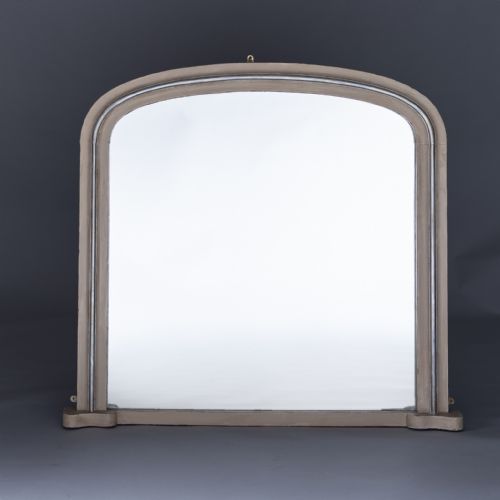
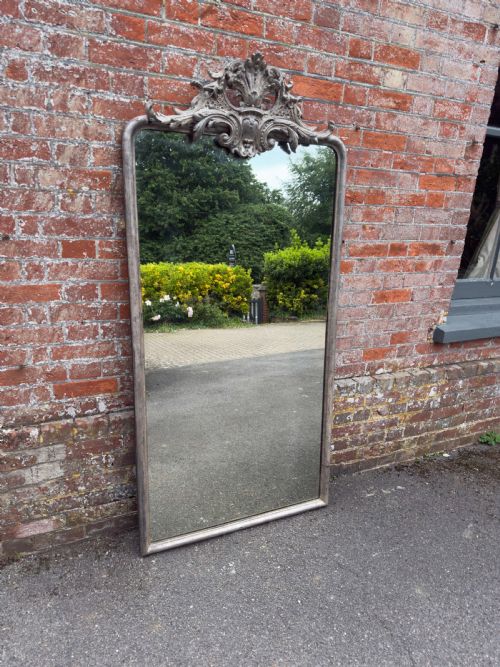
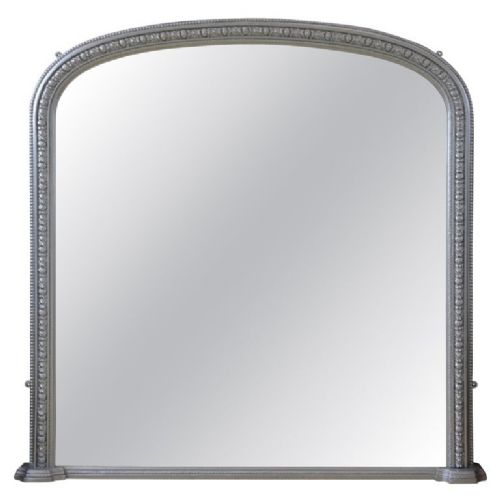
A silver arched wall mirror combines a curved top edge with a reflective silvered or silver gilt surface, forming a distinctive shape suited to domestic interiors. These pieces appear frequently as large overmantle mirrors designed to sit above fireplace openings, alongside taller wall mirrors intended for vertical spaces.
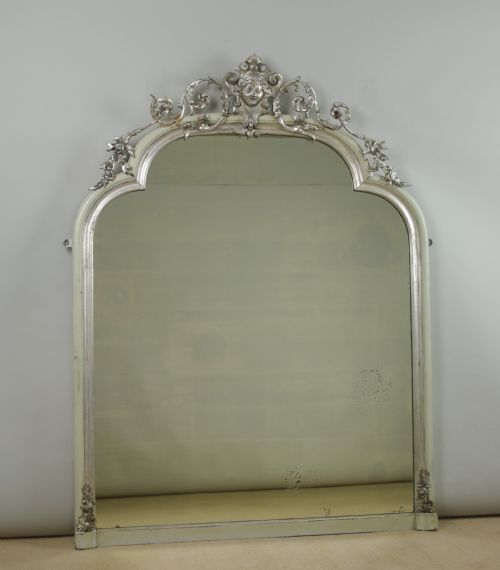
The selection ranges from Victorian English examples to French pieces spanning the nineteenth century, including styles such as Louis Philippe, French Rococo Revival, and Art Deco. Buyers encounter painted and silvered wooden frames, as well as heavily decorated carved wood and gesso designs featuring ornate flower mouldings.
Originating largely from nineteenth-century workshops in England and France, these mirrors served both practical and decorative functions in period homes. Today, they function effectively in hallways, living rooms, and bedrooms, where the arched profile softens linear architectural surroundings.
Materials and construction
Traditional construction relies upon a wooden frame foundation, often built from carved wood that supports an applied layer of gesso. Makers then applied silver leaf, silver gilt, or paint finishes to the prepared surface, creating the characteristic metallic sheen seen on these mirrors.
The glazing consists of mirror glass fitted within the arched rebate of the frame, sometimes accompanied by silvered borders. Distressed patination on both the glass and the metallic leaf develops through age and atmospheric exposure, marking the physical history of each piece.
Listings feature periods spanning the nineteenth and twentieth centuries, encompassing Victorian, Edwardian, and Art Deco eras alongside French chateau styles.
Assessing quality and craftsmanship
The standard of carving and the definition of applied gesso ornamentation separate exceptional mirrors from standard examples. Superior pieces display crisp relief in floral mouldings and scrollwork, whereas lesser versions show softer, shallower detailing where the underlying plaster has filled fine contours.
The integrity of the original silver leaf or silver gilt finish, and the harmonious relationship between the glass and the frame, dictate the overall stature of the object. Substantial overmantle mirrors require robust internal timber joining to support the weight of the heavy glass safely within its arched frame.
The Silver Arched Wall Mirror Glossary
- Overmantle mirror
- A large mirror specifically designed to hang on the wall directly above a fireplace mantelpiece. These pieces often feature wide horizontal or vertical proportions to balance the hearth below.
- Gesso
- A plaster-like material applied to wooden frame foundations to create a smooth surface for gilding or painting. Artisans carve and model this compound before applying silver leaf.
- Silver gilt
- A surface treatment where thin leaves of silver are applied to an object, sometimes accented with gold leaf or warm toning. This finish provides a softer metallic luminescence than bright modern silver.
- Louis Philippe
- A nineteenth-century French style characterised by restrained classical proportions and gentle arched tops. Such designs favour clean architectural lines over excessive rococo ornamentation.
- Distressed
- A condition describing the natural wear, oxidation, and ageing visible on mirror glass and frame finishes. This weathering alters the reflective quality and appearance of the metallic surface.
Silver Arched Wall Mirror: Frequently Asked Questions
How do I hang a heavy overmantle mirror safely?
Large mirrors require secure fixing directly into solid masonry or substantial wall studs using appropriate brackets and fixings. The weight distribution across the wooden frame demands professional installation to ensure stability.
Positioning the mirror at the correct height above a mantelpiece or console table balances the visual weight of the room. Ensure the wall structure can support the combined mass of the wood, gesso, and thick mirror glass.
How do I clean an antique silvered mirror frame?
Dust the carved wood and gesso frame gently with a soft, dry brush to prevent damage to delicate silver leaf or gilt surfaces. Avoid commercial liquid cleaners or abrasive cloths that strip historical patination.
Clean the glass plate using a minimal amount of glass cleaner applied to a cloth rather than sprayed directly onto the surface. This prevents moisture from seeping behind the glass edges and harming the silvered backing.
How do I distinguish French and English nineteenth-century styles?
French mirrors from this period frequently incorporate carved wood and gesso with pronounced floral mouldings and rounded shoulders typical of Louis Philippe or Rococo Revival aesthetics. English variants often present simpler rectangular forms with arched tops and painted or parcel-silvered surfaces.
Examining the backboards, joinery methods, and the composition of the gesso helps confirm the regional origin and manufacturing traditions of the piece.
What rooms suit an arched wall mirror best?
Living rooms and reception spaces benefit from large overmantle mirrors placed above fireplaces, where they amplify natural light and reflect interior details. Hallways also accommodate taller vertical designs, creating an immediate sense of space upon entry.
The curved arch provides a softening architectural contrast in rooms dominated by straight lines, rectangular windows, and standard furniture layouts.