


Silver and Glass Caster
A silver and glass caster combines polished metalwork and cut crystal to serve sugar or condiments at the dining table with enduring style.

Silver and Glass Caster
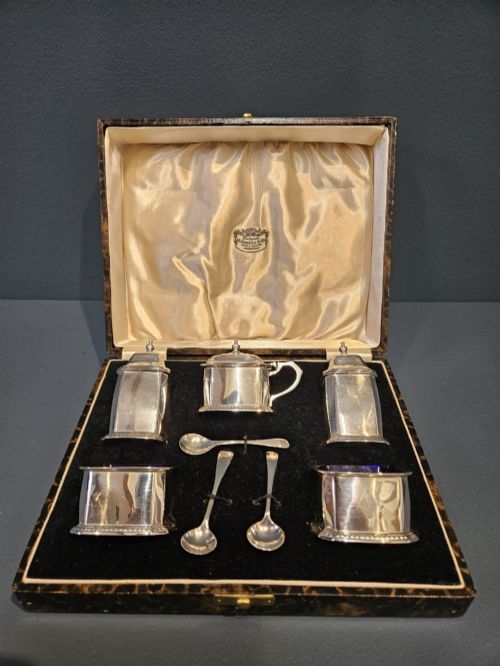
When you search for a silver and glass caster, you are looking at tabletop vessels designed to dispense powdered sugar, castor sugar, or fine seasonings through a perforated top. These pieces typically combine a clear or coloured glass body with a pierced metal cap, alongside related cruet sets and condiment stands.
The selections span from the Georgian period through the Victorian and Edwardian eras into the Art Deco style and mid-century modern pieces. You will frequently encounter tall sugar sifters, lighthouse forms, and individual pepper pots mounted in silver plate or sterling silver.
Materials and Construction
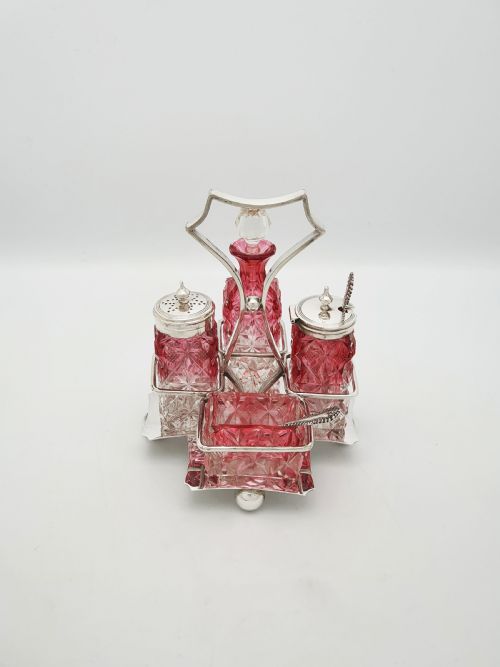
The primary materials recorded in these pieces are cut glass and silver, appearing either as solid sterling silver or silver plate over a base metal. Glass bodies are frequently moulded, faceted, or flash-cranberry, paired with screw-fit or push-on metal lids pierced with floral or geometric patterns.
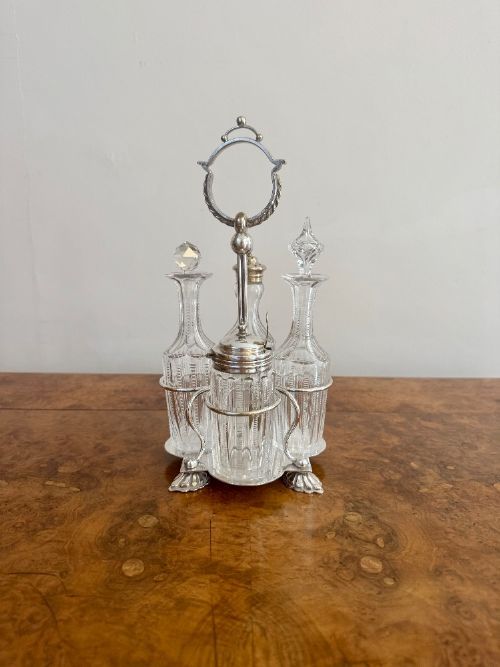
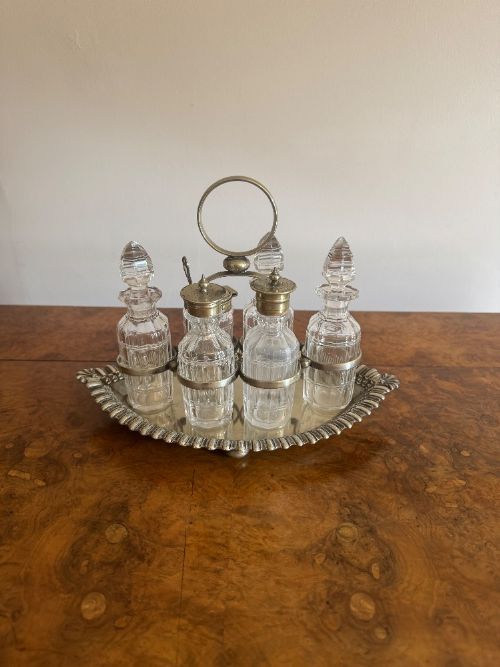
Stands and frames incorporate secondary materials such as ebonised wood, oak, velvet, and pewter, often housing multiple bottles within a fitted silver-plated framework. Individual shakers utilise hallmarked sterling mounts secured directly to the glass necks.
Listings feature periods spanning from the Georgian era through Victorian, Edwardian, and Art Deco up to the 1960s.
Markers of Quality
Distinction across the range lies in the crispness of the glass cutting, the weight of the metal, and the precision of the piercing on the cap. Superior examples display deep, sharp facets on the crystal and substantial metal gauge rather than thin plating.
The integrity of the maker marks, the snugness of the lid fit, and the retention of original matching bottles separate standard production items from workshop pieces bearing identifiable silversmith stamps.
Goldsmith & Silversmith's·Mappin Brothers·Walker & Hall·Charles Thomas Fox·Elkington & Co·Preece & Willicombe·Wade Wingfield Wilkins
The Silver and Glass Caster Glossary
- Caster
- A small container with a perforated top used for sprinkling sugar or condiments onto food. These vessels often feature a bulbous or lighthouse body shape.
- Cruet Set
- A matched collection of bottles or pots for holding vinegar, oil, mustard, salt, and pepper, usually arranged within a tabletop stand. Stands may include handles and dedicated feet.
- Sterling Silver
- An alloy of silver containing 92.5 percent pure silver and 7.5 percent other metals, typically copper, to ensure durability. Pieces made to this standard carry official assay office hallmarks.
- Silver Plate
- A base metal substrate coated with a thin layer of pure silver through electroplating or older techniques. This method allowed makers to produce ornate tablewares at a lower cost than solid silver.
- Cut Glass
- Glass shaped and patterned by grinding wheels and polishing stones to create decorative facets. This technique catches the light and adds tactile grip to sugar shakers.
Silver and Glass Caster: Frequently Asked Questions
How do I clean a silver and glass caster?
Wash the glass body in warm soapy water using a soft cloth, taking care to keep moisture away from any cemented mounts or aged cork liners.
Polish the silver portions separately with a dedicated silver cloth to avoid abrasive contact with the glass facets.
Can I use these casters for daily dining?
Many solid silver and heavy cut glass examples remain robust enough for regular use on the dining table. Ensure the piercing on the cap matches the grain size of the dry condiment or sugar you fill it with.
Delicate plated threads or antique glass liners warrant gentle handling during refilling to prevent accidental chips.
How do I identify the period of a caster?
Examine the hallmarks stamped on the silver cap or mounts for date letters, monarch profiles, and city marks. Stylistic cues such as heavy geometric Art Deco lines or intricate Edwardian piercing also indicate the era of manufacture.
Glass manufacturing techniques, including the depth of the cut and the presence of mould seams, offer further clues to the date.
Are replacement bottles easy to find?
Original matched bottles are integral to cruet sets, but replacements can occasionally be sourced by matching the exact neck diameter and base footprint. Stand frames require specific heights and widths to secure each bottle properly.
Complete sets with all original matched bottles command higher interest from collectors.