



Silver and Blue Mirror
These pieces gather the distinct pairing of silver and blue mirror into decorative vanity items and furnishings.
Silver and Blue Mirror
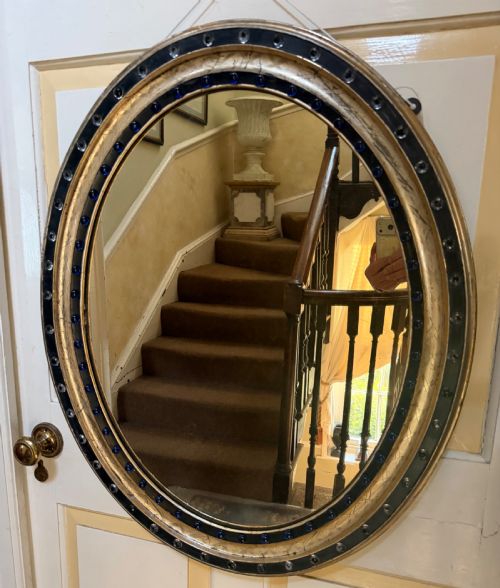
A silver and blue mirror brings together metallic lustre and cool blue tones, appearing across pocket accessories, dressing table items, and larger wall hangings. These objects range from small personal items like compacts and purse mirrors to substantial decorative mirrors.
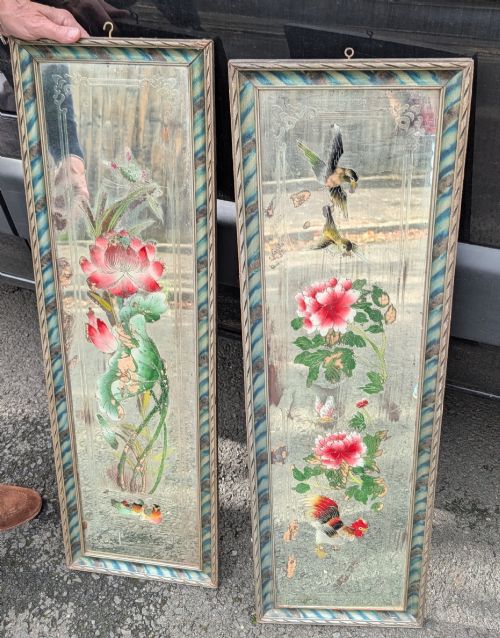
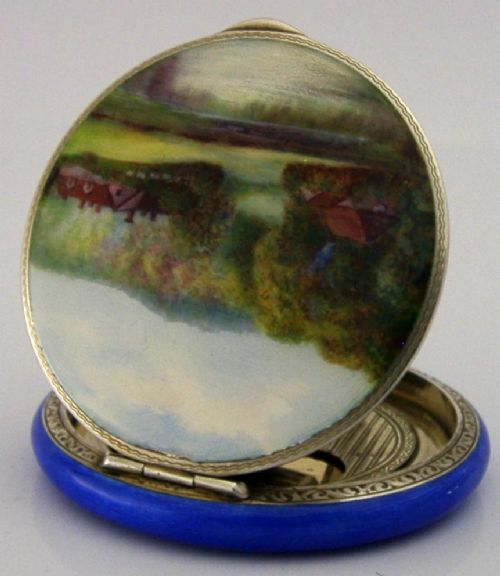
The pieces on this page span the Victorian era, the 19th century, and the 1930s Art Deco period, alongside Chinese and Venetian works. Buyers most frequently encounter compacts and hand mirrors featuring enamelwork alongside wall mirrors and trays.
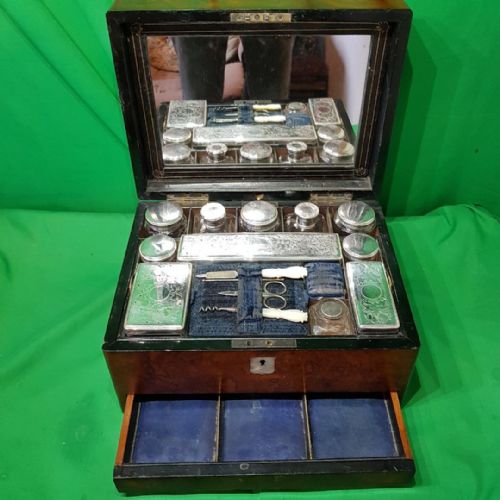
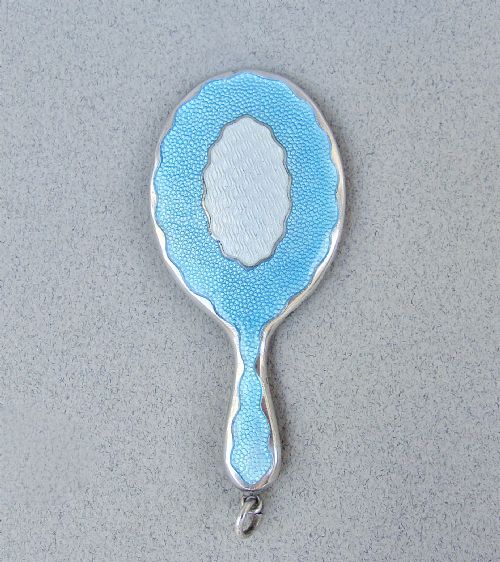
Enamelled vanity sets and handheld looking glasses dominate the selection, reflecting the practical elegance of early twentieth-century dressing tables. Alongside these, decorative wall mirrors and trays utilise cobalt blue glass and silver framing to create strong visual contrast.
Materials and construction
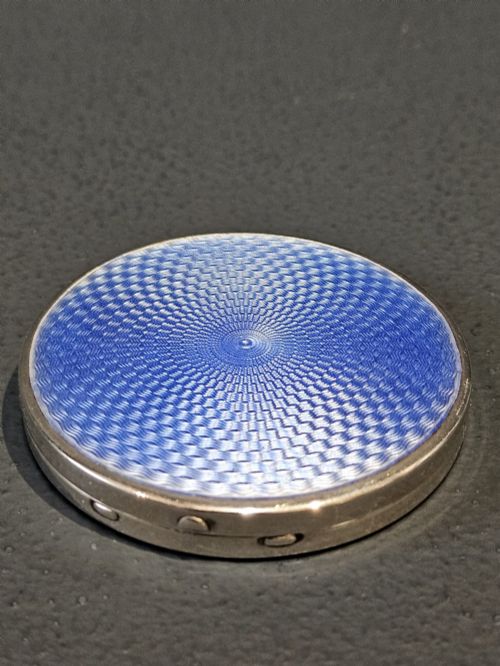
Makers combined sterling silver, silver plate, and base metals with glass and vitreous enamel, often applying guilloché techniques to engrave geometric patterns beneath translucent blue coatings. Wood and painted finishes appear in travelling sets and frames.
Enamelwork required fusing powdered glass to metal surfaces under high heat, a process that created smooth, vitreous finishes in shades of blue. Hand painting and engine turning added precise surface decoration to compact lids and hand mirror backs.
Silver and Blue Mirror Retail Price Guide 2026
Typical asking prices for silver and blue mirror among the pieces listed under this phrase on Sellingantiques today, from the lower quarter to the upper quarter. They describe what is for sale here now, not the wider market.
Listings feature items from the Victorian period, the 1920s, and the 1930s, utilising sterling silver, enamel, wood, and mirror glass.
Factors of quality
Quality rests in the crispness of engine-turning beneath translucent enamel and the weight of the underlying silver or metal chassis. Superior pieces display even colour distribution without chipping or hairline fractures in the glass and enamel layers.
The precision of hinges, clasps on compacts, and the clarity of the mirror glass itself distinguish finer examples from standard production. Artisanal hand painting and hallmarked precious metals elevate the standing of individual pieces.
Henry Williamson·Henry Matthews·Evans·Jean Gille
The Silver and Blue Mirror Glossary
- Guilloché
- A decorative engraving technique that etches precise geometric patterns into metal before a translucent enamel layer is applied. This method allows light to reflect through the coloured coating, creating depth.
- Engine turned
- A mechanical method of ornamenting metal surfaces with intricate, repeating linear designs using a lathe. It provides a textured base for enamel work.
- Enamel
- A durable glass-like substance fused to metal surfaces through high-temperature firing. It supplies vibrant colour and a glossy finish to vanity accessories.
- Silver deposit
- A decorative technique where pure silver is chemically bonded to glass or porcelain surfaces in intricate designs. This creates a raised metallic pattern against a blue ground.
- Compact
- A small handheld case containing a mirror, often used for holding face powder. These accessories frequently feature decorative metal and enamel lids.
Silver and Blue Mirror: Frequently Asked Questions
What are silver and blue mirror items?
These objects comprise vanity accessories, handheld looking glasses, and wall furnishings that incorporate silver metalwork with blue glass, enamel, or painted elements.
They serve both decorative and functional purposes, originating largely from the Victorian period and the Art Deco era.
How were these mirrors used?
Smaller pieces like compacts and hand mirrors were kept in handbags or used at dressing tables for personal grooming.
Larger wall mirrors and trays functioned as interior decorations and display surfaces in domestic rooms.
How do I date a piece?
Dating relies on hallmarks stamped into the silver, manufacturing styles, and material combinations.
Art Deco items typically show geometric patterns from the 1930s, whereas Victorian pieces display heavier, more ornate frames and settings.
How do I care for enamelled pieces?
Enamel and silver require gentle cleaning with soft cloths to avoid scratching the glass coating or polishing away delicate metal plating.
Keeping them away from direct sunlight and moisture helps preserve the vibrancy of the blue tones.