






Silk Suzani Textile
A silk suzani textile brings vibrant Central Asian needlework into a room, offering rich botanical motifs and tribal patterns stitched across cotton, wool, or silk grounds.
Silk Suzani Textile
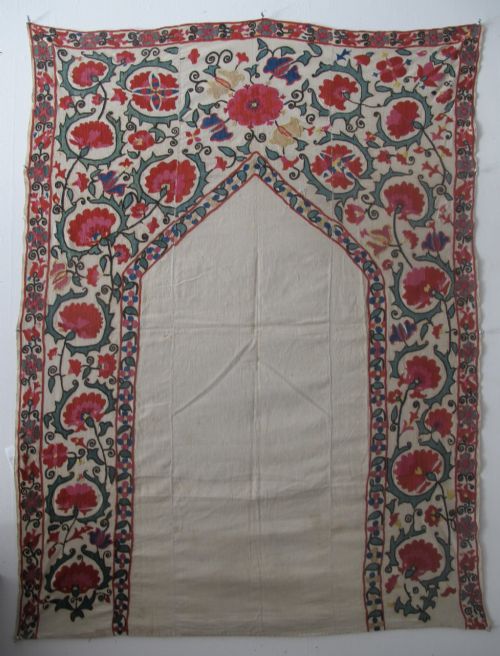
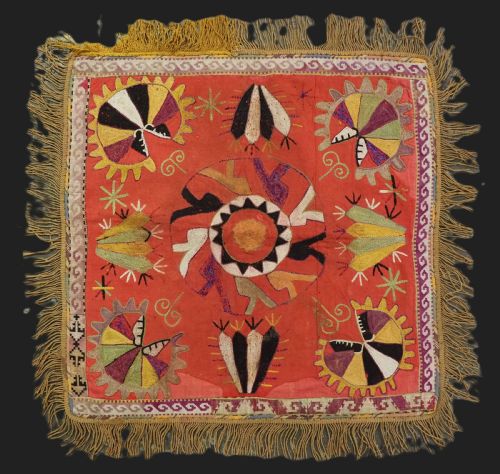
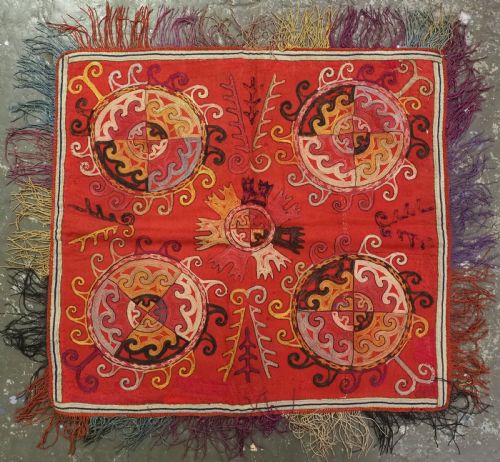
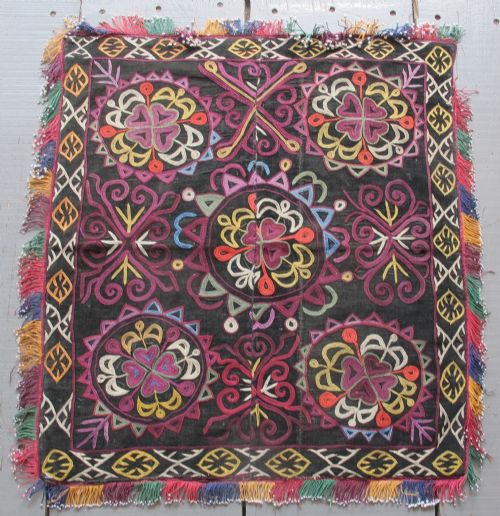
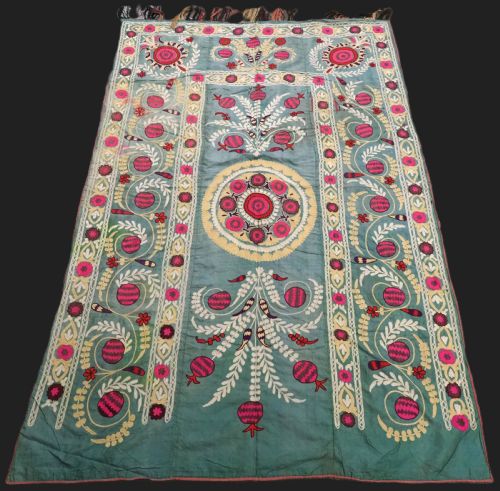
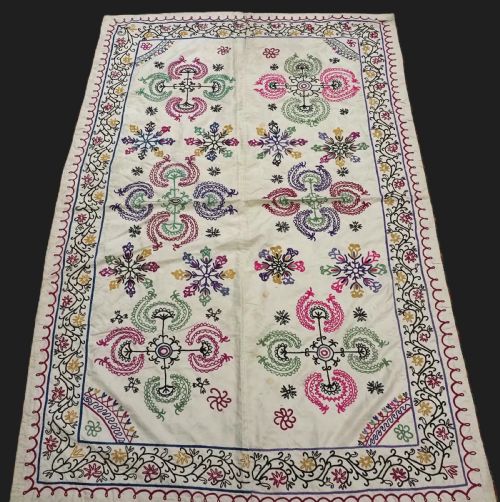
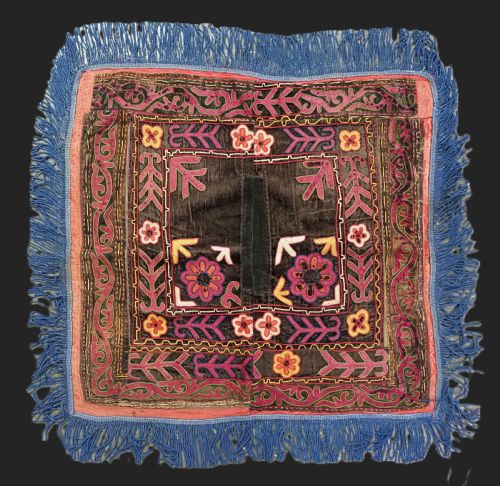
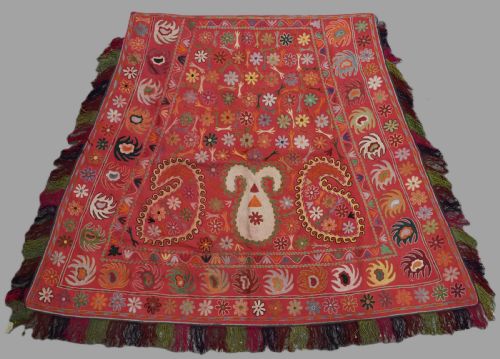
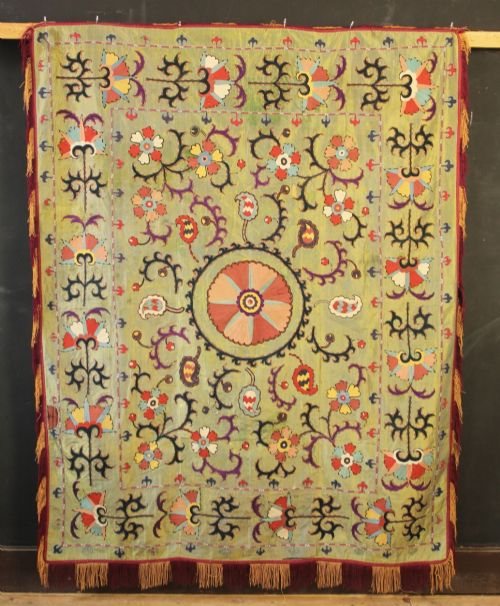
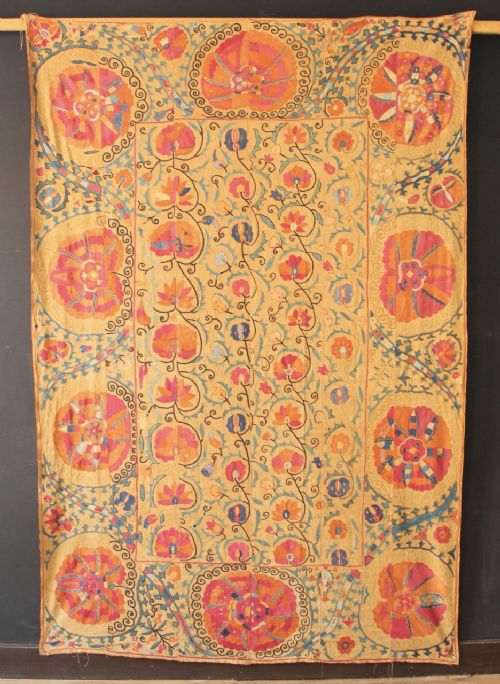
A silk suzani textile is a traditional embroidered hanging or cover originating from Central Asia, encompassing regional variations from regions such as Bokhara, Tashkent, and Shakrisabz. These pieces include large wall hangings, bed covers, mirror covers, and smaller tribal ilgich pieces created for domestic or ceremonial use.
The selections encountered here span from the mid-nineteenth century through the early twentieth century, reflecting Uzbek, Tajik, Kyrgyz, and Lakai tribal traditions. Makers utilised local cotton, wool, velvet, and adras grounds as the foundation for intricate needlework.
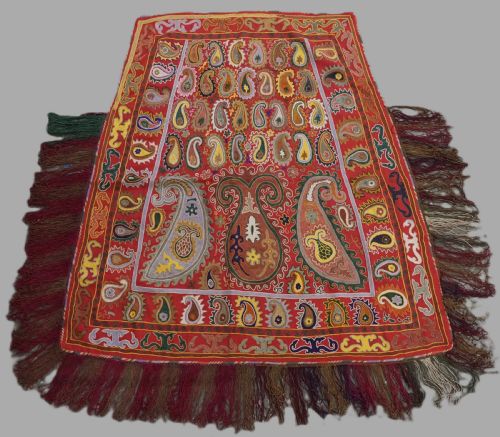
Domestic textiles such as the ru-i-jo bed cover or tush kyiz yurt hanging served functional purposes within nomadic and village life, while specialised pieces like ceremonial horse covers display distinctive tribal iconography.
How They Were Made
Artisans worked with silk thread, wool, and occasionally glass beads, stitching dense motifs onto hand-woven foundations of cotton, wool, silk, or adras. Grounds of red wool, yellow cotton, and black cotton provide high contrast for the multi-coloured embroidery.
Needlework techniques range from partial designs to full-work surfaces where the ground fabric is densely covered in stitches. Tashkent examples often exhibit a full-work palak layout featuring central stars, while Lakai tribal embroidery employs distinct geometric and figurative forms.
Silk Suzani Textile Retail Price Guide 2026
Typical asking prices for silk suzani textile among the pieces listed under this phrase on Sellingantiques today, from the lower quarter to the upper quarter. They describe what is for sale here now, not the wider market.
Ground materials vary across the selection, encompassing silk, cotton, wool, velvet, adras, and wool fringe with occasional glass bead embellishments.
What Varies in Quality
The density of the needlework fundamentally distinguishes full-work pieces from partial or nim suzani variations. Greater coverage of silk thread across the foundation fabric requires considerably more time and technical skill.
The vibrancy and condition of the dye palette, along with the complexity of architectural, medallion, or floral layouts, determine the visual impact of the textile. Distinct regional drawing styles, such as those found in Bokhara and Shakrisabz workshops, display varying levels of artistic execution.
The Silk Suzani Textile Glossary
- Ilgich
- A specific form of hanging or dowry embroidery associated with the Lakai tribe.
- Nim Suzani
- A smaller half-scale version of a full suzani textile, often utilised for compact spaces or specific domestic functions.
- Palak
- A large-scale Tashkent suzani type featuring a fully embroidered surface dominated by a central star or medallion motif.
- Adras
- A traditional Central Asian blended fabric woven from silk and cotton warps and wefts.
- Ru-i-jo
- A traditional Central Asian bed cover textile designed for domestic interiors.
Silk Suzani Textile: Frequently Asked Questions
How were silk suzanis used originally?
Families utilised these textiles primarily as wall hangings, bed covers, and ceremonial furnishings within traditional Central Asian homes and nomadic dwellings. Specific pieces also served as dowry items or horse covers for festive occasions.
Over time, these domestic items became prized decorative objects for interiors, valued for their rich needlework and cultural history.
How do you hang an antique textile safely?
Mounting requires non-damaging methods such as a fabric sleeve stitched to the reverse or a specialist velcro conservation mounting system that distributes weight evenly. Direct pinning through the textile causes permanent damage to the silk thread and ground fabric.
Keeping the hanging away from direct sunlight preserves the natural dyes in the cotton and silk grounds.
How can you tell a Tashkent suzani from a Lakai piece?
Tashkent suzanis frequently present large-scale floral layouts and full-work palak designs with prominent central stars. The drawing tends to be expansive and balanced across the entire ground.
Lakai tribal embroidery, by comparison, often displays smaller geometric motifs, bold colour contrasts on red wool or cotton grounds, and distinct energetic tribal arrangements.