




Silk Suzani Hanging
A silk suzani hanging brings the bold needlework and rich textiles of Central Asia directly into a modern interior.
Silk Suzani Hanging
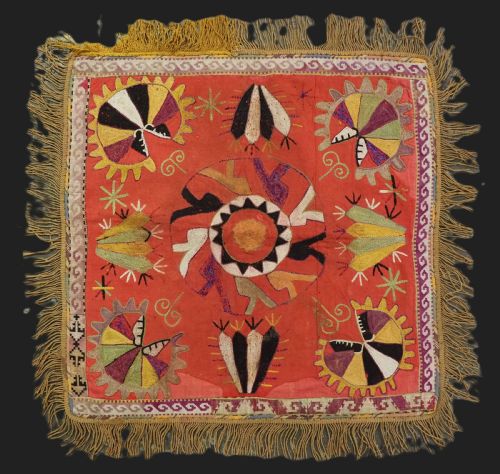
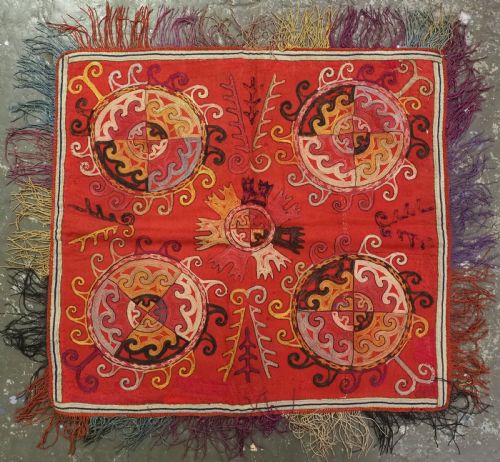
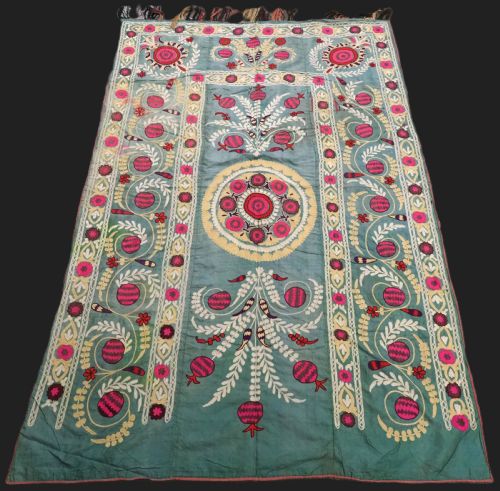
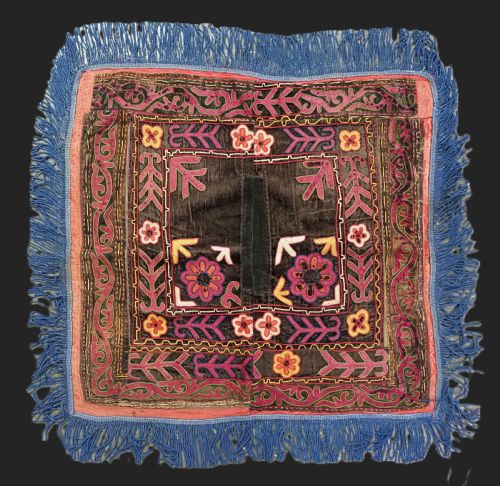
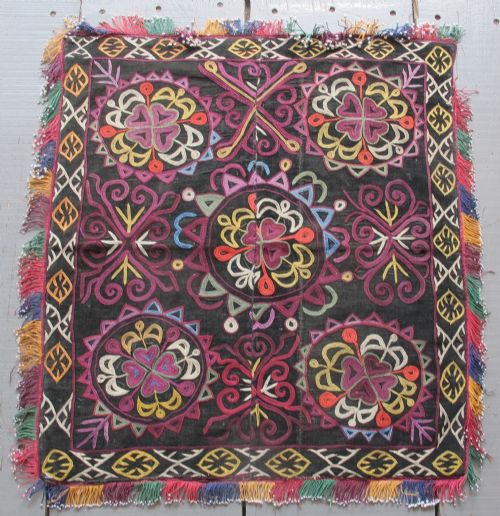
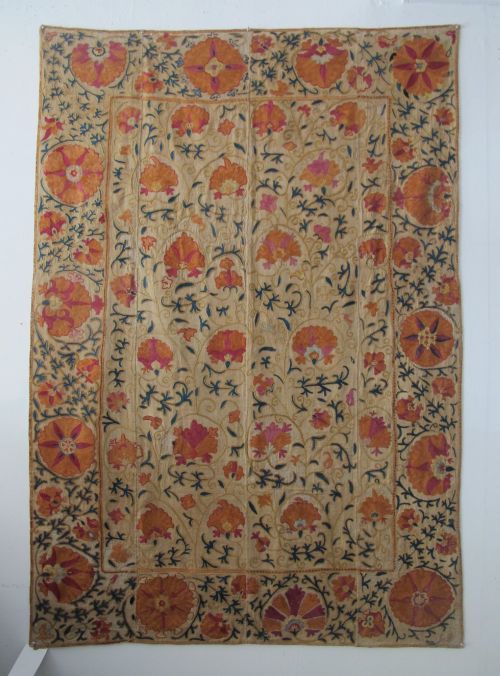
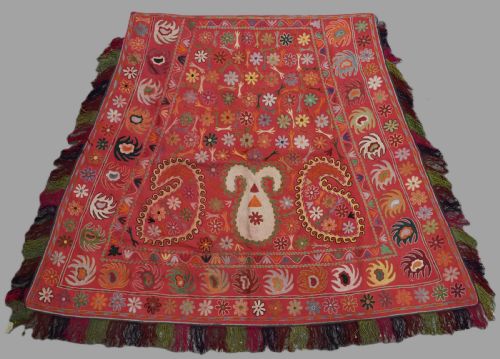
A silk suzani hanging represents traditional embroidered textiles originating from Central Asia, specifically Uzbekistan, produced by makers from regional groups including the Uzbek, Tajik, Kyrgyz, and Lakai tribes. These pieces encompass wall hangings, bed covers, mirror covers, and ceremonial horse covers dating from the nineteenth and early twentieth centuries.
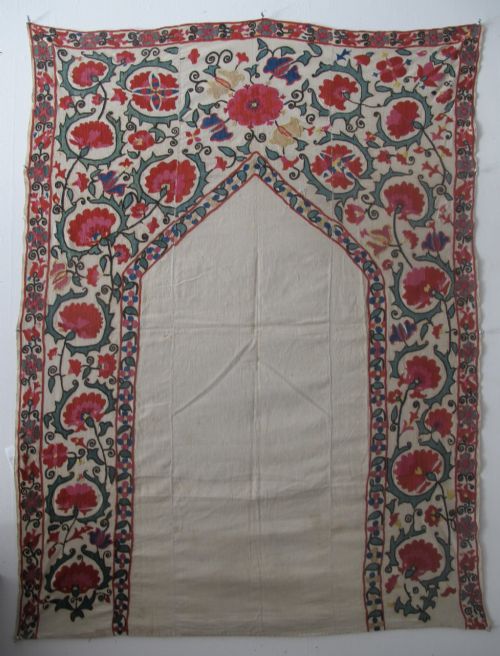
The selections available on this page most commonly include dowry embroideries, known as ilgich, alongside smaller nim suzanis and architectural or medallion variant designs. Makers constructed these textiles for domestic use and ceremonial purposes, utilising traditional formats such as prayer designs and full-work palak layouts.
How They Were Made
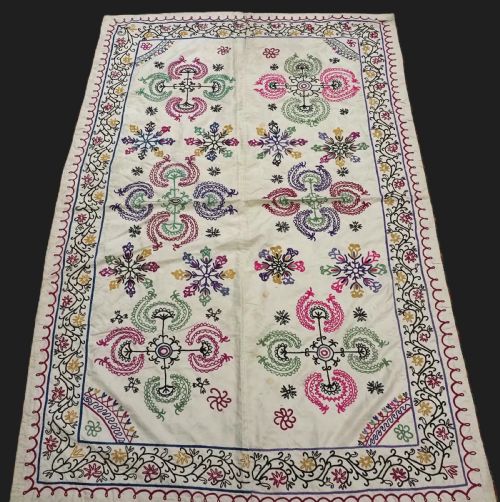
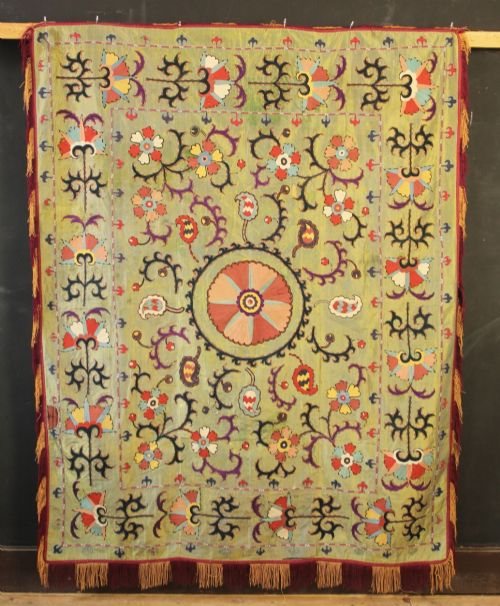
Artisans embroidered using vibrant silk thread onto various foundation fabrics, which include plain cotton, red wool, yellow cotton, black cotton, adras silk and cotton mix, and silk on silk grounds. Certain regional pieces incorporate glass beads to accent the needlework.
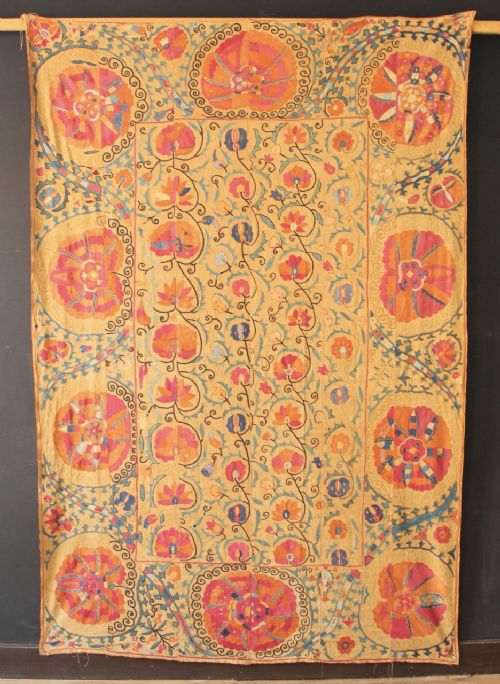
Needleworkers applied dense stitch work across the foundation cloths to create elaborate floral motifs, central stars, and architectural layouts. Workshops in centres like Bokhara, Tashkent, Samarkand, and Shakrisabz developed distinct regional characteristics in their handling of scale and ground colour.
Silk Suzani Hanging Retail Price Guide 2026
Typical asking prices for silk suzani hanging among the pieces listed under this phrase on Sellingantiques today, from the lower quarter to the upper quarter. They describe what is for sale here now, not the wider market.
Listings feature textiles spanning the nineteenth and early twentieth centuries, incorporating silk, cotton, wool, velvet, and glass beads across multiple regional styles.
What Varies in Quality
The density of the needlework separates densely covered full-work panels from lighter, spaced-out compositions. Full embroidery across the entire ground demands significantly more labour and material from the maker.
The vibrancy and condition of the dyed silks and foundation cloths define the visual impact of an individual textile. Intact fringes, secure ground fabrics, and well-preserved silk threads indicate careful preservation over generations.
The Silk Suzani Hanging Glossary
- Suzani
- An embroidered textile originating from Central Asia, traditionally worked in silk thread on a cotton or wool foundation. These pieces served as decorative wall hangings, bed covers, and ceremonial furnishings.
- Ilgich
- A specific form of Central Asian embroidery used as a dowry hanging or wall decoration by tribal groups. These items frequently display geometric and symbolic motifs unique to nomadic makers.
- Palak
- A large-scale suzani design featuring dense, full embroidery dominated by a central star or medallion motif. The term denotes a heavy coverage of the ground fabric.
- Nim Suzani
- A smaller scale version of the standard suzani hanging, translated from the Persian word for half. These pieces provide a more compact format for domestic display.
- Adras
- A traditional hand-woven fabric made from a mixture of silk and cotton yarns. Makers frequently utilised this blended textile as the ground cloth for embroidery.
Silk Suzani Hanging: Frequently Asked Questions
How were silk suzani hangings originally used?
These textiles served multiple domestic and ceremonial functions within Central Asian households. Families displayed them on walls, used them as bed covers, or utilised specialised pieces like mirror covers and horse blankets.
Many of these items functioned as dowry pieces created for marriages. They marked important life events and demonstrated the needlework skill of the maker within the community.
Where do these embroidered textiles come from?
The pieces originate primarily from historical centres and tribal regions across Uzbekistan and neighbouring areas in Central Asia. Specific towns such as Bokhara, Tashkent, Samarkand, and Shakrisabz developed recognised local styles.
Nomadic and settled groups including the Uzbek, Tajik, Kyrgyz, and Lakai tribes produced distinct variations. Each community contributed specific design layouts, colour palettes, and structural motifs to the tradition.
How do I care for an antique textile hanging?
Display the hanging away from direct sunlight to protect the natural silk and cotton threads from fading. Support the weight evenly across the piece if mounting it for wall display rather than hanging it entirely from a few isolated points.
Limit cleaning to gentle surface dusting by professionals experienced in antique textiles. Avoid washing these historical items with water or chemical solvents to preserve the fragile dyed threads and ground fabrics.
What distinguishes different regional suzani types?
Regional variations appear in the choice of foundation fabric, colour palette, and motif arrangement. Tashkent pieces often display full-work palak designs with prominent central stars, while Bokhara and Shakrisabz examples emphasise intricate floral compositions.
Tribal groups like the Lakai incorporate distinct geometric elements and specific formats such as small ilgich wall hangings or ceremonial saddle covers. These regional traits help identify the likely origin of an individual textile.