



Silk Ikat Textile
A silk ikat textile brings vibrant Central Asian pattern and rich colour into a room, offering striking panels and traditional coats.
Silk Ikat Textile
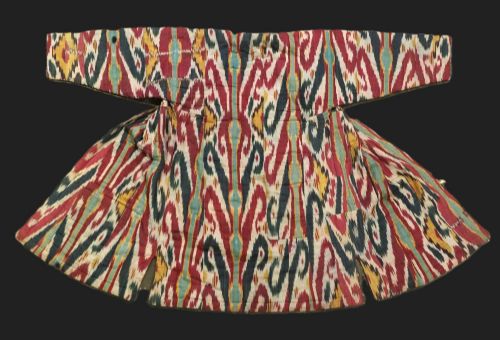
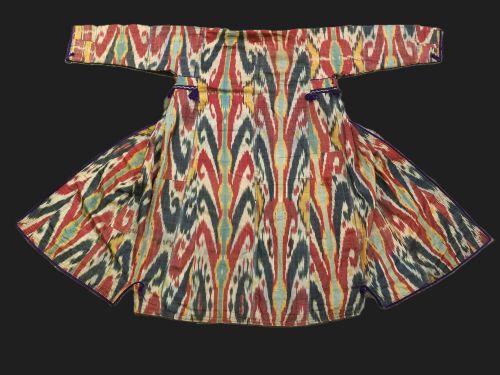
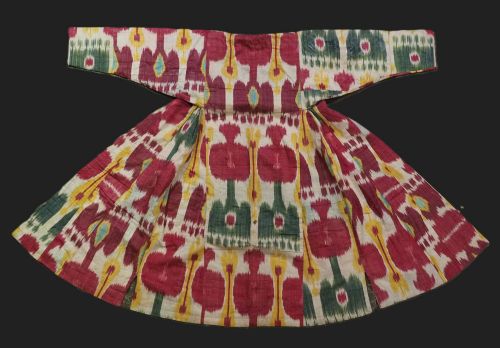
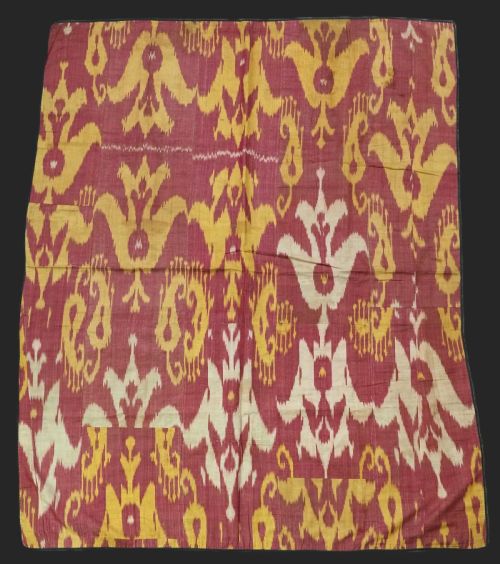
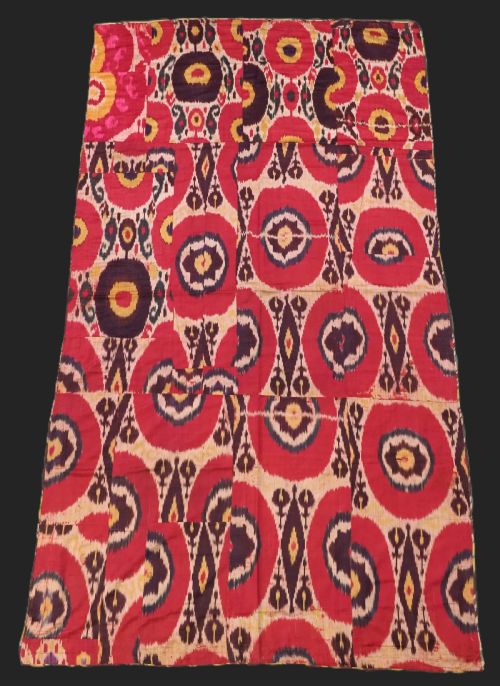
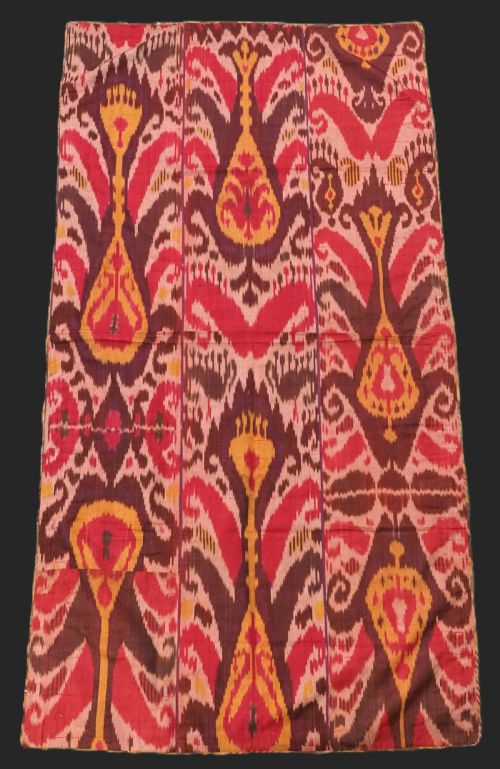
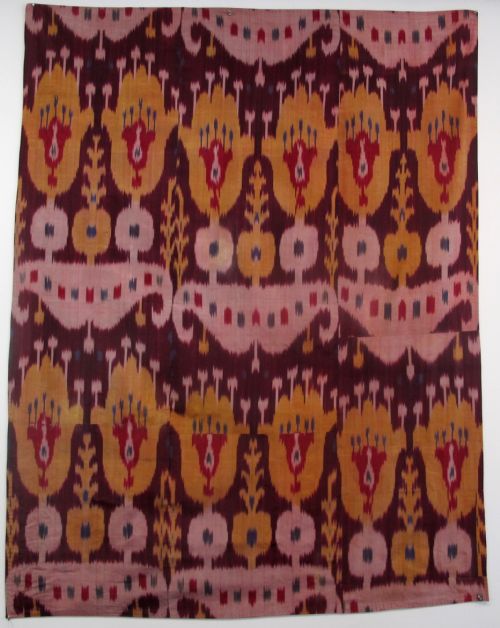
A silk ikat textile comprises traditional Central Asian wall hangings, fabric panels, and garments such as gentlemen's coats and purses. These pieces originate from Uzbekistan, specifically regions like Bukhara and Samarkand, dating from the late nineteenth century.
Buyers most frequently encounter fabric panels and coats including the traditional khalat and chapan styles on this page. These textiles display distinct ethnic patterns originating from nineteenth century Central Asian traditions.
The objects vary from large decorative wall panels down to smaller personal items like double-sided purses. Each piece demonstrates the traditional textile art and clothing forms of the region.
How they were made
These textiles utilise silk and semi-silk adras materials combined with cotton. Artisans created the distinct patterns through resist-dyeing the threads before weaving the cloth.
Coats such as the chapan were quilted and padded for winter use, incorporating structural stitching alongside the woven cloth. Certain panels also incorporate glass beads within their material composition.
Silk Ikat Textile Retail Price Guide 2026
Typical asking prices for silk ikat textile among the pieces listed under this phrase on Sellingantiques today, from the lower quarter to the upper quarter. They describe what is for sale here now, not the wider market.
Current listings feature textiles and garments originating from Uzbekistan, specifically dated across the 1880s, 1890s, and circa 1900.
What varies in quality
The complexity of the resist-dyed patterns and the crispness of the colour boundaries separate standard work from finer examples. Precision in the alignment of the design during weaving defines the upper tier of these pieces.
The condition of the silk pile, the integrity of the cotton or adras backing, and the survival of original padding in garments influence the overall character of each textile.
The Silk Ikat Textile Glossary
- Ikat
- A dyeing and weaving technique where threads are resist-dyed before being set on the loom to create characteristic feathered pattern edges. This method produces the distinctive blurred motifs seen across Central Asian textile art.
- Adras
- A traditional fabric woven from a mixture of silk and cotton yarns. This material provides durability while retaining a characteristic sheen.
- Khalat
- A traditional long, loose-fitting gentleman's coat worn across Central Asia. These garments showcase large-scale ikat patterns across their length.
- Chapan
- A quilted and padded outer coat designed for winter use. These heavier garments provide structural warmth in addition to decorative textile patterns.
- Becasab
- A specific type of striped or patterned fabric used in traditional garments. It appears in regional coat construction from nineteenth century workshops.
Silk Ikat Textile: Frequently Asked Questions
How do I hang a textile panel?
Fabric panels require careful mounting to distribute their weight evenly across the textile without damaging the silk fibres. Professional conservation framing or a sleeved hanging system protects the structural integrity of the piece.
Direct exposure to bright sunlight should be avoided to prevent the natural dyes from fading over time. Placing the textile away from direct heat sources maintains the condition of the historic silk and cotton materials.
What is a khalat coat?
A khalat is a traditional men's coat worn across Central Asia during the nineteenth century. These garments feature flowing lines and open fronts designed to be layered over other clothing.
Tailored from bold ikat fabrics, they functioned as status garments and daily wear in regions like Bukhara and Samarkand. Surviving examples demonstrate the peak of regional tailoring and textile design.
How do I date these textiles?
Dating relies on stylistic analysis of the ikat patterns, the specific weave structure, and the combination of silk and cotton yarns. Pieces from the late nineteenth century exhibit distinct regional dye palettes and organic mordants.
Comparative study of surviving garments and panels from Uzbekistan establishes the approximate decades of production. Examination of the backing materials and stitching methods provides further chronological context.
Can I wear an antique coat?
Antique coats from the nineteenth century are delicate historical artefacts with fragile silk and cotton structures. Regular wear places physical stress on the antique threads and historical stitching.
Most collectors choose to preserve these garments through careful display rather than daily use. Gentle handling ensures the textile art remains intact for future study.