


Silk Floral Needlework Panel
A silk floral needlework panel brings vibrant botanical motifs and centuries of textile skill directly into a room.
Silk Floral Needlework Panel
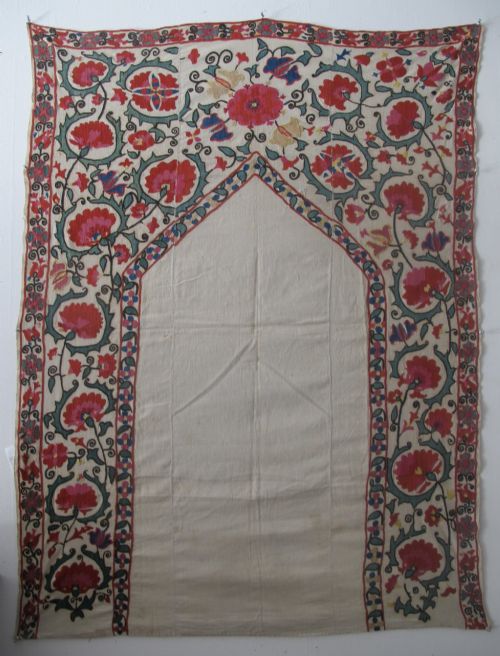
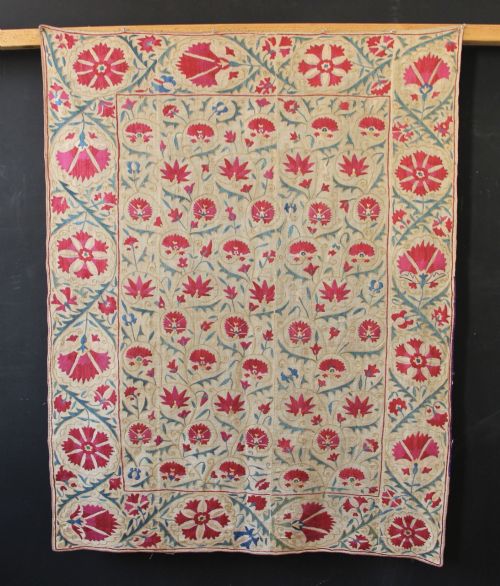
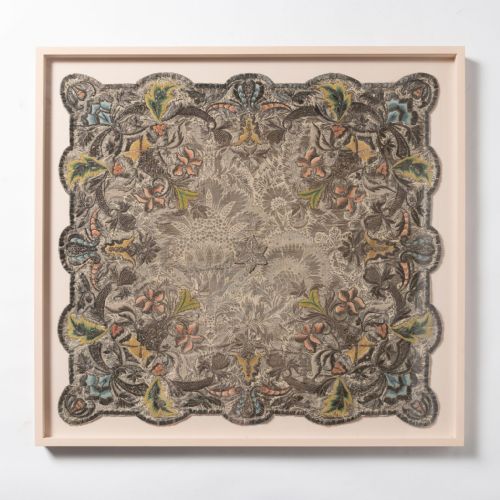
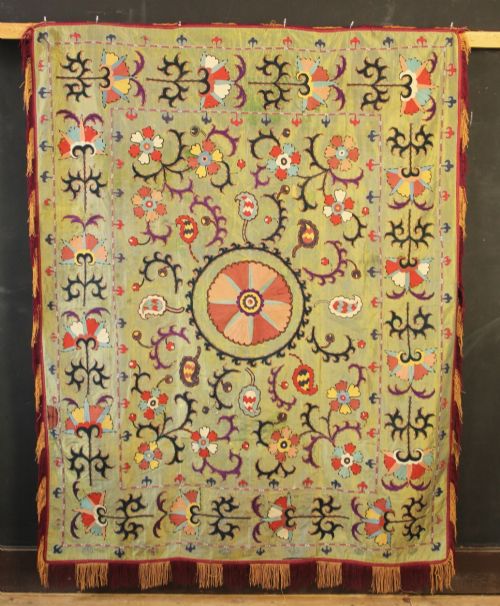
A silk floral needlework panel represents a diverse range of historic textile traditions, spanning European needlework pictures, Persian embroideries and Central Asian suzanis. These pieces function primarily as wall art, wall hangings and framed textiles, bringing intricate plant and floral designs into domestic interiors.
Buyers encountering this page will frequently meet Central Asian suzanis alongside English needlework panels and French silk embroideries. The selection encompasses diverse origins including Uzbekistan, Persia, China and Europe, capturing centuries of decorative needlework.
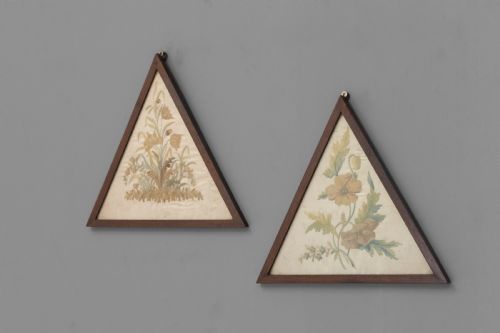
The objects take various forms, from large embroidered covers and prayer formats to small mounted panels and framed needlework pictures. They bridge the gap between utilitarian textile crafts and fine decorative art.
How they were made
Makers utilised fine materials including silk thread, cotton, linen, wool and felt to construct these panels. Ground fabrics often consist of sturdy woven cotton or felt, providing a stable foundation for dense silk embroidery.
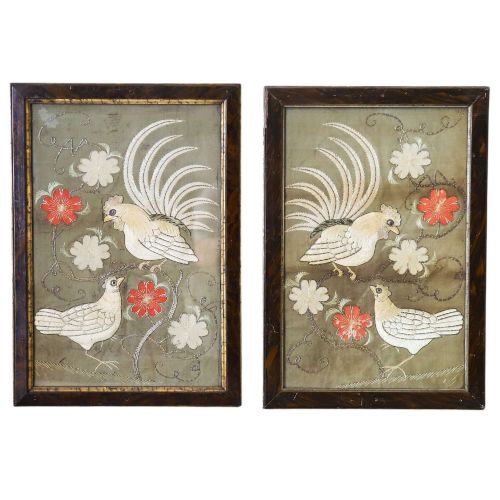
Techniques range from intricate needlework pictures to complex applique work and traditional embroidery. Artisans stitched floral medallions, garden birds and botanical motifs by hand onto the ground fabrics.
Several panels proudly display domestic poultry, featuring embroidered cockerels, hens and mandarin ducks keeping watch over the floral fields.
What varies in quality
Quality depends heavily on the precision of the needlework and the complexity of the design. Finer panels exhibit meticulous stitch work and sophisticated composition within the floral motifs.
The condition of the ground fabric and the vibrancy of the surviving silk threads influence the overall integrity of the piece. Superior examples maintain intact foundations and clear, harmonious colour relationships.
The Silk Floral Needlework Panel Glossary
- Suzani
- A type of embroidered tribal textile originating from Central Asia, typically featuring bold floral designs worked in silk thread on a cotton or linen ground.
- Applique work
- A sewing technique where pieces of fabric are attached to a larger background material to form a pattern or design.
- Needlework picture
- A framed textile artwork created using various embroidery stitches on canvas or linen, common in European decorative traditions.
- Ground
- The underlying fabric or material upon which an embroidery or needlework pattern is stitched.
- Sampler
- A piece of needlework demonstrating various stitches and patterns, traditionally produced to practice and showcase skill.
Silk Floral Needlework Panel: Frequently Asked Questions
How should I hang a delicate textile panel?
Mount the textile carefully behind glass or utilise a professional framing method that avoids puncturing the fabric. Ensure the piece hangs away from direct sunlight to protect delicate silk threads.
Regular rotation and stable indoor humidity levels help preserve the integrity of older cotton and wool grounds.
What is the difference between a suzan and a needlework picture?
Suzanis originate from Central Asia and typically display large scale botanical motifs worked in silk on cotton or linen. European needlework pictures often present framed pictorial scenes influenced by classical or baroque tastes.
Both forms utilise fine silk threads but serve different decorative and cultural traditions.
Can these panels be cleaned safely?
Professional textile conservation is recommended for any cleaning or maintenance of antique panels. Household washing methods risk damaging fragile silk threads and historic ground fabrics.
Surface dust can be gently removed with very low suction through a protective mesh screen.
How do I identify the origin of an embroidery?
Examine the choice of ground fabric, stitch types and characteristic floral motifs such as medallions or garden birds. Persian Rasht embroideries often utilise felt grounds, while Uzbek suzanis frequently feature cotton foundations.
Regional colour palettes also provide strong indicators of geographic provenance.