




Signed Scottish Watercolour Painting
A signed scottish watercolour painting brings the lochs, moors and historic streets of the north directly into a room with delicate brushwork and authentic signatures.

Signed Scottish Watercolour Painting
When you search for a signed scottish watercolour painting, you encounter original works on paper capturing landscapes, coastal scenes and town views from the nineteenth and twentieth centuries. These pieces reflect the distinct character of the Scottish School, moving from Victorian romanticism towards mid-century modernism.
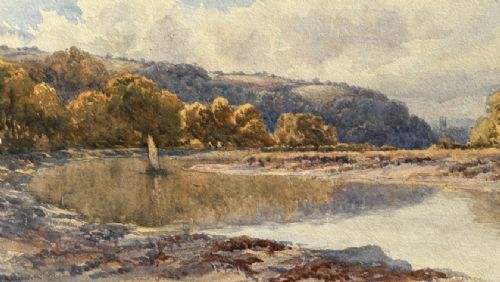
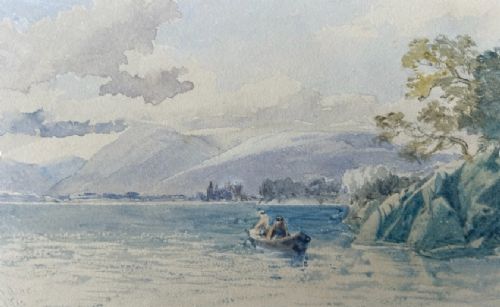
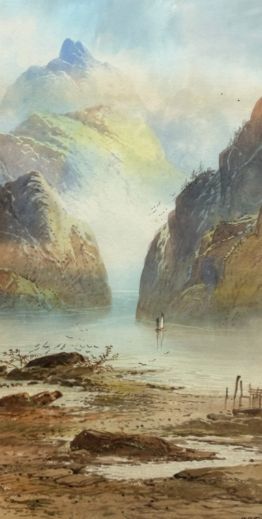
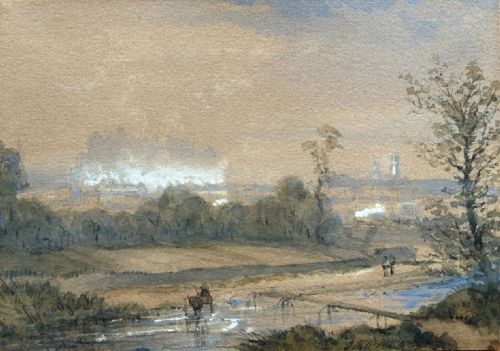
The most common examples on this page date from the late nineteenth and early twentieth centuries, often depicting Highland lochs, cattle or mountain ranges under atmospheric skies. Signed by recorded artists and frequently housed behind glass in period gilt wood frames, these watercolours provide a direct link to historical Scottish art.
Materials and Method
Artists utilised watercolour pigment and paint applied to heavy paper surfaces, often building up translucent washes to capture the changing light over Scottish landscapes. Many of these works employ gouache highlights to add opacity and fine detail to water, foliage and distant peaks.
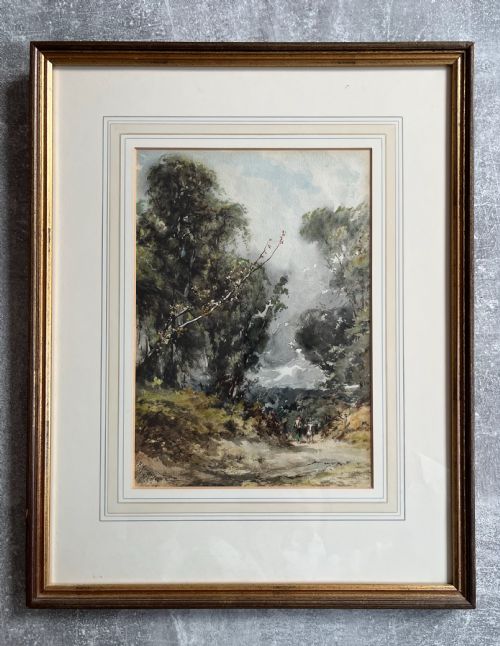
Presentation played an important role in the finished piece, with works typically protected beneath glass and mounted within decorative wood and gold leaf frames that complemented the tonal range of the painting.
The listings combine nineteenth-century Victorian landscapes with twentieth-century modernist works, all executed on paper using watercolour and gold leaf frames.
Distinctions in Quality
The hierarchy of these works rests upon the confidence of the brushwork and the artist's ability to render the specific atmospheric conditions of the Scottish terrain. Superior examples demonstrate a sure hand in capturing transient effects of light and weather rather than relying on stiff formulaic composition.
Condition and presentation further elevate a piece, particularly when a watercolour retains its original gilt wood frame and remains free from heavy fading or foxing across the paper surface.
David Law·Thomas Miles Richardson Jnr·William Henry Earp·Robert Buchan Nisbet·Herbert Moxon Cook·Waller Hugh Paton·John MacLauchlan Milne·James Orrock
The Signed Scottish Watercolour Painting Glossary
- Watercolour
- A painting method in which the paints are made of pigments suspended in a water-based solution. The paper itself often serves as the white light source for the transparent washes.
- Gouache
- An opaque water-based paint method that creates solid blocks of colour and fine highlights. Artists utilised this alongside transparent watercolour to add depth to clouds and water.
- Gilt wood
- Wood coated with a thin layer of gold leaf or metallic gilt paint. These frames protect the works on paper from environmental damage while providing a traditional decorative border.
- Scottish School
- A collective term for artists working in Scotland or influenced by its distinct landscape traditions over successive centuries. The grouping includes nineteenth-century landscape painters and later modernists.
- Foxing
- Small brownish spots caused by chemical reactions within older paper over time. Collectors look for sheets where these age marks remain minimal and outside the main focal areas of the image.
Signed Scottish Watercolour Painting: Frequently Asked Questions
How do I hang antique watercolours safely?
Keep works on paper away from direct sunlight to prevent the watercolour pigments from fading over time. Position them on interior walls where temperature and humidity remain relatively stable.
Ensure the frame is hung securely using appropriate fixings for your wall type. Glass protection helps shield the delicate paper surface from household dust and atmospheric moisture.
Are these paintings all original works?
Every piece recorded here is an original hand-painted work on paper rather than a mechanical print or reproduction. Artists applied pigment directly by hand, making each composition unique.
Signatures or monograms appear on the face of the works or within the margins, identifying the individual hand behind the painting.
What subjects appear most often?
Scottish landscapes dominate the selections, featuring Highland lochs, mountain ranges, coastal seascapes and historic street views. Cattle, shepherds and fishermen frequently populate the foregrounds of nineteenth-century pieces.
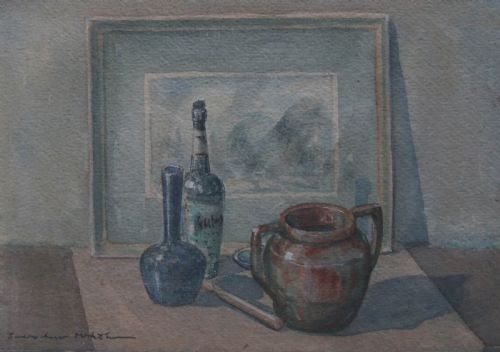
Later works shift towards modernist interpretations of Scottish towns and still life arrangements while maintaining the focus on paper as a medium.
How do I identify the period of a piece?
Stylistic clues within the painting offer the clearest indication of date, moving from detailed Victorian naturalism to looser twentieth-century compositions. Framing materials and paper types also correspond to the era in which the artist worked.
Artist biographical dates, when known, provide a reliable bracket for when a specific landscape was executed.