


Scottish Maritime Wall Art
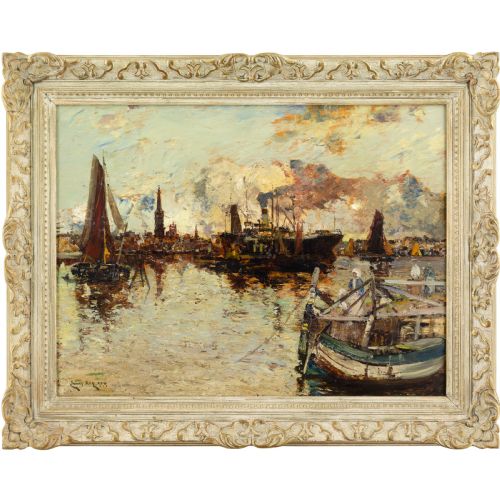
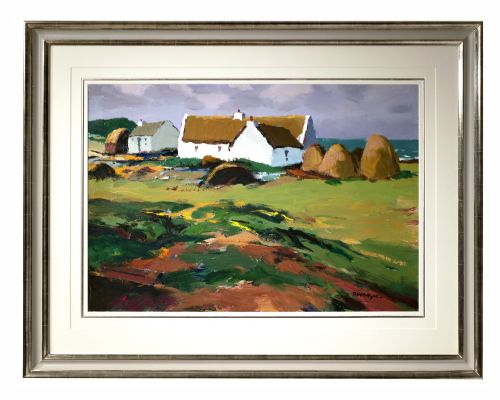
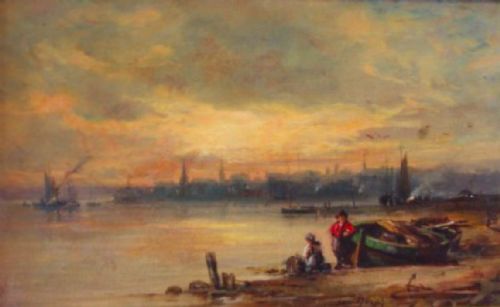
These pieces of scottish maritime wall art capture coastal life and open waters through oil paint and watercolour.

Scottish Maritime Wall Art
Scottish maritime wall art encompasses paintings and watercolours depicting ships, coastal settlements, and sea views connected to Scotland. These works range from Victorian marine art to twentieth-century Modern British interpretations.
The pieces on this page typically feature canvas, wood, paper, and glass framing oil paint or watercolour scenes. Subjects span specific locations such as the Firth of Forth, Loch Lomond, and Leith at Sunset.
Buyers encounter works produced across various periods, notably the nineteenth century, Victorian era, and decades through the mid-twentieth century. Styles include Scottish School, Impressionism, and British Impressionism.
How they were made
Artists utilised oil paint applied to canvas, board, or wood panels, building rich textures for coastal scenes. Others employed watercolour on paper to capture the atmospheric light of Scottish lochs and shores.
Framing often involved gilt wood and gold leaf, complementing the traditional marine subjects and protecting the painted or watercoloured surfaces.
Listings feature works spanning the nineteenth century, Victorian era, 1910, 1950, and 1960, utilising oil paint, watercolour, canvas, and gilt wood.
What varies in quality
Quality rests upon the artist's handling of light, water, and atmospheric conditions, alongside the precision of maritime architecture in the depiction of vessels. Works by established named painters demonstrate superior brushwork and compositional depth compared to anonymous regional outputs.
The preservation of the original medium, whether oil on canvas or watercolour on paper, influences the visual impact. Intact period frames, including gilt wood and gold leaf surrounds, contribute positively to the overall integrity.
James Kay RSW·Donald McIntyre·Stanley Orchart·Richard Ball Spencer·Samuel Bough RSA
The Scottish Maritime Wall Art Glossary
- Marine Art
- Artwork that depicts or draws its main inspiration from the sea, ships, and coastal views. This genre includes both historical vessel portraits and broader coastal landscapes.
- Oil on Canvas
- Pigment mixed with drying oil applied to a stretched fabric surface. This medium allows for deep colour saturation and textured brushwork.
- Watercolour
- Paint consisting of colour pigments suspended in a water-soluble vehicle, typically applied to paper. It produces transparent washes ideal for capturing subtle light on water.
- Gilt Wood
- Wood that has been coated with a thin layer of gold leaf or gilt powder. It provides a decorative and protective border for traditional paintings.
- Scottish School
- A grouping of artists working in Scotland or sharing distinct regional artistic traditions. Their output reflects local landscapes, light, and maritime subjects.
Scottish Maritime Wall Art: Frequently Asked Questions
What periods do these pieces cover?
The works span from the Victorian era and nineteenth century through to mid-twentieth-century Modern British movements. Artists recorded coastal scenes across these shifting decades.
Each period brings distinct stylistic approaches, moving from detailed Victorian marine art towards impressionistic interpretations of Scottish waters.
What materials were used?
Makers employed oil paint and watercolour applied to canvas, board, paper, and wood supports. Many works retain their original gilt wood and gold leaf frames.
These traditional materials ensure the sustained vibrancy of the coastal scenes and maritime subjects across the centuries.
How do I hang coastal art?
Position these works at eye level in spaces with controlled lighting to protect the delicate watercolours or oil surfaces from direct sunlight. Ensure heavy gilt frames are secured with appropriate wall fixings.
Pairing these maritime scenes with simple interior backgrounds allows the historic frames and painted details to remain the focal point.
How do I identify different styles?
Victorian marine pieces tend to focus sharply on vessel rigging and specific ships, while Scottish School and impressionistic works prioritise atmosphere and coastal light. Examining the brushwork reveals whether the artist favored tight realism or looser expression.
Signature styles often align with the active dates of the painters, helping to distinguish nineteenth-century works from later twentieth-century interpretations.