







Framed Coastal Scene Watercolour
A framed coastal scene watercolour brings the salt air and movement of 19th-century and early 20th-century harbours directly onto the wall.

Framed Coastal Scene Watercolour
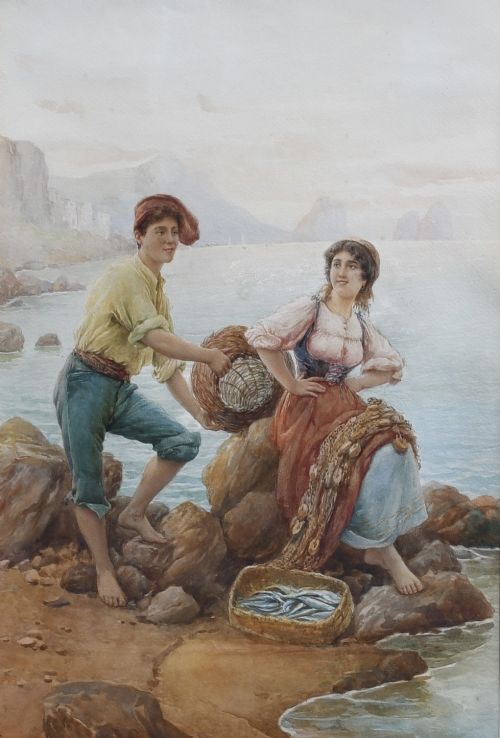
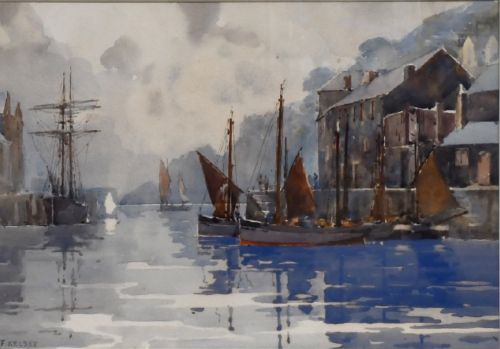
A framed coastal scene watercolour captures maritime life, fishing ports, and rolling tides from the Victorian era through to the mid-20th century. Buyers encounter depictions of bustling Cornish harbours, quiet Dutch quays, and sunlit Mediterranean shores executed by regional and internationally recognised painters.
The works on this page span British Impressionism, Victorian Maritime, and Modern British movements, reflecting the shifting tastes in landscape recording over several decades. Most examples preserve the original atmosphere of working ports and tranquil inlets using traditional pigment on paper.
Framed watercolours from this selection range from intimate local sketches of Devon and Yorkshire to expansive views of Venetian canals and North Sea havens. Each piece offers a direct window into historical coastal communities through the specific lens of the artist's eye.
How they were made
Artists built these coastal compositions using watercolour pigments applied to paper, often combining gouache for opaque highlights and added depth on restless seas. The translucent washes allowed natural light from the paper surface to illuminate breaking waves, clouds, and sandy shores.
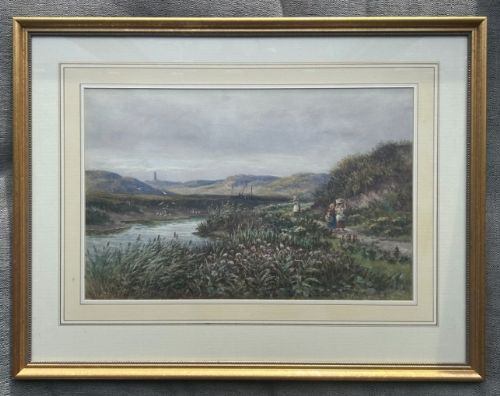
Protection from the elements came from period enclosures featuring wood, gilt frames, or ebonised surrounds set behind glass to shield the delicate pigments. Many pieces retain their original mountings, framing the delicate brushwork and preserving the paper from atmospheric damage.
Regional depictions focus heavily on British and European harbours, including St Ives, Whitby, Venice, and the French Riviera.
What varies in quality
Quality rests upon the artist's command of light, shadow, and maritime atmosphere, distinguishing masterly depictions of moving water from static illustrations. The handling of pigment opacity and the sureness of the initial pencil work dictate the visual energy of the scene.
The integrity of the framing materials also influences the piece, with period gilt wood or hand-enamelled surrounds adding context that inferior modern replacements lack. Preservation of the underlying paper without heavy foxing or fading secures the enduring impact of the work.
Thomas Bush Hardy·William Russell Flint·Paul Delvaux·James Orrock·Ernest F. Hill
The Framed Coastal Scene Watercolour Glossary
- Gouache
- An opaque water-soluble paint often used alongside watercolour to create solid highlights and dense colour areas. It gives artists the ability to introduce bright whites and heavy opaque tones into marine skies.
- Wash
- A thin, fluid application of watercolour pigment spread evenly across the paper to create expansive areas of sky or sea. Painters build atmosphere by layering multiple translucent washes.
- Foxing
- Small brownish spots caused by chemical reactions in older paper over time. It appears frequently on antique works due to dampness or fluctuating humidity.
- Lugger
- A traditional small fishing boat with one or two masts carrying lug sails, commonly seen in West Country maritime watercolours. These vessels populate many historical scenes along the coasts of Cornwall and Devon.
Framed Coastal Scene Watercolour: Frequently Asked Questions
How do I date an antique coastal watercolour?
Dating relies on observable clues such as artist signatures, costume styles of figures on the shore, and the rigging of depicted vessels. Period framing styles also offer helpful chronological markers.
Paper stock and handwriting on the reverse frequently provide additional verification for pieces originating between the Victorian period and the mid-20th century.
Where should I hang a framed watercolour?
Watercolours require placement away from direct, strong sunlight to prevent the pigments from fading over time. Stable indoor humidity levels protect both the paper support and the wooden frame.
Positioning the artwork at eye level in a room with gentle ambient light allows the subtle washes and fine details to be fully appreciated.
Are these watercolours original paintings?
The selections consist of hand-painted original works on paper rather than mechanical reproductions or prints. Each piece displays unique brushstrokes and the distinct texture of pigment applied directly to the sheet.
Close inspection under magnification reveals the individual pooling of water and pigment characteristic of authentic historical painting.
What framing is typical for these pieces?
Many examples retain their period wood, gilt, or ebonised frames behind glass, which protects the fragile paper surface from dust and handling. Some feature decorative elements such as hand-enamelled polychrome surrounds.
Original frames contribute significantly to the historical context and overall presentation of antique watercolours.