



Signed Marble Bust
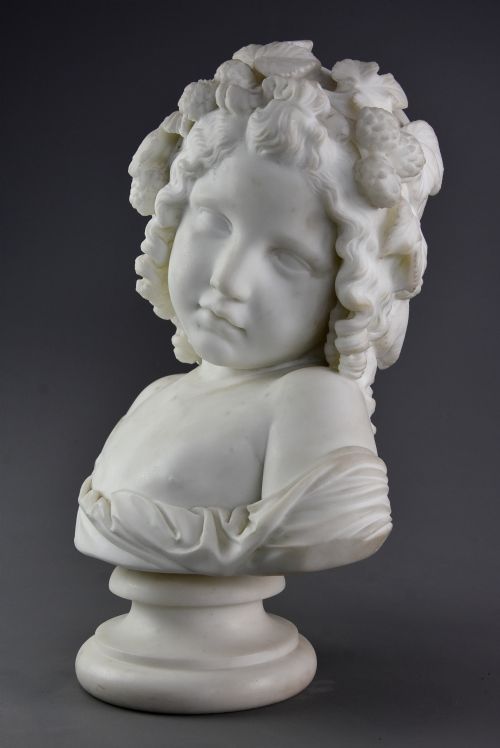
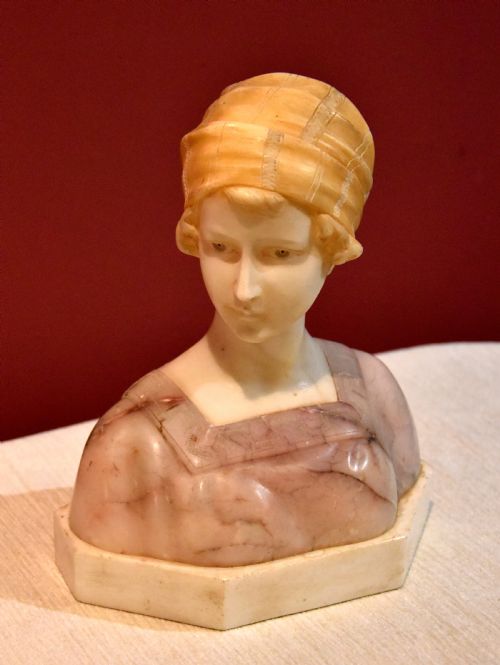
These signed marble bust examples capture portraiture and classical figures in stone, offering collectors a chance to acquire carved likenesses bearing the maker's hand.
Signed Marble Bust
A signed marble bust brings sculpted portraits and mythological figures into an interior space, drawing on centuries of classical and academic tradition. When searching for a signed marble bust, buyers encounter works ranging from early nineteenth-century portraits to later Art Nouveau representations.
The pieces appearing here include depictions of young girls, historical figures such as James Loch MP, and classical deities like Diana the Huntress and Ceres. Sculptors executed these works in various scales, from cabinet pieces to life-size portraits set on columns or pedestals.
Origins span British and continental European workshops, with French and Italian carvers strongly represented. Materials frequently combine white Carrara marble or alabaster with bronze or contrasting marble bases.
How carvers shaped stone and metal
Makers shaped a signed marble bust using blocks of white marble, Carrara marble, and alabaster, employing chisels, rasps, and drills to achieve lifelike flesh and drapery. Sculptors sometimes combined these stones with cast bronze elements and ormolu mounts.
Portoro marble and onyx occasionally formed the supporting bases for mixed-media compositions. Carvers incised or carved their signatures directly into the stone or onto attached bronze plaques to mark their authorship.
At least one young girl immortalised in stone appears alongside representations of Roman goddesses and Scottish members of parliament.
What separates fine carving from standard work
Quality in a signed marble bust rests on the precision of the facial expression, the undercut of the hair, and the natural fall of cloth or veiling. Finer sculptures display subtle transitions in texture between polished skin and rough-hewn elements.
The presence of a known signature by an established academic or continental sculptor elevates a piece significantly. Selection of superior stone blocks, free from distracting flaws, also defines the upper tier of these works.
Auguste Henri Carli·Alajos Strobl·E. Laurent·Giuseppe Carnevale·William Brodie
The Signed Marble Bust Glossary
- Alabaster
- A fine-grained stone used for carving, softer than marble and possessing a natural translucency. Sculptors utilised it frequently for female busts and figures requiring a warm surface quality.
- Neoclassical
- A style originating in the mid-eighteenth century inspired by the art of ancient Greece and Rome. Works in this manner emphasise clean lines, classical drapery, and noble subjects.
- Art Nouveau
- An international style prominent around nineteen-ten, characterised by organic forms, flowing lines, and depictions of women with long, cascading hair.
- Ormolu
- Gilded bronze mounts applied to furniture, bases, or sculptures. The technique involves coating bronze in a mercury-gold amalgam to produce a rich golden finish.
Signed Marble Bust: Frequently Asked Questions
How do I identify the signature on a bust?
Signatures are typically incised into the back, side, or shoulder truncation of the marble or bronze. Makers sometimes used cursive script or block lettering accompanied by dates or location names.
Examining the lettering under a strong oblique light helps reveal faint signatures carved into white marble or alabaster surfaces.
Where should I display a marble bust?
These sculptures require sturdy furniture or dedicated stone columns capable of supporting considerable weight. Placing them away from direct heat sources and sunlight protects the stone and any applied bronze elements.
Positioning a bust at eye level allows the viewer to appreciate the facial modeling and carving detail intended by the sculptor.
How do I clean marble and alabaster safely?
Dusting with a soft, dry microfiber cloth removes everyday surface particles without risking abrasion. Water and liquid cleaners should be avoided, particularly on alabaster which is porous and water-sensitive.
Professional conservators should handle stubborn staining or structural repairs to prevent permanent damage to the carved surface.
What is the difference between marble and alabaster?
Marble is a metamorphic rock formed from limestone, offering high hardness and durability. Alabaster is a softer mineral compound that transmits light more readily due to its inherent translucency.
Carvers utilised alabaster for smaller or more delicate indoor sculptures, while durable marbles suited both interior and monumental works.