




Signed Italian Sculpture
Signed Italian sculpture brings the hand of the maker directly into the room through carved stone and cast bronze.
Signed Italian Sculpture
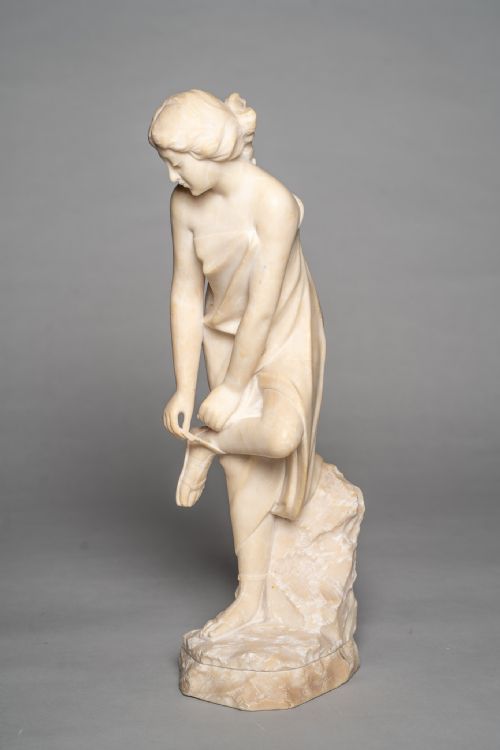
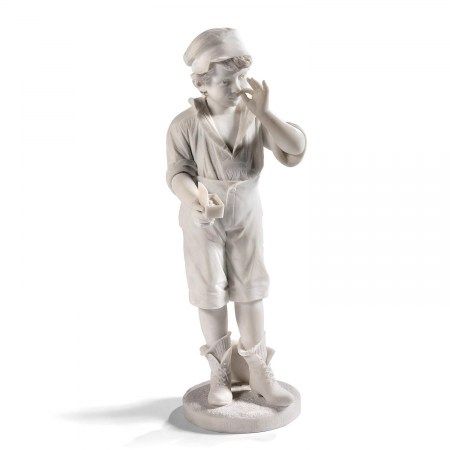
When you search for signed Italian sculpture, you encounter works spanning the nineteenth and twentieth centuries, executed in marble, alabaster, bronze, and wood.
The objects take many forms, from grand busts of Diana the Huntress and young boys to full-length figures such as oriental dancers, bathing females, and animal studies.
You meet pieces representing periods from nineteenth-century realism and neoclassical traditions through to Art Nouveau, Art Deco, and mid-century modernism.
Materials and construction methods
Carved stone works utilise white marble, Carrara marble, and two-toned alabaster, shaped by hand to create figures, drapery, and hair.
Metal sculptures rely on bronze and silver, cast using traditional foundry methods and often finished with patination or mounted on portoro marble and granite bases.
A silver model of a lion fish proves that Italian sculptors found inspiration below the waves as well as in classical mythology.
Markers of distinction
Quality rests in the sensitivity of the carving and the crispness of the bronze casting, where delicate details like fingers, facial expressions, and clothing folds remain sharp.
The choice of material elevates a piece, particularly where sculptors select high-grade Carrara marble or combine contrasting alabaster and bronze elements.
Luigi Secchi·R. Mattei·Eduardo Giolli·P. Della Vedova·Mario Bucellati·Ferdinando Vichi·A. Cipriani
The Signed Italian Sculpture Glossary
- Alabaster
- A soft stone used for carving intricate figures and decorative objects. It often exhibits a translucent quality that catches the light.
- Carrara marble
- A fine-grained white or blue-grey marble quarried in Tuscany. Sculptors have favoured this material for centuries due to its smooth texture.
- Patina
- The surface sheen or colour that develops on bronze over time through age or chemical treatment. It adds depth and character to cast metal.
- Écorché
- A figure drawn, painted, or sculpted to show the muscles of the body without skin. These studies assist in anatomical accuracy.
- Grand Tour
- The nineteenth-century practice of travelling through Europe for cultural study. Tourists acquired small bronzes and sculptures as souvenirs.
Signed Italian Sculpture: Frequently Asked Questions
How do I identify the signature on a marble sculpture?
Signatures are typically incised directly into the stone near the base of the figure during the carving process. Examining the lettering under a strong light helps distinguish a signature carved by the artist from later inscriptions.
Some makers applied metal plaques or signed the surrounding marble or bronze base rather than the main body of the work.
What is the difference between marble and alabaster sculptures?
Marble is a hard, crystalline metamorphic rock that withstands outdoor conditions and holds sharp details over long periods. Alabaster is a softer, gypsum-based stone that allows for a translucent, glowing finish.
Alabaster pieces require indoor display and careful dusting because the material is sensitive to moisture and scratching.
Where were these sculptures displayed in period homes?
Larger marble and bronze figures stood on pedestals in entrance halls or drawing rooms as focal points of interior decoration. Busts and smaller animal studies occupied mantelpieces, desks, and cabinet tops.
Grand tour bronzes and cabinet sculptures were frequently placed in studies or libraries for close inspection.
How do I care for a nineteenth-century bronze?
Dust bronze sculptures regularly with a soft, dry brush to prevent dirt accumulation in the recessed details. Avoid using water, soap, or household polishes, which can strip the original patination.
Occasional light application of microcrystalline wax helps protect the metal surface from atmospheric moisture.