


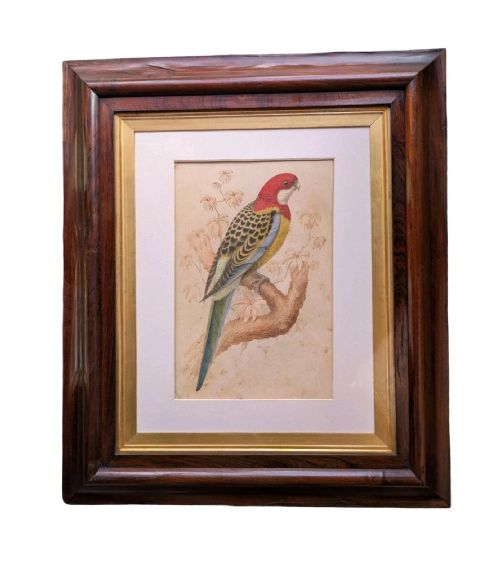
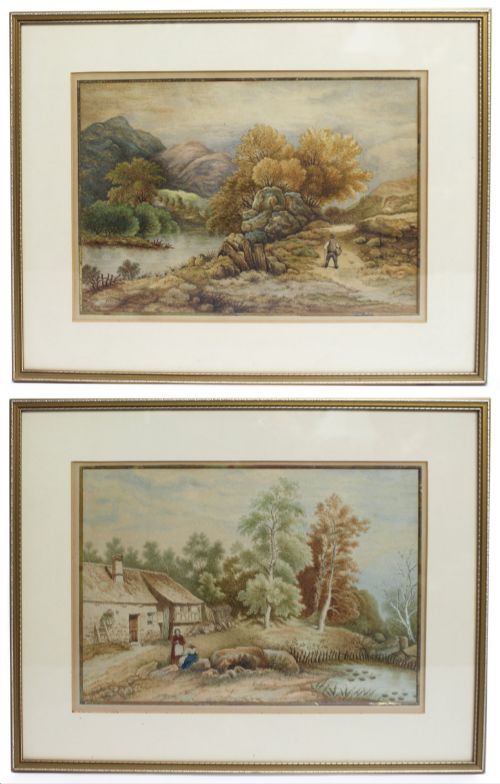
Signed 19th Century Watercolour
A signed 19th century watercolour brings the authentic touch of the Victorian artist's hand into a room through delicate washes and lasting paper.
Signed 19th Century Watercolour
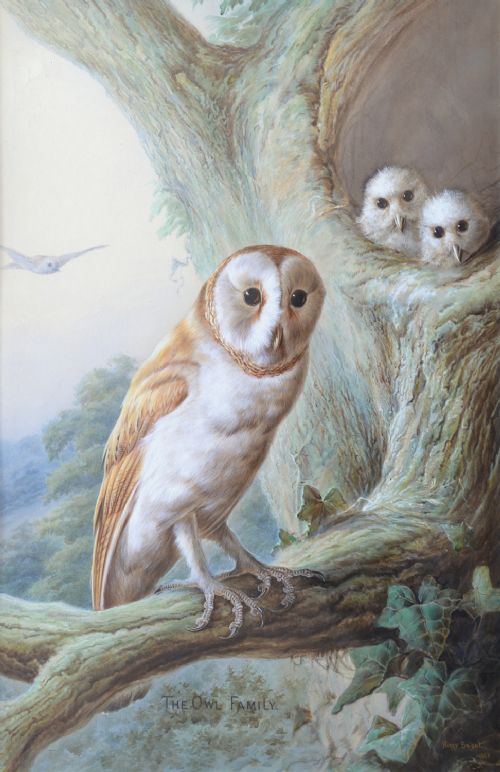
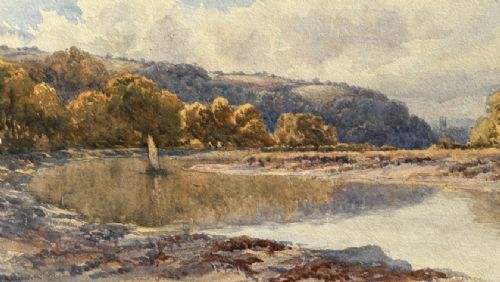
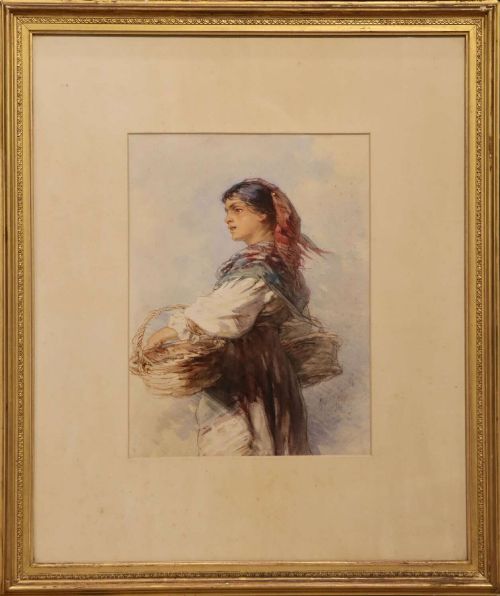
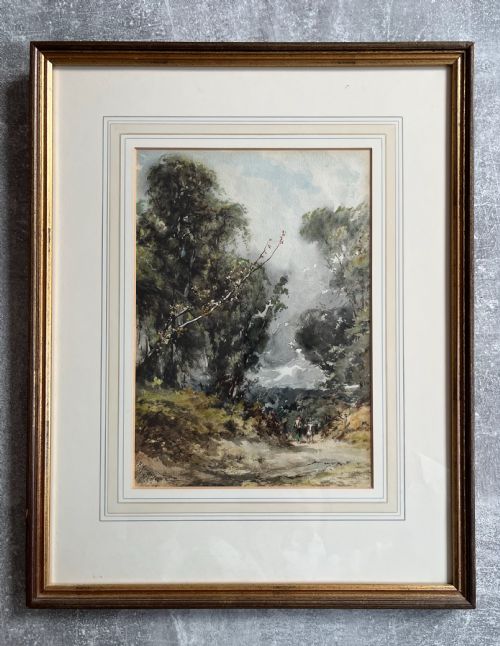
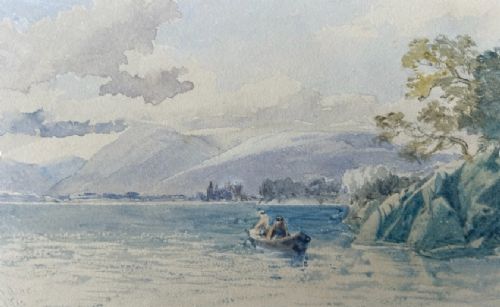
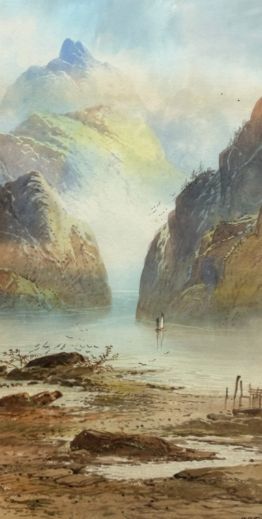
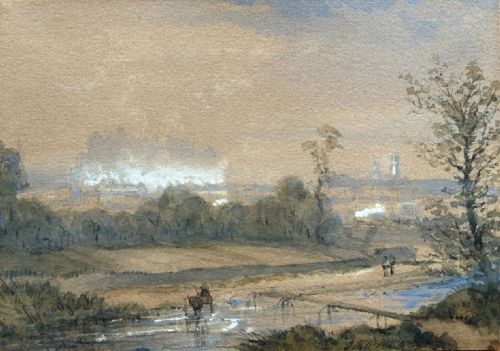
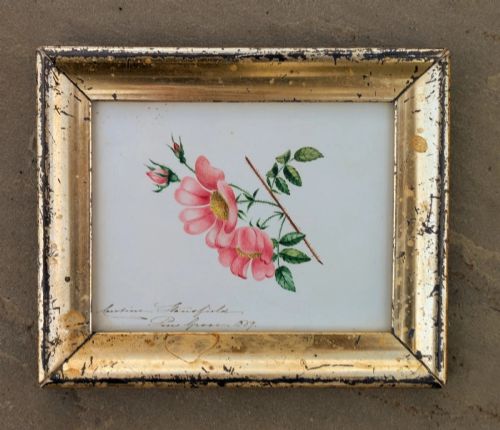
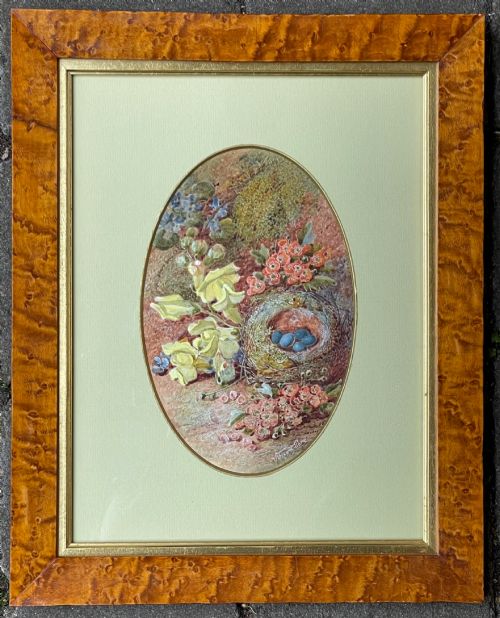
When searching for a signed 19th century watercolour, buyers encounter original works on paper capturing landscapes, coastal scenes, and portraits from the Victorian era. These pieces range from intimate miniature portraits dated in the 1840s to expansive depictions of Scottish lochs and Welsh valleys signed by professional practitioners of the period.
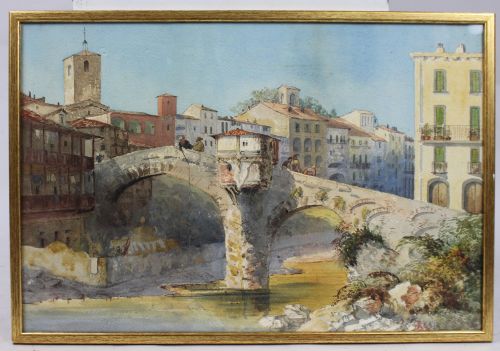
The selections span British and European subjects, including Italianate views, Dutch harbours, and quiet rural riversides. Many bear legible signatures, monograms, and dates spanning the decades from the 1830s through to the turn of the twentieth century.
How They Were Made
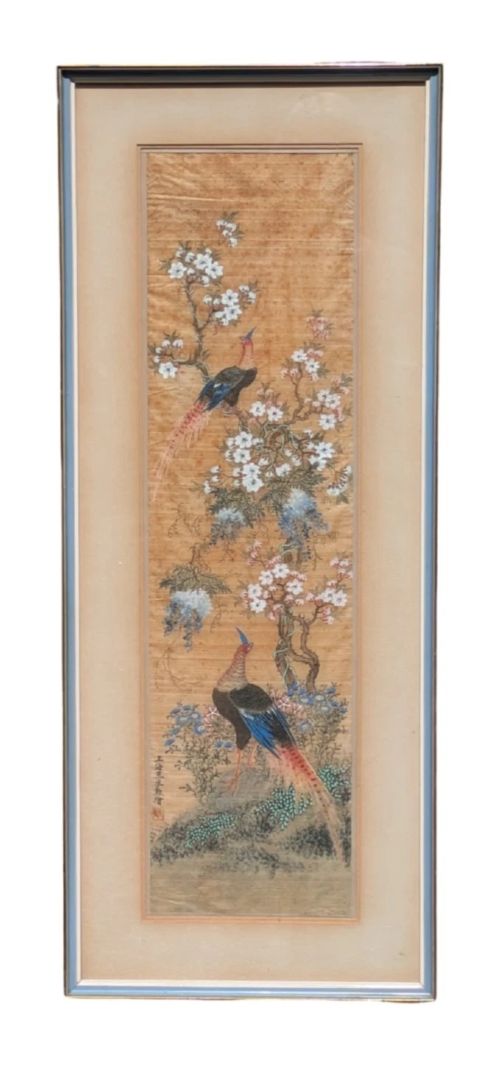
Artists of the period applied watercolour pigment onto heavy paper or silk using fine brushes, often combining transparent washes with bodycolour or pencil highlights to build depth. Works were frequently executed outdoors on location before being finished in the studio and mounted behind glass within period gilt wood frames.
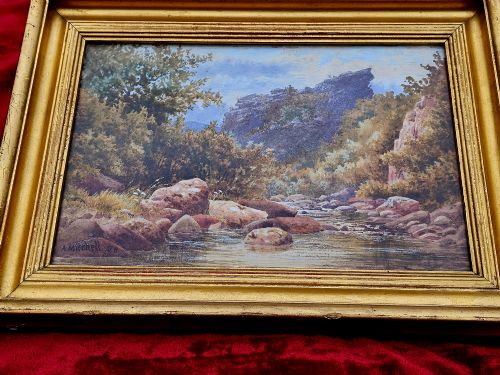
Support materials varied from standard artist papers to tinted sheets, while framing employed gold leaf wood mouldings that protected the delicate pigments from atmospheric damage over generations.
Listings feature paper, glass, and gilt wood combined in framed artworks dating across the nineteenth century.
What Varies In Quality
Quality rests upon the sureness of the brushwork, the precision of perspective, and the artist's ability to capture natural light and atmospheric conditions. Master hands achieved luminous skies and convincing water textures with minimal strokes, whereas lesser examples rely on heavy, flat applications of pigment.
The preservation of the paper and the vibrancy of the original watercolour paint also define the worth of a piece, as fading from sunlight alters the intended balance of the composition.
David Law·Guido Bach·George Fotherly Hargitt·Thomas Miles Richardson Jnr·James Orrock·William Henry Earp·John R Prentice·William Banks Fortescue·Vincent Clare·Th. Thibault·William Frederick Settle·Harry Wanless·Thomas Bush Hardy·F J Aldridge·Colin H Greenwood·Henry Bailey·John Syer·Henri Joseph Harpignies·Franz Knebel·Robert Buchan Nisbet·Kate E Booth·William Stephen Coleman·Thomas Woolnoth·Edmund Morris Wimperis·Grace Hastie
The Signed 19th Century Watercolour Glossary
- Watercolour
- A painting method where fine pigment is suspended in a water-soluble binder and applied to paper. This medium allows for transparent washes that let the reflective quality of the paper shine through.
- Monogram
- A motif made by overlapping or combining two or more letters to form a single symbol. Artists frequently used these initials to sign smaller or more intimate works.
- Gilt Wood
- Timber framing treated with a thin layer of gold leaf or gold paint. These decorative borders were standard for finishing fine art pieces of the period.
- Bodycolour
- Watercolour paint mixed with a white pigment to make it opaque. This technique adds solid highlights and dense areas of colour to a transparent wash painting.
- Provenance
- The chronological record of ownership tracing a piece back to its creation. Clear signatures and dates help establish this historical lineage.
Signed 19th Century Watercolour: Frequently Asked Questions
How do I care for antique watercolours?
Keep these works on paper away from direct sunlight to prevent the delicate pigments from fading over time. Display them in rooms with stable humidity and ensure they remain sealed behind glass.
Professional framing using acid-free mounts protects the paper integrity and preserves the original condition for future decades.
Were these paintings always framed?
Most finished pieces were framed soon after completion to protect the soft paper surface from dust and moisture damage. Period gilt wood frames often accompany the original artwork and complement the style of the era.
Original frames add historical context, though some pieces have been reframed by later owners to suit modern interiors.
How can I tell the date of a watercolour?
Many artists inscribed their signatures alongside a precise year directly onto the lower corner of the paper. When a date is absent, stylistic clues such as costume details, framing methods, and the type of paper provide a reliable timeframe.
Examine the reverse of the backing board for old handwritten labels or exhibition tags that record the history of the piece.
What subjects are most common?
British and European landscapes dominate the selection, featuring rivers, coastal fishing boats, and mountainous terrain. Architectural studies and pastoral scenes with figures also appear frequently among Victorian works.
Artists frequently travelled to record specific locations during the height of the Grand Tour and the expansion of railway travel.