
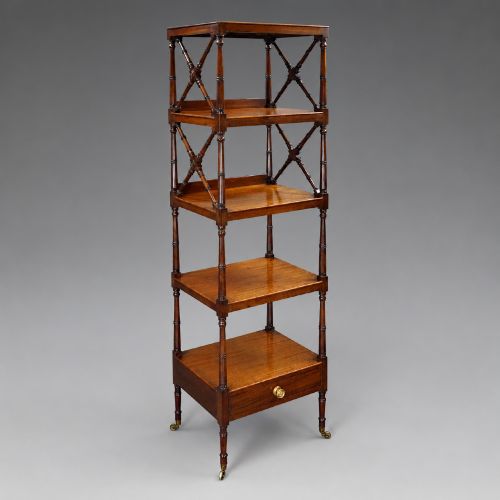
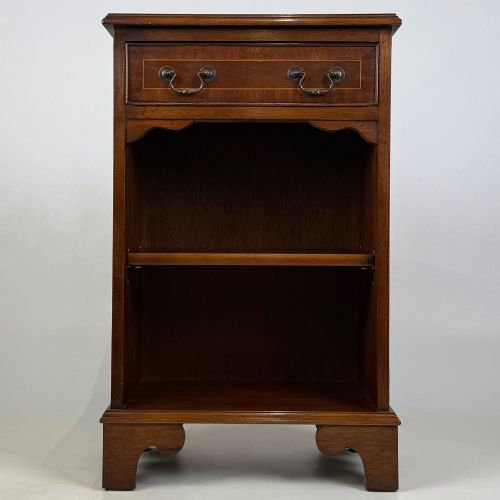
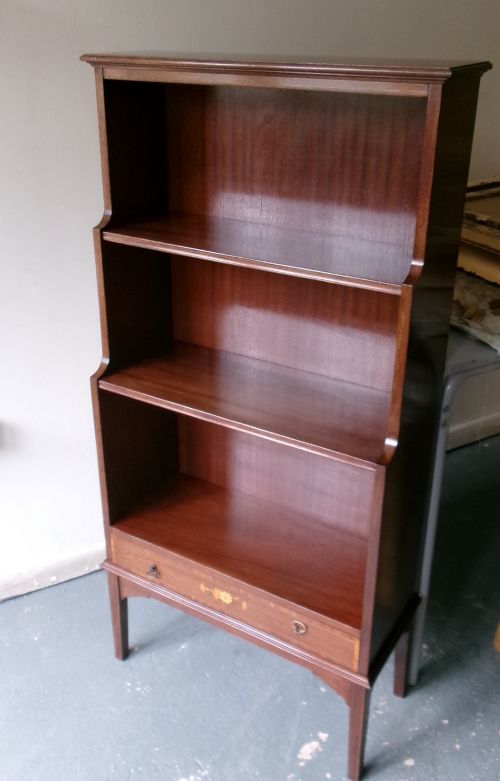


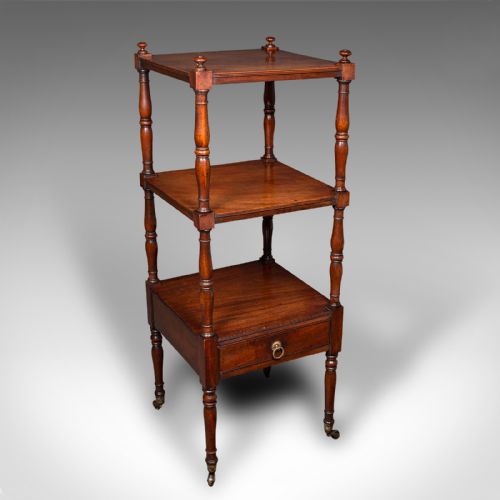

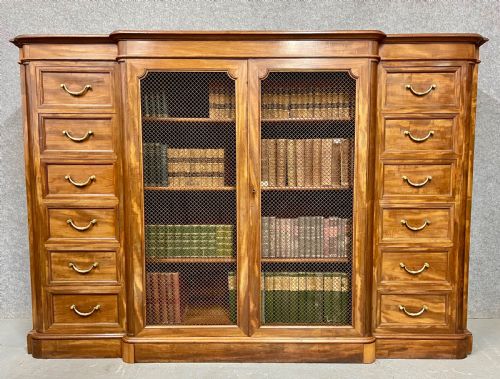

Side Drawer Bookcase
These side drawer bookcase pieces combine practical shelving with integrated drawer storage, offering a traditional solution for organising volumes.
Side Drawer Bookcase
A side drawer bookcase brings together open shelving or glazed cabinets with functional drawer compartments, serving multiple display and storage purposes. When you examine this selection, you encounter forms spanning the Georgian, Victorian, and Edwardian eras, alongside later revival styles.
The pieces on this page appear in various timber configurations, incorporating modular open tiers, music cabinets, and break-fronted formats. Makers combined these shelving units with lower or integrated drawers to house smaller items alongside book collections.
Materials and construction methods
Cabinetmakers utilised robust hardwoods including mahogany, walnut, and oak to build these frames, frequently applying flame mahogany veneer or satinwood inlay for decorative contrast. Timber selection dictated both the structural integrity and the visual grain pattern of the finished article.
Glass panels appeared in glazed display variants, while brass hardware served as handles and escutcheons on the drawer sections. Joinery techniques varied according to the period, supporting heavy shelving loads while maintaining refined proportions.
Assessing craftsmanship and execution
Superior examples demonstrate meticulous attention to timber selection, evidenced by matched veneer grains and precise inlay work. The execution of the joinery around the drawer frames and shelving tiers dictates the overall durability and visual balance of the piece.
Finer items exhibit well-proportioned cornices, harmonious hardware integration, and cabinetry that retains its structural rigidity over centuries of use. Lesser pieces show simpler construction details and less refined surface finishing.
The Side Drawer Bookcase Glossary
- Whatnot
- An open multi-tiered piece of furniture designed for displaying small objects or books. These freestanding stands feature several platforms supported by slender uprights.
- Chiffonier
- A low sideboard cabinet typically equipped with drawers and enclosed shelving below. This form evolved during the Georgian and Victorian periods to store household items.
- Flame Mahogany Veneer
- A thin slice of timber cut from the fork of a mahogany tree to create a distinctive flickering flame pattern. Cabinetmakers applied this decorative surface to drawer fronts and door panels.
- Break-Fronted
- A furniture configuration where the central section projects forward from the flanking wings. This architectural arrangement adds depth and visual interest to larger bookcase designs.
Side Drawer Bookcase: Frequently Asked Questions
What is a side drawer bookcase?
A side drawer bookcase is a piece of furniture that integrates open or glazed book storage with one or more functional drawers. These compartments provide a place for smaller items while keeping volumes accessible.
Such items appear across various historical periods, reflecting the shifting interior tastes of Georgian, Victorian, and Edwardian cabinetmakers.
How were these bookcases used historically?
Historically, these items served in libraries, parlours, and studies to house reference books, sheet music, and personal correspondence. The integrated drawers kept writing materials and small accessories close at hand.
Their dual functionality made them practical for domestic spaces where floor area was at a premium.
How do I date a wooden bookcase?
Dating involves examining the timber species, construction methods, and decorative styles characteristic of specific eras. Georgian pieces often display different proportions and mouldings compared to later Edwardian or 1930s interpretations.
Hardware styles and secondary timbers used in internal drawer construction also offer clues to the period of manufacture.
How do I care for antique mahogany furniture?
Maintaining mahogany requires keeping pieces away from direct sunlight and sudden temperature fluctuations to prevent timber movement. Regular dusting with a soft, dry cloth preserves the polished surface.
Applying appropriate wax polishes occasionally helps nourish the wood and maintain its natural lustre without building up excessive residue.