
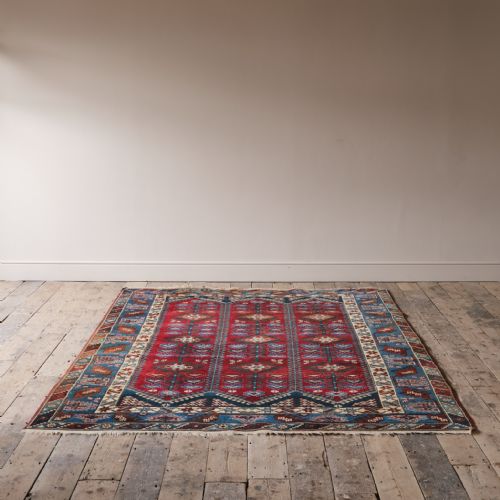
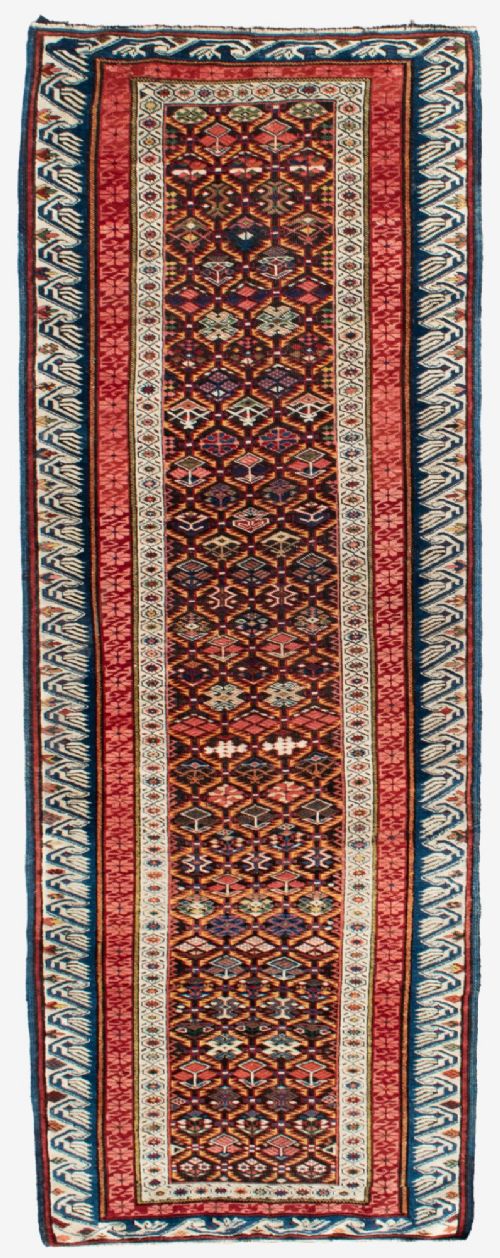
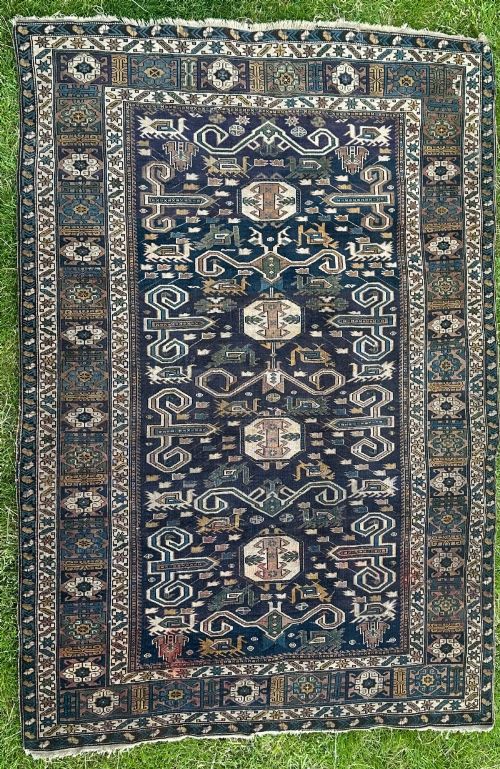
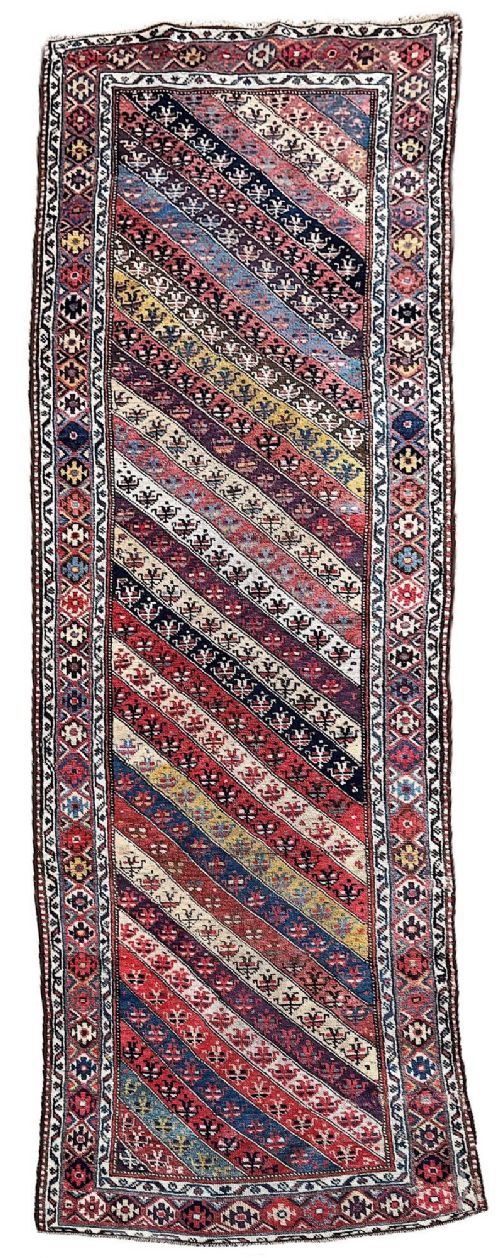
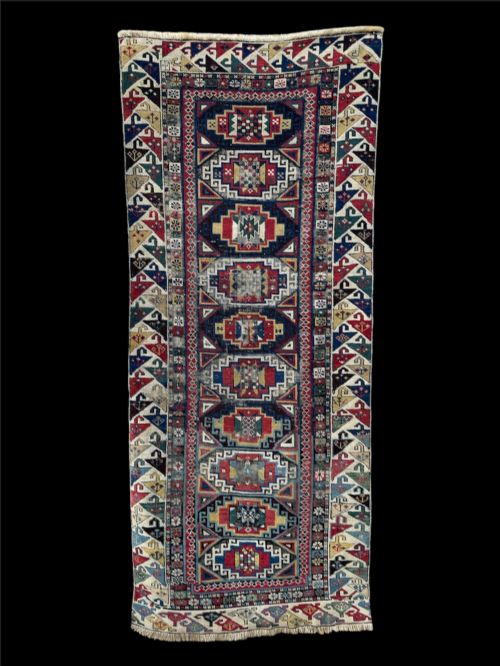


Shirvan Carpet Runner
A shirvan carpet runner brings tribal geometry and saturated wool into a hallway, offering the precise weight and proportion needed for narrow spaces.
Shirvan Carpet Runner
When you search for a shirvan carpet runner, you are looking at woven floor coverings originating from the Caucasus region during the nineteenth and early twentieth centuries. These pieces appear as narrow runners, long rugs, and fragment pieces, often carrying regional designations such as Baku, Marasali, or Akstafa.
The format is suited to corridors and gallery spaces, providing linear repetition through traditional Caucasian motifs. Pieces on this page span several decades, including examples from the 1880s, 1890s, and the first quarter of the twentieth century.
Materials and construction
Weavers constructed these runners using hand-spun wool for the pile and foundation, supplemented by cotton in specific structural elements. The application of natural dyes produces the distinct tonal depth observed across the examples.
The technique relies on dense knotting traditions native to the Eastern Caucasus. This construction method creates a durable surface that withstands high traffic areas while maintaining flexibility.
Listings span production dates from 1880 through 1910, exclusively utilising hand-spun wool, natural dyes, and cotton.
Assessing quality and character
The distinction between tiers rests upon the fineness of the knot count and the precision of the geometric layout. Examples featuring scarce designs or named regional variations hold greater interest for collectors.
Preservation of the original dye palette and border integrity distinguishes superior pieces. Evenness of pile wear and the crispness of motifs such as the Lesghi star or flaming boteh dictate the visual impact of each runner.
The Shirvan Carpet Runner Glossary
- Shirvan
- A style of weaving originating from the Shirvan region in the Eastern Caucasus, known for structured geometric patterns. These pieces frequently employ crisp lines and balanced colour palettes.
- Boteh
- A stylised almond or paisley motif representing a floral spray or cypress tree, often depicted with flames in regional variations. This symbol appears repeatedly across Caucasian textile designs.
- Kilim
- A flat-woven carpet or rug produced without a pile, utilising slit-weave techniques. These items serve as lightweight floor coverings or wall hangings.
- Natural dye
- Colourants derived from plants, insects, and minerals rather than synthetic compounds. These substances yield complex, harmonious hues that age with subtle patination.
Shirvan Carpet Runner: Frequently Asked Questions
How do I care for an antique runner?
Regular gentle vacuuming without a rotating brush roll prevents dust accumulation in the wool pile. Professional cleaning suited to antique textiles preserves the natural dyes and structural integrity.
Placement in heavy direct sunlight should be avoided to prevent fading. Using a quality underlay prevents slipping and cushions the weave against hard flooring.
Where were these runners made?
Production centred in the Caucasus region, specifically within workshops and tribal communities in the Shirvan district and surrounding areas. Weavers passed down specific border patterns and colour combinations through generations.
Each valley and village developed distinct graphic vocabularies. This local specialisation allows experts to attribute pieces to specific towns like Baku or Akstafa.
What is the difference between a runner and a rug?
Runners feature an elongated, narrow rectangular format specifically proportioned for corridors, staircases, and hallways. Rugs maintain broader proportions suited to centre rooms and seating areas.
Both formats utilise the same knotting techniques and wool materials. The distinction lies strictly in the dimensional ratio.
How do I date a Caucasian runner?
Dating relies on analysing the wool preparation, the chemical composition of the natural dyes, and the structural characteristics of the foundation. Stylistic markers and regional design evolution provide additional chronological reference points.
Pieces from the nineteenth century often display specific palette shifts compared to those from the early twentieth century. Comparing structural details against documented examples helps narrow the period of origin.