
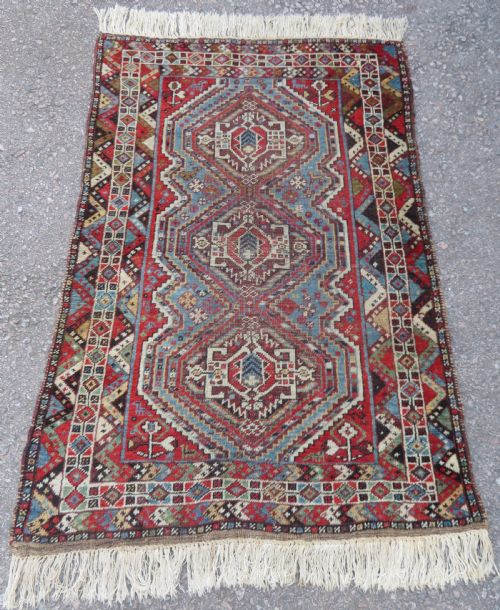

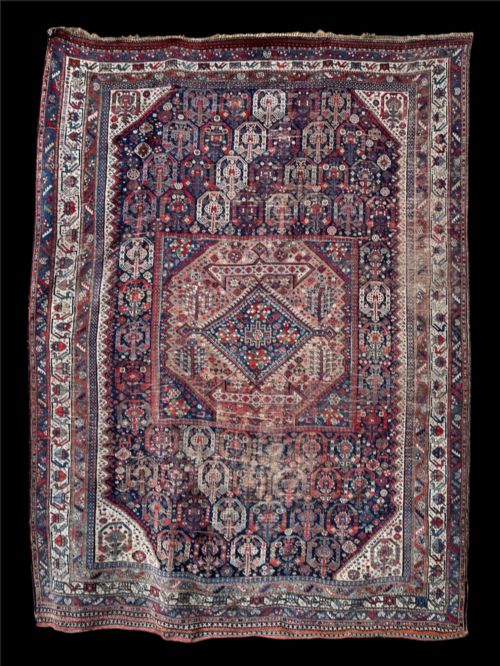
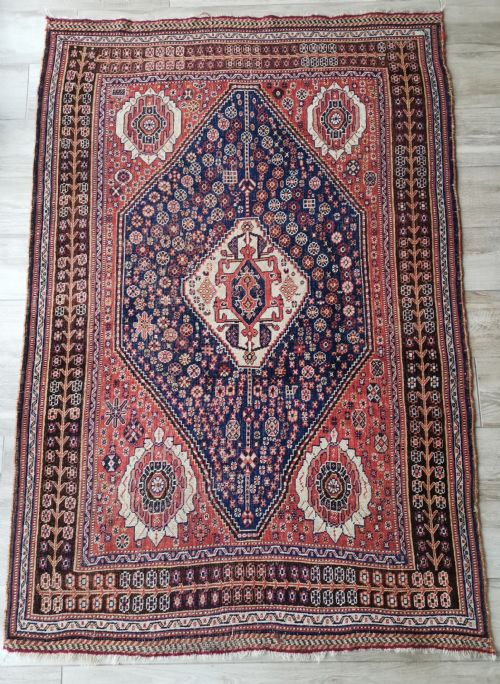
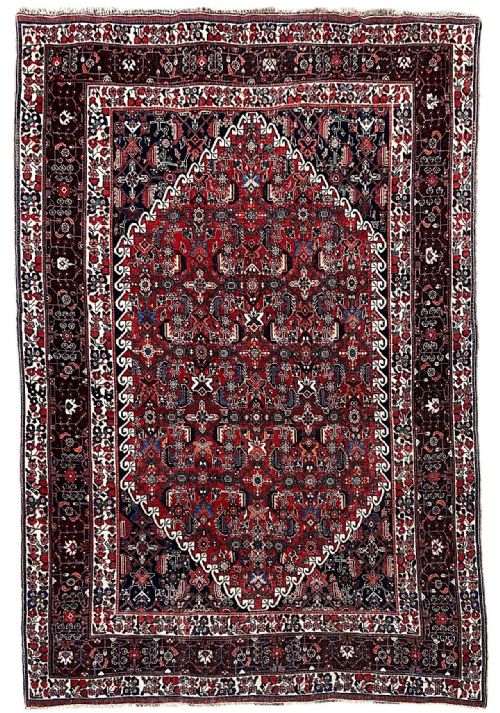
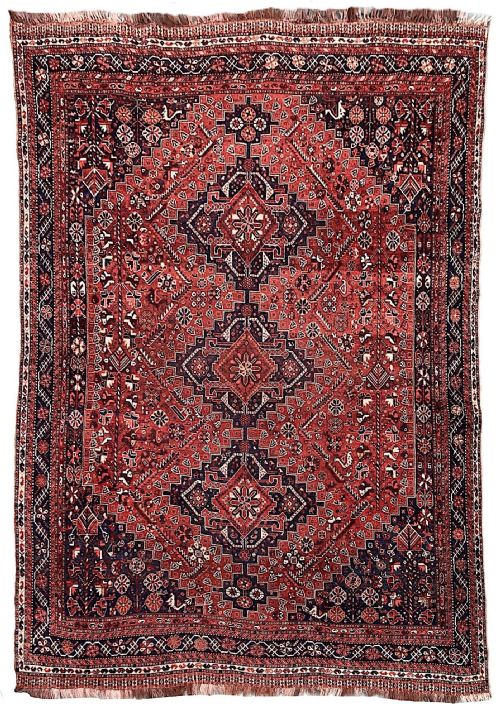


Shiraz Medallion Carpet
A shiraz medallion carpet brings the rich palette and geometric storytelling of South Persian nomads directly onto your floor.
Shiraz Medallion Carpet
When you search for a shiraz medallion carpet, you encounter hand-woven tribal floor coverings originating from the 19th century up through the 1930s. These pieces encompass Qashqai and Khamseh traditions, reflecting South Persian nomadic life through distinct central motifs.
You are most likely to meet Qashqai rugs and Khamseh carpets on this page, often featuring single or multiple medallions. Certain examples incorporate specific local imagery, such as peacocks or the pillars of Persepolis, within their tribal compositions.
How they were made
These carpets rely on hand-woven wool construction built upon cotton foundations. Artisans utilised natural dyes to achieve the deep tones characteristic of nineteenth and early twentieth-century Persian weaving.
Nomadic and village weavers produced these textiles using traditional upright looms. The handling of natural dyes creates subtle variations across the wool pile over decades of use.
Some tribal weavers tucked tiny representations of local peacocks right beside the grand central medallions.
What varies in quality
The standard of a woven piece depends heavily on the fineness of the knotting and the complexity of the tribal design. Tighter structures and more intricate medallion layouts separate exceptional main carpets from standard village work.
The vibrancy and depth of the natural dyes significantly influence overall merit. Rich colour retention and intact wool pile across the surface mark the distinction between ordinary utility rugs and superior examples.
The Shiraz Medallion Carpet Glossary
- Medallion
- A central ornamental motif set within the field of the carpet. This design element draws the eye and anchors the geometric composition.
- Pile
- The upright yarn loops that form the usable surface of the carpet. Hand-woven wool pile provides both texture and durability.
- Nomadic
- Produced by mobile tribal groups rather than in urban workshops. These designs carry local folklore and ancestral patterns.
- Natural Dyes
- Colouring agents derived from plants, minerals and insects rather than synthetic compounds. They age with a characteristic softening of tone.
Shiraz Medallion Carpet: Frequently Asked Questions
How do I care for a wool rug?
Vacuum gently without a rotating brush roll to protect the hand-woven wool pile. Keep the carpet out of direct sunlight to preserve the natural dyes.
Rotate the rug periodically to ensure even wear across high-traffic areas. Professional cleaning by a specialist in antique textiles remains essential every few years.
Are these carpets suitable for daily use?
Traditional wool and cotton construction provides robust durability for living spaces. Many examples have survived a century or more while remaining entirely functional.
Pair the carpet with a quality underlay to prevent slipping and reduce friction on the fibres. This simple step extends the working life of vintage floor coverings.
What defines Qashqai weaving?
Qashqai textiles originate from nomadic confederacies in South Persia. They typically showcase finely knotted geometric patterns and distinctive central medallions.
Weavers frequently incorporated motifs inspired by local fauna, flora and regional architecture. The resulting rugs bridge practical utility with expressive tribal artistry.
How can I date my carpet?
Examination of the weave structure, wool quality and dye types provides initial clues to age. Pieces spanning the nineteenth century through the 1930s often display distinct structural traits.
Stylistic conventions and tribal attributions also help narrow down the period of production. Comparing knot density against known examples assists in placing the item within its historical era.