


Sheraton Vanity Mirror
These sheraton vanity mirror examples are classic table-top glasses that bring useful reflection and crisp proportions to a room.
Sheraton Vanity Mirror
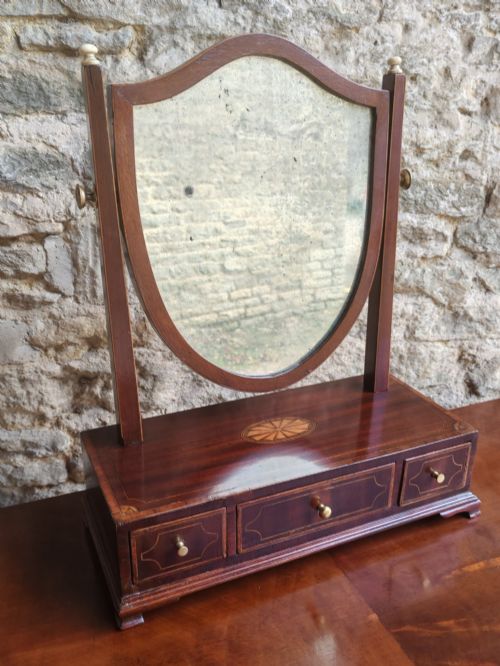
A sheraton vanity mirror is primarily found as a dressing table or toilet mirror designed to sit upon a chest or surface. You will frequently encounter George III and Georgian pieces, alongside later Edwardian revivals from the nineteenth and twentieth centuries.
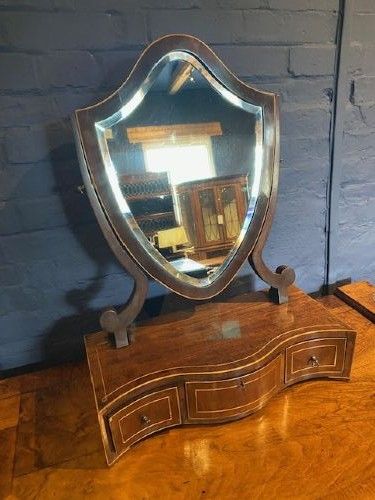
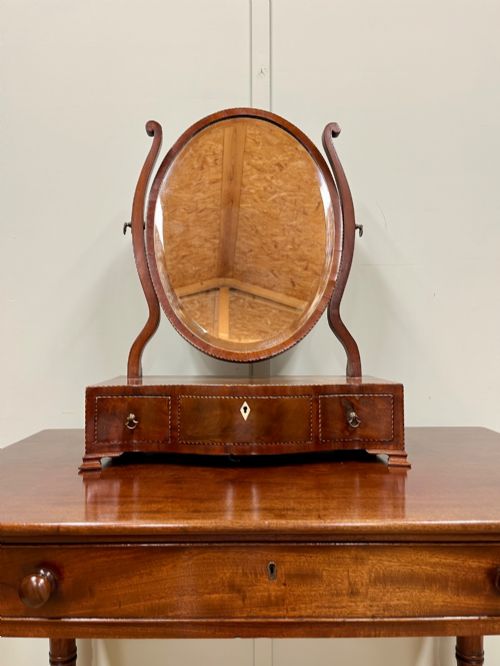
The form typically comprises an upright swinging glass mounted between two supporting arms, often resting on a small box base fitted with drawers. Many examples feature oval or shield-shaped plates, while others adopt bow-fronted or serpentine contours for the base.
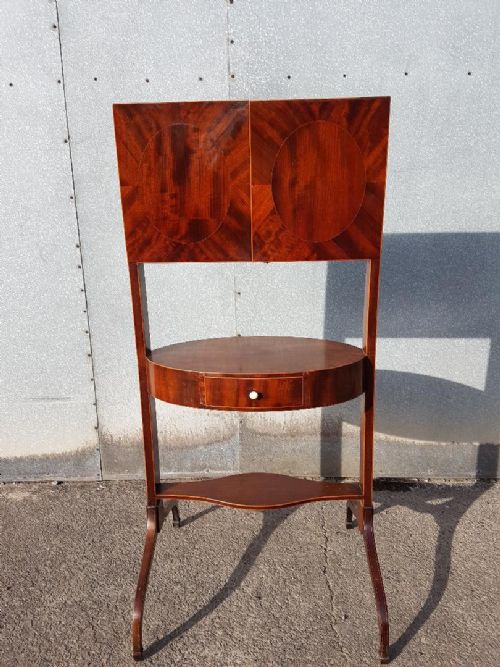
Makers adapted the style into various related forms, including larger dressing tables, tambour desks, and writing furniture with mirrored superstructures. The core function remains the provision of a tilting glass supported by refined woodwork.
How they were made
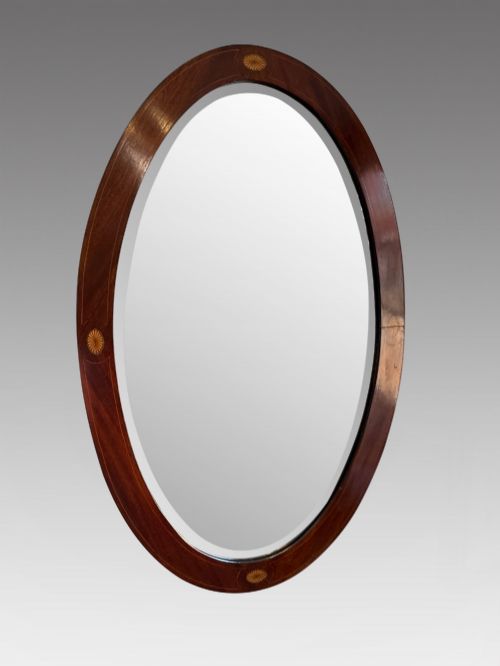
Joiners built these mirrors using solid timber carcases faced with figured veneers, predominantly mahogany, alongside satinwood and harewood. Boxwood and bone inlay frequently created contrasting stringing lines and geometric decoration across the surfaces.
The swinging mirror plate hangs on brass pivot screws inset into upright arms, allowing the glass to tilt to the required angle. Small turned bone or wooden knobs often serve as handles for the miniature drawers set into the bases.
The listings on this site combine 18th Century Georgian originals with Edwardian Sheraton Revival interpretations spanning up to 1910.
What varies in quality
The distinction between ordinary and superior examples lies in the selection of cabinet timbers and the crispness of the stringing inlay. Finer pieces display carefully chosen flame mahogany or figured satinwood rather than plain secondary woods.
Proportion and structural harmony separate standard workshop output from exceptional furniture. The sweep of a shield-shaped plate or the curve of a serpentine drawer base dictates the visual balance of the whole piece.
Gillows
The Sheraton Vanity Mirror Glossary
- Toilet mirror
- A small mirror designed to stand on a dressing chest or table. These pieces usually incorporate small storage drawers in the base.
- Shield mirror
- A glass cut into the outline of a heraldic shield. This shape was popular during the eighteenth century for dressing mirrors.
- Serpentine
- A curved line that bends inward centrally and outward at the ends. It appears frequently on the drawer fronts of better-made bases.
- Stringing
- Thin lines of contrasting wood or bone inlaid into a surface. Makers used this technique to outline panels and drawer edges.
Sheraton Vanity Mirror: Frequently Asked Questions
How do I date a sheraton vanity mirror?
Dating relies on timber selection, construction methods, and the profile of the mirror frame and base. Georgian pieces often display lighter framing and hand-cut dovetails in the miniature drawers.
Later Edwardian revival pieces tend to show machine-prepared timbers and standardised brass fittings alongside painted satinwood decoration.
Are these mirrors meant to be wall-hung?
The vast majority of these pieces are table mirrors designed to sit upon a dressing table, chest of drawers, or sideboard. They rely on a weighted box base to remain stable while the glass swings.
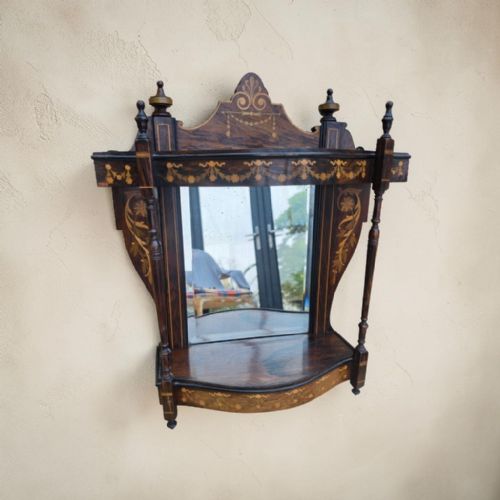
While some wall mirrors appear in the wider group, toilet mirrors are built with dedicated wooden stands and feet.
What timbers were used for these mirrors?
Mahogany served as the primary structural and surface timber across both Georgian and Edwardian periods. Cabinetmakers also employed satinwood, harewood, and rosewood for figured decorative veneers.
Inlay work frequently incorporated light boxwood and bone to create sharp linear contrasts against the darker background woods.