

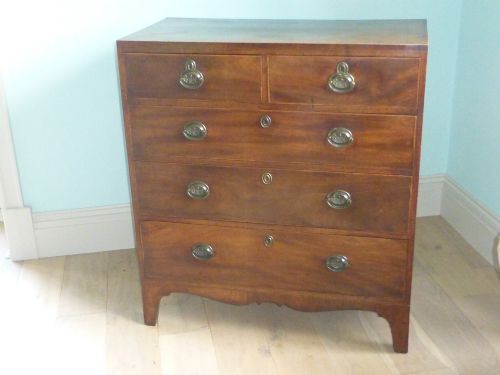
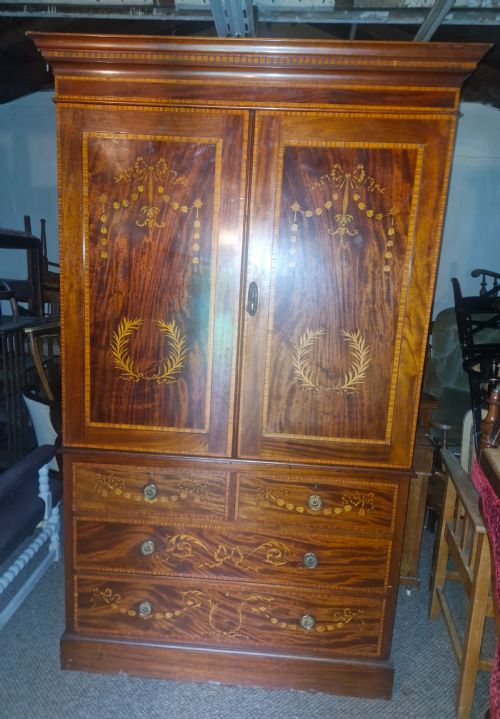


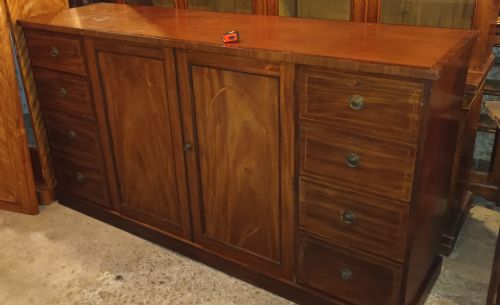


Sheraton Style Mahogany Chest
A sheraton style mahogany chest brings refined classical proportion and delicate inlay into a room, offering both generous storage and distinguished craftsmanship.
Sheraton Style Mahogany Chest
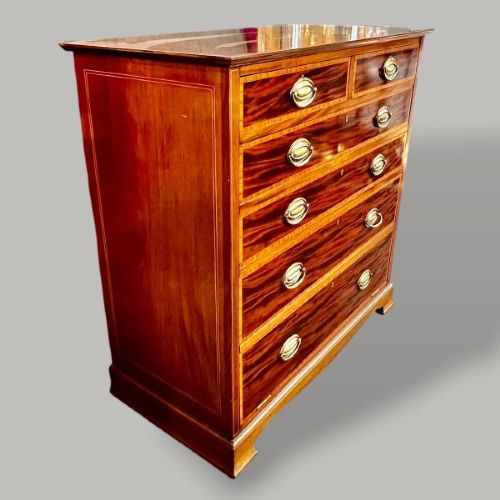
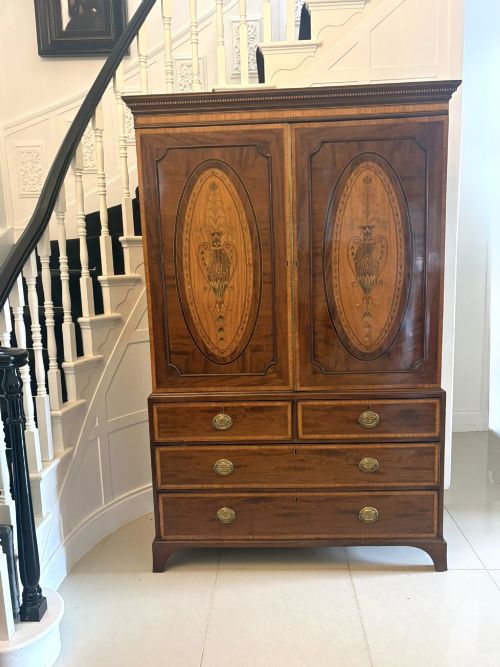
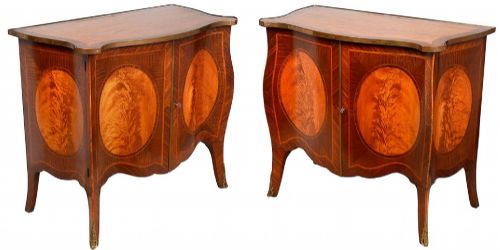
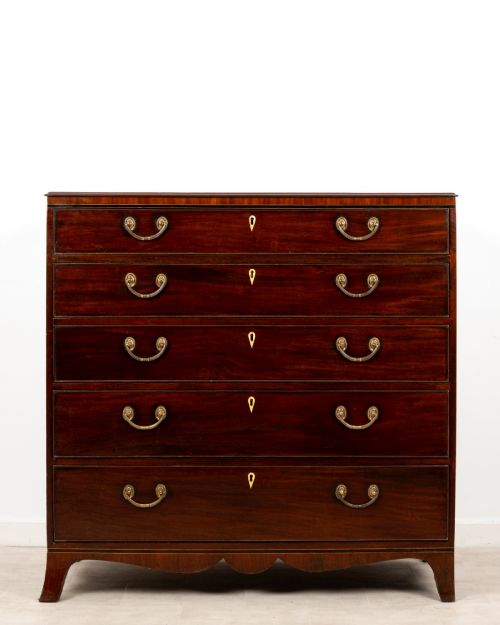
When you search for a sheraton style mahogany chest, you encounter pieces spanning from the late eighteenth century through the Edwardian period and the twentieth century revival eras. These items manifest primarily as chests of drawers, bowfront chests, commodes, and taller linen presses or housekeepers' cupboards.
The selection ranges from genuine Georgian items produced around 1800 to later Victorian, Edwardian, and 1920s revival pieces that emulate the clean lines and classical aesthetic. Buyers typically find either full-scale bedroom storage units or smaller dwarf and side cabinet variants.
The overarching design vocabulary relies on straight or serpentine elevations, balanced proportions, and contrasting timber details that define the aesthetic. Surviving examples demonstrate how cabinetmakers adapted these classical proportions across different decades.
Assessing quality and execution
The distinction between standard utility items and superior examples lies in the precision of the cabinetwork and the intricacy of the timber selection. Superior pieces display carefully matched mahogany veneers and meticulous boxwood and satinwood inlay work that remains intact and crisp.
Proportion and the handling of secondary timbers dictate the overall success of the piece, with finer workshops employing superior interior construction and heavier gauge brass hardware. The sophistication of the design, whether a straightforward chest or a complex linen press, determines the tier of the piece.
Sheraton Style Mahogany Chest Retail Price Guide 2026
Typical asking prices for sheraton style mahogany chest among the pieces listed under this phrase on Sellingantiques today, from the lower quarter to the upper quarter. They describe what is for sale here now, not the wider market.
A solitary decanter box appears amongst the large wardrobes, proving that serious storage can come in miniature proportions.
Druce & Co·Edwards and Roberts
The Sheraton Style Mahogany Chest Glossary
- Sheraton style
- A neoclassical design vocabulary originating in the late eighteenth century, characterised by straight lines, tapered legs, and contrasting stringing. It prioritises elegance and classical symmetry over heavy ornamentation.
- Satinwood
- A pale, lustrous timber native to Ceylon and the West Indies, utilised extensively for contrasting crossbanding and decorative veneers. Its golden tone provides a sharp visual counterpart to dark mahogany.
- Inlay
- The technique of embedding pieces of contrasting wood, bone, or metal into a recessed surface to form a decorative pattern. In these pieces, boxwood and satinwood form delicate lines and motifs.
- Bowfront
- A convex curved cabinet front that projects outward in the centre, creating a softer silhouette. This form requires advanced woodworking skill to shape the drawers and frame accurately.
- Linen press
- A tall piece of furniture featuring upper doors enclosing sliding trays for textiles, positioned above a base of lower drawers. These function as substantial storage units for household linens and garments.
Sheraton Style Mahogany Chest: Frequently Asked Questions
What periods do these chests come from?
The available pieces span from the Georgian era around 1800 through the Victorian and Edwardian periods up to the 1920s.
Revival pieces from the late nineteenth and early twentieth centuries sit alongside eighteenth-century originals in the historical record.
How do I distinguish revival pieces from original ones?
Original pieces from the Georgian era display construction methods, timber ageing, and secondary woods consistent with eighteenth-century workshop practices.
Revival items from the Edwardian era or 1920s utilise machine-assisted joinery and standardised hardware typical of later manufacturing.
What woods are used besides mahogany?
Satinwood appears frequently as a contrasting veneer for panels and crossbanding on drawers and cabinet doors.
Boxwood and bone provide fine linear stringing and detailed inlay work to accentuate the primary mahogany surfaces.
Where were these pieces used in a home?
Chests of drawers and bowfront commodes served primarily in bedrooms for clothing storage and personal items.
Linen presses and housekeepers cupboards functioned in hallways or dedicated storage rooms to keep household textiles organised.