



Edwardian Inlaid Tall Chest
These edwardian inlaid tall chest examples offer slender vertical storage with fine cabinetwork and polished mahogany.
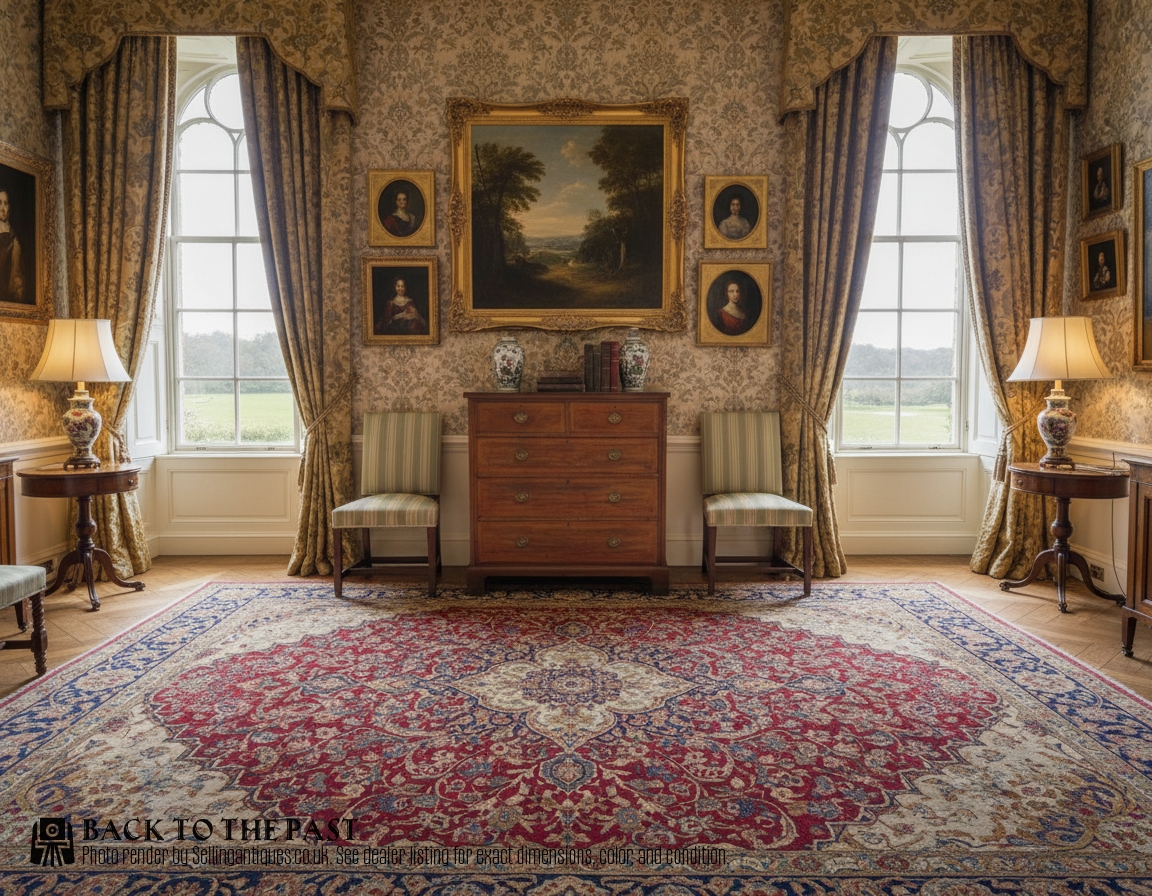
Edwardian Inlaid Tall Chest
An edwardian inlaid tall chest provides deep vertical drawer space while keeping a narrow floor footprint in the bedroom or dressing room. These pieces mostly date from the early twentieth century, spanning the Edwardian period and the decades around nineteen ten.
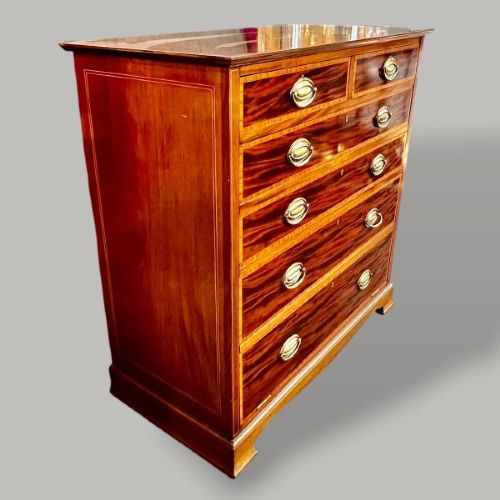
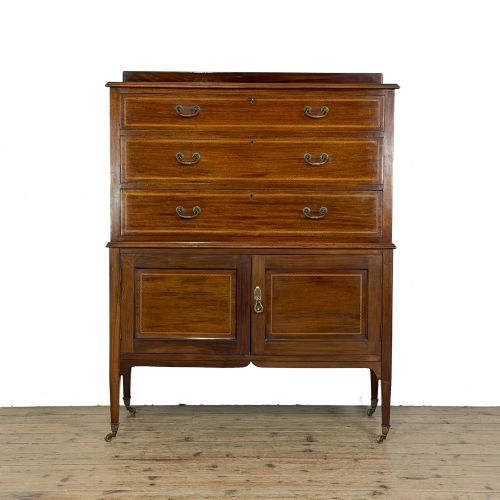
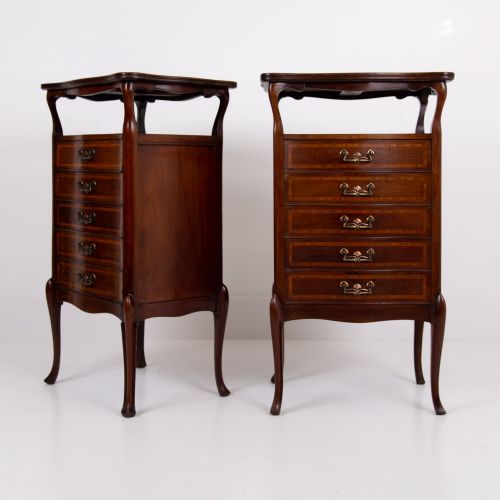
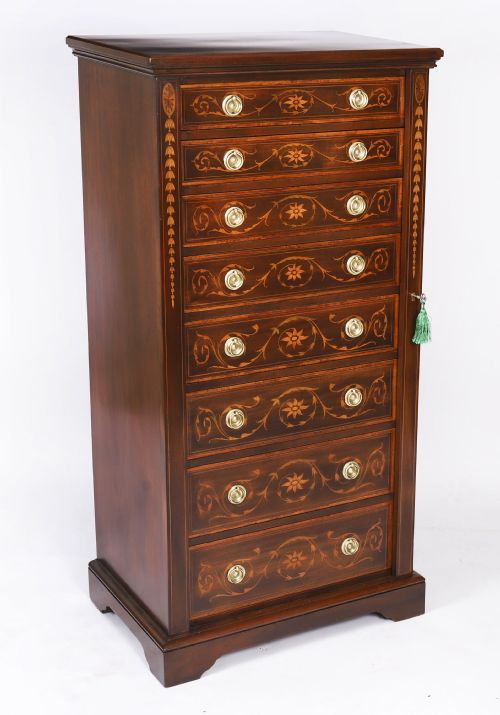
The form appears in several distinct guises on this page, ranging from standard chests of drawers and tallboys to specialised Wellington chests and slender pillar cabinets. Mahogany forms the primary carcase material across nearly every example, accented with decorative inlay.
Makers adapted classic Georgian proportions to suit smaller twentieth century rooms, resulting in slim proportions with multiple stacked drawers. Buyers encounter Sheraton Revival influences alongside plainer bedroom chests designed for daily utility.
How they were made
Cabinetmakers constructed these pieces using solid mahogany and mahogany veneers over secondary timbers, shaping tall carcases designed to hold multiple stacked drawers. Timber selection focused on straight-grained sections to maintain structural integrity along the vertical height.
Decoration relies heavily on contrasting wood veneers, incorporating satinwood inlay and occasional rosewood details to form banded borders and classical motifs. Brass handles and drawer pulls complete the construction, secured to dovetailed drawer boxes.
Edwardian Inlaid Tall Chest Retail Price Guide 2026
Typical asking prices for edwardian inlaid tall chest among the pieces listed under this phrase on Sellingantiques today, from the lower quarter to the upper quarter. They describe what is for sale here now, not the wider market.
Some Wellington chests include a secret locking mechanism disguised as a plain pilaster, keeping private correspondence safe from wandering eyes.
What varies in quality
Superior examples originate from documented workshops such as Maple and Company or J Shoolbred, where cabinetmakers exerted greater care over timber selection and jointing. The fineness of the inlay work and the depth of the mahogany figuring separate standard utility furniture from pieces commissioned for high-end domestic interiors.
Structural refinement shows in the thickness of the drawer linings and the precision of the dovetail joints, which ensure smooth operation across tall banks of drawers. Lesser pieces rely on simpler applied decoration, whereas better examples integrate the inlay seamlessly into the mahogany structure.
J Shoolbred·Maple & Co.
The Edwardian Inlaid Tall Chest Glossary
- Tallboy
- A traditional chest of drawers built in two stacked sections, creating an elevated storage unit. This form maximises vertical capacity without expanding the room footprint.
- Wellington chest
- A tall, narrow chest featuring a hinged vertical locking stile on one side that secures all the drawers at once. It derives its name from the Duke of Wellington.
- Inlay
- A decorative technique where contrasting woods or materials are fitted into recesses carved into the primary timber surface. Satinwood and rosewood frequently serve this purpose on mahogany carcases.
- Sheraton Revival
- A late nineteenth and early twentieth century design movement that reinterprets the neoclassical furniture forms of Thomas Sheraton. Pieces often feature delicate banded inlay and tapered supports.
- Pillar chest
- A cylindrical or very narrow rectangular freestanding cabinet containing multiple stacked drawers. These pieces provide compact storage for documents or specialty items.
Edwardian Inlaid Tall Chest: Frequently Asked Questions
How do I date an edwardian inlaid tall chest?
Examination of the timber construction, secondary woods, and handle fixings reveals the approximate manufacturing period. Edwardian pieces generally date from nineteen hundred to nineteen twenty.
Makers' stamps inside drawer boxes or on the backboards provide definitive attribution when present. Stylistic markers such as Sheraton Revival inlay further confirm the early twentieth century origin.
Where should I place a tall chest in a room?
The slender proportions of these cabinets make them suitable for bedroom corners or narrow wall spaces where standard horizontal chests will not fit. Their height provides substantial storage without dominating floor area.
Positioning them away from direct sunlight protects the mahogany polish and delicate satinwood inlay from fading over time. Adequate clearance in front of the piece ensures all stacked drawers open smoothly.
Are these chests suitable for modern homes?
Their vertical storage capacity makes them practical for contemporary bedrooms needing efficient organisation within a compact floor space. The refined mahogany tones blend easily with various interior styles.
Routine maintenance involves dusting with a dry cloth and occasional application of appropriate furniture wax. Keeping them away from excessive heat sources preserves the timber and veneer stability.