
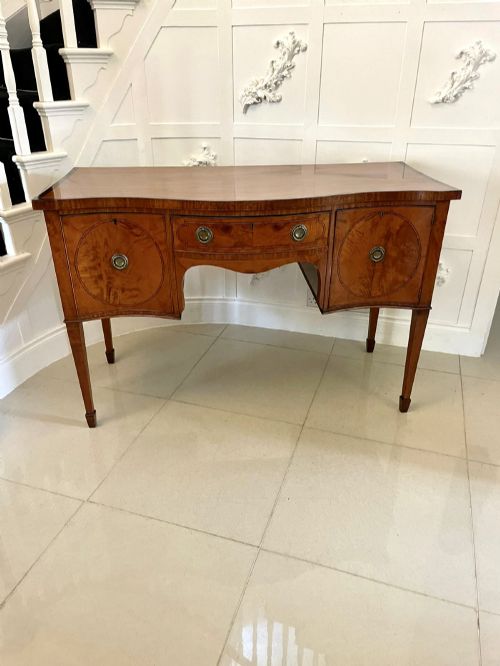
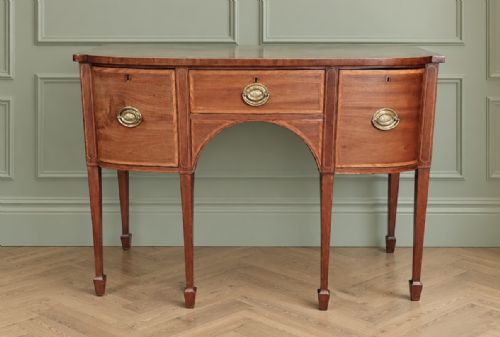
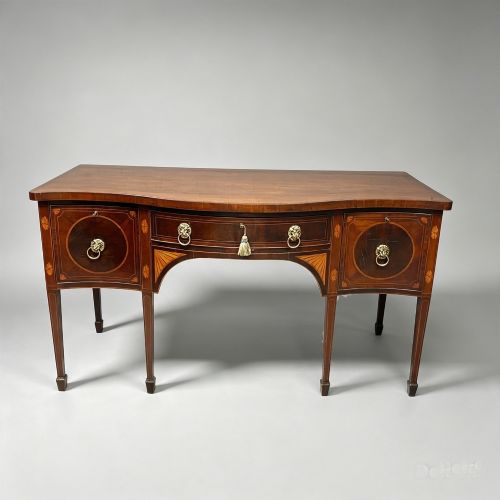
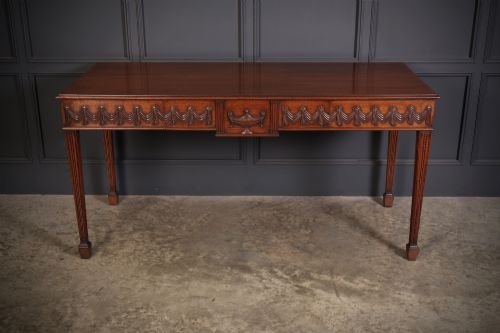
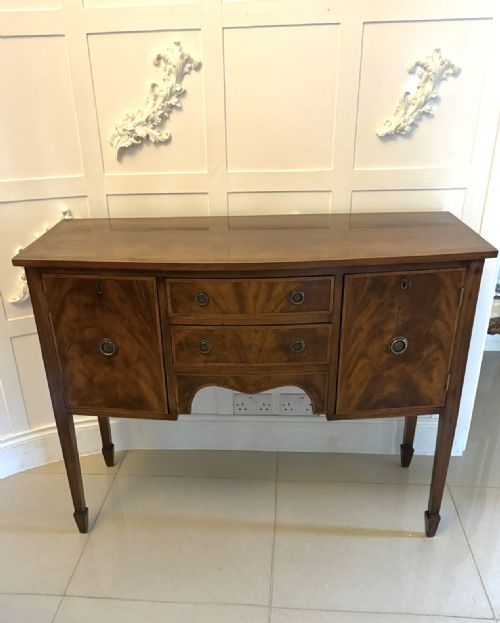

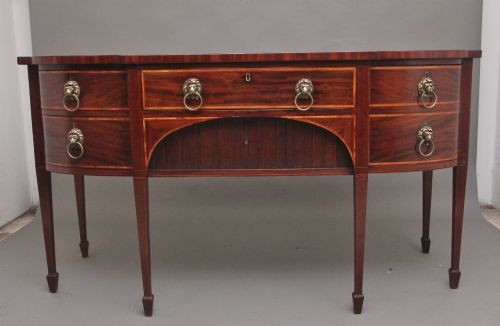
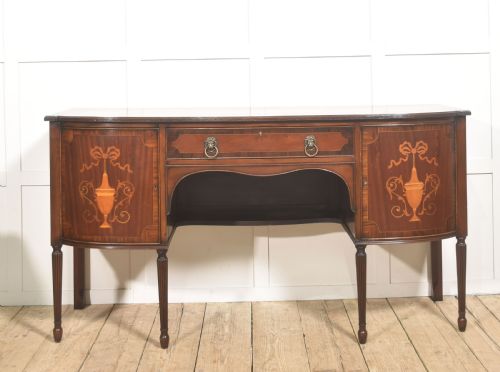
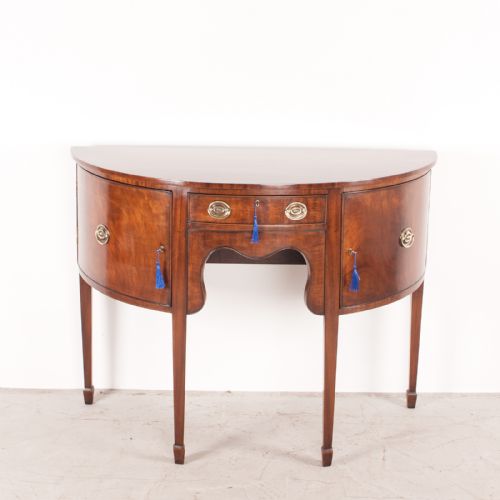
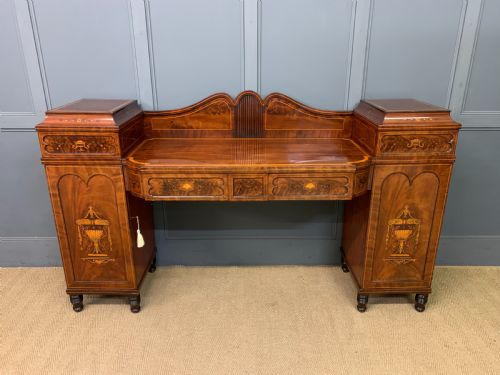


Sheraton Style Dining Table
A sheraton style dining table brings balanced classical proportions and refined wood selection into the dining room.
Sheraton Style Dining Table
A sheraton style dining table combines light proportions with geometric inlay, drawing upon late eighteenth-century design principles. Examples originate from the Georgian period through to later revival eras including Edwardian and 1930 production.
The twin pillar configuration appears frequently among these dining tables, often supporting extended seating capacity for larger rooms. Buyers encounter both original period pieces and later revival interpretations sharing the same vocabulary of straight tapered legs and banded borders.
Materials and construction methods
Construction relies heavily upon mahogany timber, selected for both structural stability and rich natural grain patterns. Workshops applied intricate wood inlay and satinwood banding to create crisp linear borders along tabletops and friezes.
Makers utilised flame mahogany veneer on larger surfaces to generate dramatic visual movement, complemented by contrasting boxwood stringing. Pillar supports frequently incorporate brass fittings and castors to facilitate movement.
Listings feature mahogany construction paired with satinwood inlay across Georgian, Edwardian, and later twentieth-century periods.
Distinctions in construction and design execution
Quality separates through the precision of the wood inlay and the depth of figure within the mahogany veneer. Finer examples display meticulous attention to matching grain patterns across multiple leaf sections.
The refinement of the turned pedestals and the crispness of the tapered legs indicate the level of craftsmanship invested in the piece. Subtle variations in timber selection dictate the overall visual weight and presence of the table.
The Woodworkers Ltd Kilkenny·Howard And Sons
The Sheraton Style Dining Table Glossary
- Crossbanding
- A border technique where veneer strips run perpendicular to the main grain. This frames the perimeter of the tabletop with contrasting orientation.
- Satinwood
- A pale yellowish timber employed for contrasting inlay work and decorative banding. It provides sharp visual separation against darker mahogany fields.
- Pedestal
- A central column support resting on splayed legs, allowing greater legroom around the table perimeter. Twin pillar variants use two such supports for extended lengths.
- Boxwood
- A dense, pale wood used for delicate stringing lines within inlaid borders. It creates fine linear definition around geometric panels.
Sheraton Style Dining Table: Frequently Asked Questions
How do I seat twelve people?
Extended twin pillar models provide the necessary length and structural clearance to accommodate large seating arrangements comfortably.
Positioning additional leaves allows the framework to adapt for gatherings without compromising legroom beneath the top.
Are these tables solid mahogany?
Construction typically combines solid timber framing with premium mahogany veneer applied to stable secondary woods. This method prevents warping across wide tabletops while displaying rich grain figures.
Inlay details incorporate contrasting timbers such as satinwood and boxwood set directly into the primary surface.
How do I date a revival piece?
Revival pieces from the Edwardian era or later decades adopt eighteenth-century design proportions while exhibiting manufacturing clues from their actual period of production. Examining the secondary timbers and internal construction hardware helps clarify the true age.
Stylistic cues alone do not determine the decade of manufacture, as classical forms persisted through successive generations.
How do I care for the surface?
Maintain the polished mahogany finish by avoiding direct sunlight and excessive moisture on the veneer. Gentle dusting with a soft cloth preserves the timber and the delicate inlaid borders.
Applying appropriate wax periodically nourishes the grain without building up heavy residues that obscure the natural figure.