
Extendable Pedestal Table
An extendable pedestal table is a practical dining piece offering adaptable surface space through central columns and removable leaves.
Extendable Pedestal Table
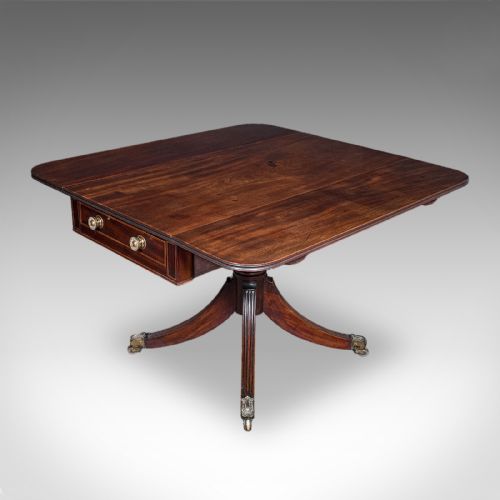
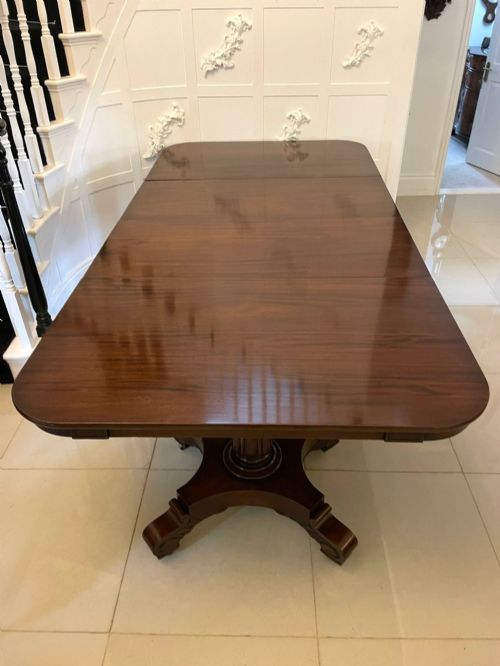
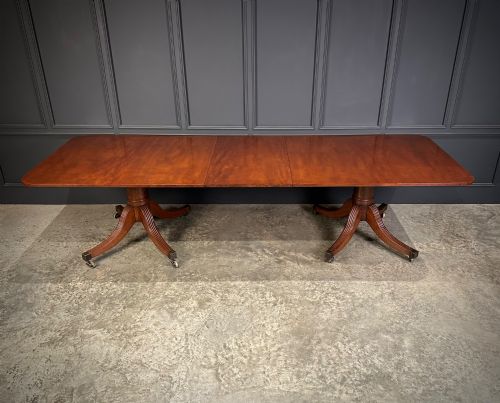
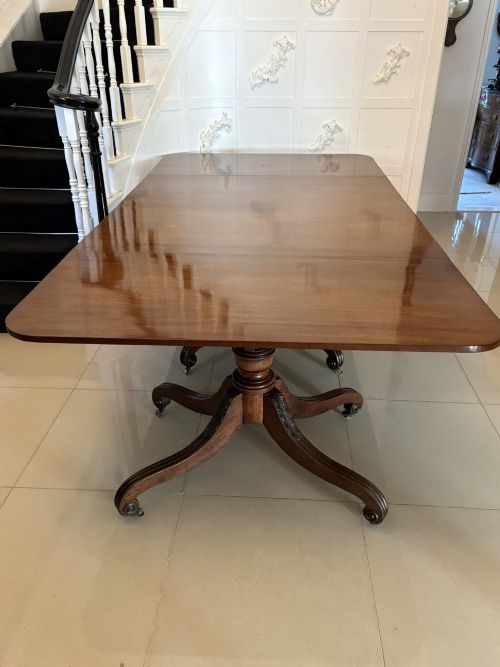
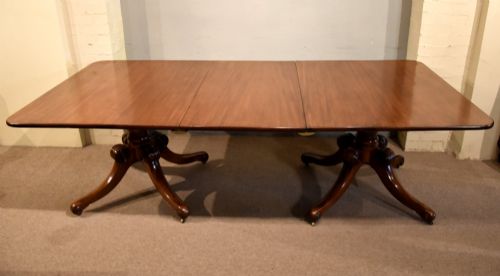
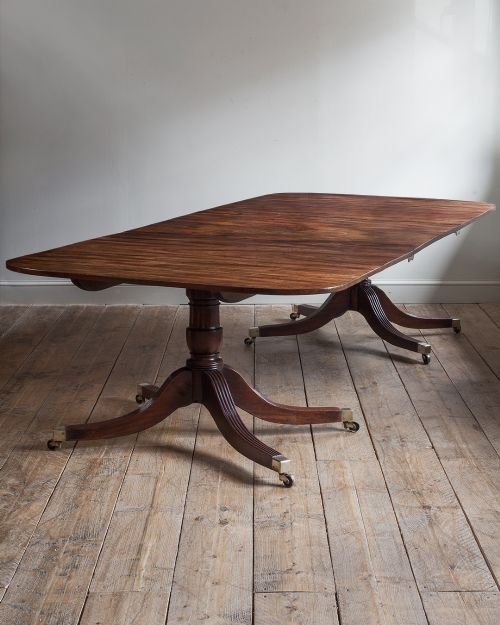
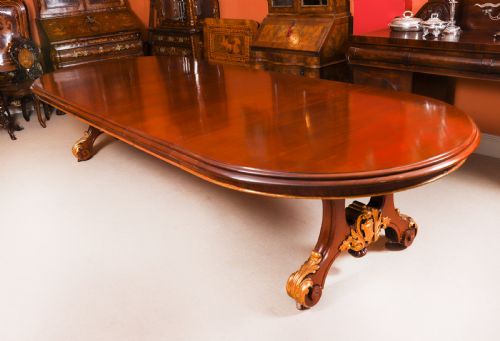
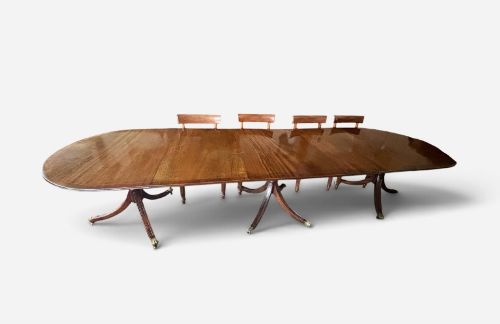
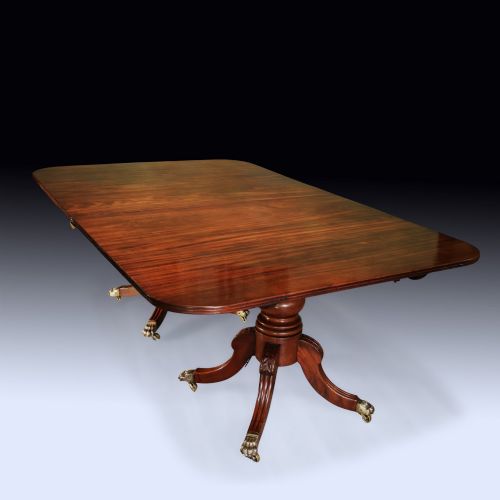
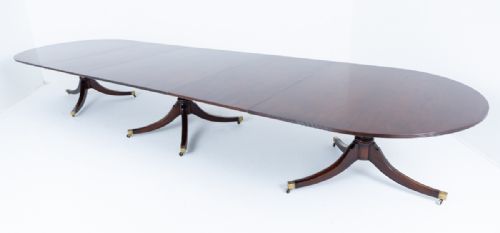
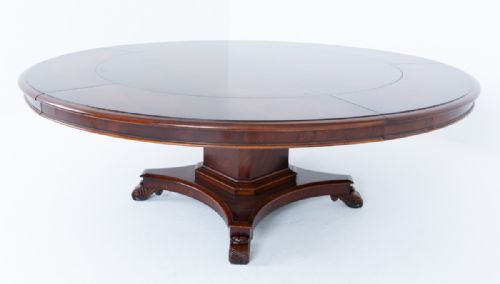
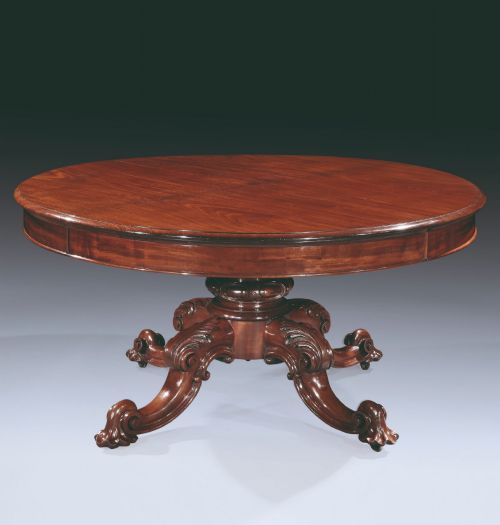
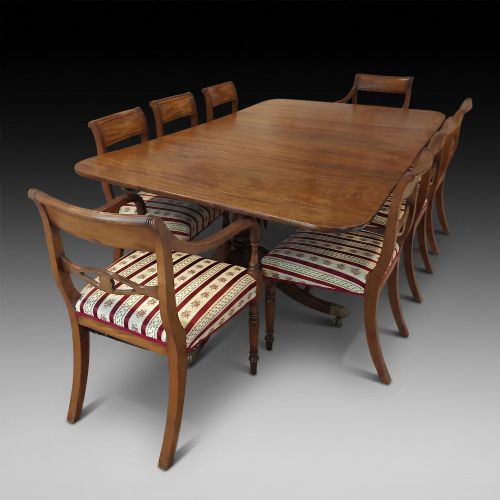
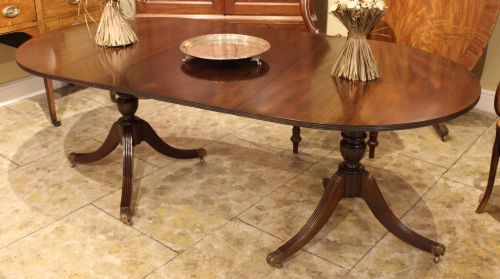
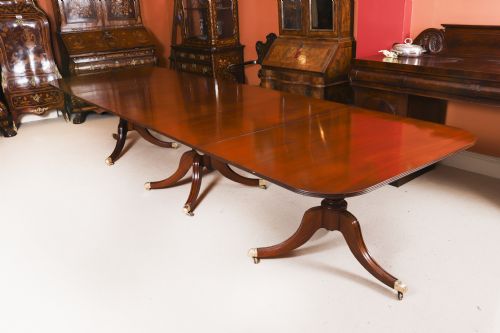
An extendable pedestal table provides flexible seating arrangements for dining rooms, utilising central pillars to support large wooden leaves. The selections visible here concentrate heavily on multi-pillar formats, particularly twin and triple pedestal designs from the Regency, George III and Victorian periods.
Buyers will most frequently encounter mahogany dining tables featuring drop leaves, tilt tops, or wind-out mechanisms to insert extra sections. These range from compact four-seater Pembroke tables up to expansive twenty-four-seater banquet configurations created during the nineteenth century and subsequent revival eras.
Materials and construction
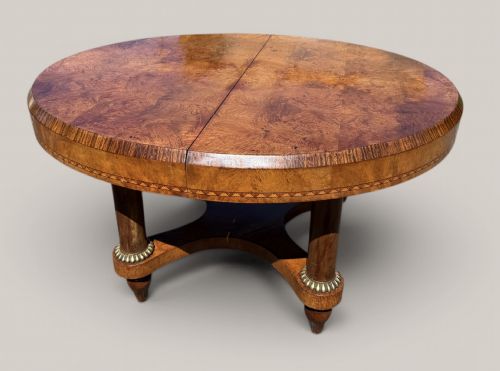
Cabinet makers constructed these extending tables primarily from solid and figured mahogany, occasionally utilising burr walnut, rosewood, and brass hardware for castors and mechanisms. Timber selection focused on rich grain patterns, particularly for table tops and D-end sections.
Internal engineering relied on sturdy wooden pillars resting on splayed tripod or quadruped bases, often combined with mechanical wind-out systems to safely expand the surface length when additional leaves were inserted.
Several dining tables on offer provide enough surface area to seat up to twenty-four guests comfortably for grand feasts.
Judging execution
Quality rests upon the selection of timber figures, the precision of the joining work between extra leaves, and the stability of the central pillars under heavy loads. Superior examples display seamless grain continuity across added leaves and robust brass mechanisms that operate smoothly.
Lesser pieces exhibit mismatched timber veneers, clumsy pillar attachments, or sluggish expansion hardware that compromises the horizontal alignment of the dining surface.
Wylie & Lochead·Whytock & Reid
The Extendable Pedestal Table Glossary
- Pedestal table
- A freestanding table supported by one or more central columns rather than standard corner legs. This construction allows greater freedom for seating arrangements around the perimeter.
- Wind-out mechanism
- A mechanical screw system operated by a crank handle that parts the table top sections to receive extra leaves. It became common during the nineteenth century for larger dining tables.
- D-end
- A semi-circular table end resembling the letter D, often used in modular dining suites. These sections detach or fold when the table is shortened.
- Pembroke table
- A small rectangular table featuring two hinged drop leaves on opposing sides. They serve as versatile side or breakfast tables within domestic interiors.
- Triple pedestal
- A table configuration utilising three vertical columns to support very long wooden tops. This arrangement provides essential structural reinforcement for seating large dinner parties.
Extendable Pedestal Table: Frequently Asked Questions
How do wind-out extending tables work?
These tables incorporate an internal metal screw mechanism accessed by turning a removable crank handle. Operating the handle pulls the two main halves apart smoothly to create a gap for insertion leaves.
Once the extra wood sections drop into place, the crank turns in reverse to lock the top securely together, maintaining a flat surface for dining.
What is a triple pedestal table used for?
A triple pedestal table provides long seating capacity for large dining rooms and country houses. The three central columns distribute weight evenly across extensive lengths of mahogany.
This architecture prevents the middle of the table from sagging when fully extended with multiple leaves in place for large gatherings.
How do I identify a Regency pedestal table?
Regency tables typically feature dark figured mahogany, brass toe-caps, and heavy turned or reeded columns rising from splayed tripod bases. The timber often exhibits deep reddish-brown tones.
Authentic period pieces show traditional hand-cut joinery methods underneath and utilise heavy solid timber construction rather than modern lightweight laminates.
Can I use a Pembroke table for daily dining?
A Pembroke table suits intimate meals or smaller spaces when the drop leaves remain lowered against the sides. Raising the flaps extends the surface area for additional guests.
Their compact footprint makes them adaptable additions to sitting rooms, studies, or breakfast corners where permanent large tables are impractical.