



Sheraton Style Cylinder Bureau
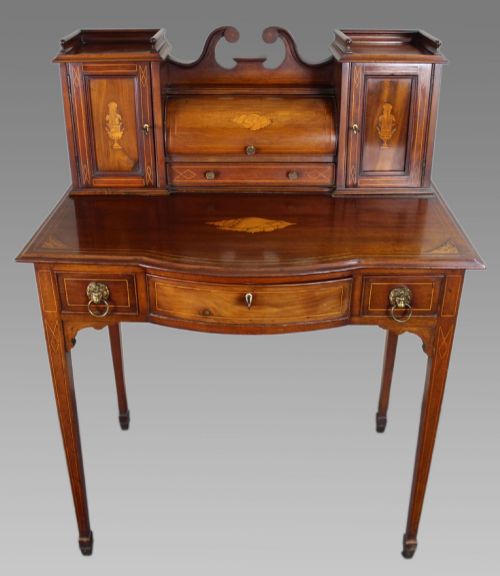
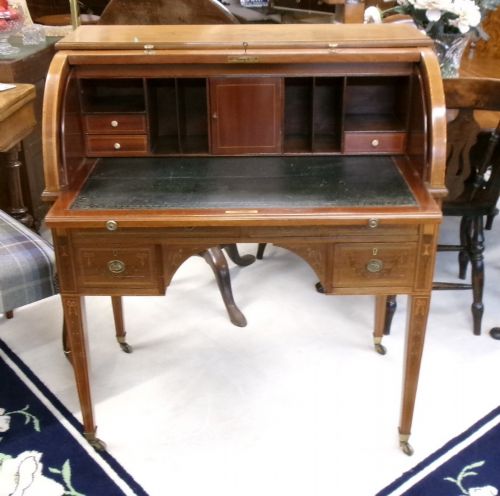
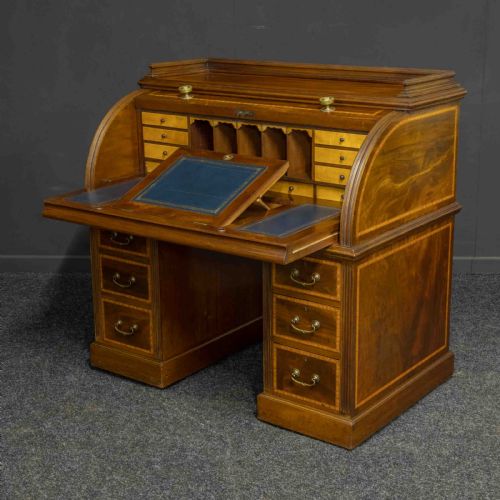
A sheraton style cylinder bureau brings refined writing furniture into the room, combining enclosed storage with a curved roll top.

Sheraton Style Cylinder Bureau
A sheraton style cylinder bureau offers a practical workspace featuring a curved roll top that conceals drawers and pigeonholes when closed. These pieces originate across the nineteenth and early twentieth centuries, including Victorian, Edwardian, and George III examples.
The form appears as both freestanding desks and larger bureau bookcases equipped with upper glass doors. Most pieces meeting this search demonstrate revival aesthetics or late Georgian craftsmanship, rendered in select timber veneers.
How they were made
Cabinet makers constructed these desks using solid mahogany or satinwood carcases finished with detailed satinwood and marquetry inlay. Brass fittings and leather writing surfaces complete the internal and external construction.
The curved cylinder action relies on precision joinery where slats of wood move smoothly within grooved tracks. Inlaid decoration is meticulously set into the primary timber surfaces by hand.
Sheraton Style Cylinder Bureau Retail Price Guide 2026
Typical asking prices for sheraton style cylinder bureau among the pieces listed under this phrase on Sellingantiques today, from the lower quarter to the upper quarter. They describe what is for sale here now, not the wider market.
The selection spans George III craftsmanship through to Victorian and Edwardian Sheraton Revival interpretations.
What varies in quality
Quality rests upon the selection of timber veneers and the crispness of the marquetry inlay. Pieces featuring detailed satinwood banding and robust internal pigeonhole arrangements stand apart from simpler iterations.
The execution of the cylinder mechanism and the integration of brass hardware dictate the overall standard of the bureau. Finer examples display balanced proportions and sophisticated secondary woods within the drawer linings.
Edwards & Roberts·Henry Samuel
The Sheraton Style Cylinder Bureau Glossary
- Cylinder bureau
- A writing desk with a rounded, rolling shutter that encloses the writing surface and inner compartment. This mechanism slides back into the body of the desk when opened.
- Marquetry inlay
- Decorative patterns formed by fitting contrasting veneers into pre-cut recesses in the wood. It often depicts floral or neoclassical motifs on these desks.
- Satinwood
- A lustrous, hard timber with a yellowish colour and a satiny sheen used extensively in revival furniture. It provides a pale, reflective surface for intricate inlay work.
- Bureau bookcase
- A writing cabinet featuring shelving enclosed by glazed doors positioned above the desk section. This combination provides both working space and display capacity.
Sheraton Style Cylinder Bureau: Frequently Asked Questions
How do I operate the cylinder top?
The curved wooden shutter slides smoothly along side tracks to reveal the interior desk space and small drawers. Pulling the writing surface forward or lifting a central pull often activates the rolling mechanism.
Ensure the internal fittings are pushed back fully before closing the cylinder to prevent jamming the mechanism. Regular gentle use keeps the wooden tracks aligned properly over time.
What is the difference between a desk and a bureau bookcase?
A standard cylinder desk provides a writing surface and enclosed storage contained entirely within a lower cabinet structure. Bureau bookcases add an upper display cabinet with glass doors for books or porcelain.
Both styles share the characteristic rolling cylinder front, but the bookcase version offers significantly greater height and vertical presence in a room.
Where should I place a satinwood bureau?
Satinwood furniture benefits from placement away from direct sunlight to preserve the pale tone and prevent the timber veneers from darkening unevenly. These desks look particularly striking positioned away from walls as freestanding pieces.
Maintain stable room humidity to protect the fine inlays and prevent the solid timber carcase from expanding or contracting excessively.
How can I tell a revival piece from an earlier one?
Revival pieces from the Edwardian and Victorian eras often employ machine-cut veneers alongside traditional hand-finishing techniques. Examining the secondary woods inside the drawers provides clues regarding the period of manufacture.
George III examples exhibit structural traits and timber ageing consistent with eighteenth-century workshop practices, whereas revival items reflect later interpretations of neoclassical design.