



Sheraton Style Breakfront
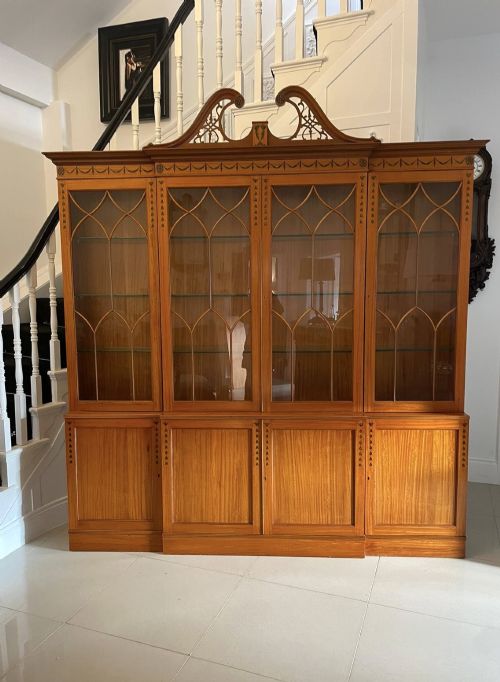
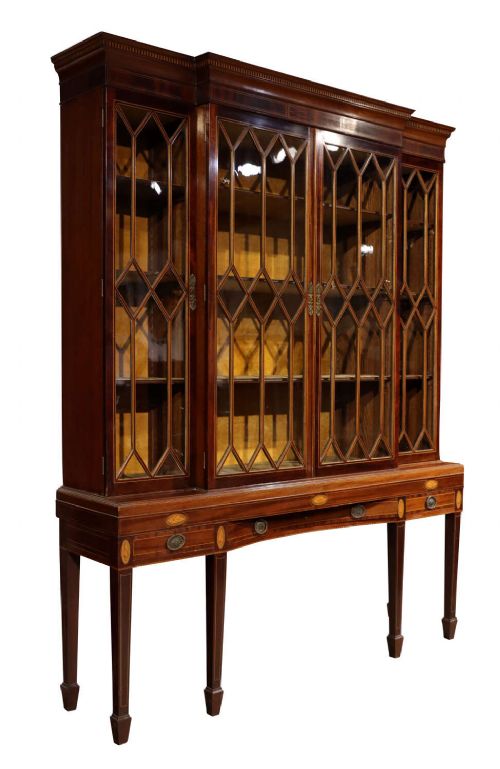
A sheraton style breakfront brings architectural balance and refined cabinetry to a room, offering display or storage through its characteristic projecting centre section.
Sheraton Style Breakfront
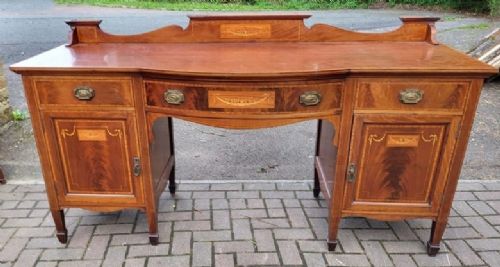
When you search for a sheraton style breakfront, you are looking at large case furniture characterised by a central section that extends forward from the flanking wings. These grand pieces include bookcases, display cabinets, sideboards, and wardrobes.
The versions you are most likely to meet on this page span the Georgian period, the nineteenth century, and the revival movements of the Edwardian era up to nineteen thirty. They combine neoclassical proportion with disciplined geometry and fine timber selection.
Makers drew direct inspiration from eighteenth-century design books, applying classical motifs to domestic furniture. The resulting forms range from towering library bookcases to low sideboards and glazed display cabinets.
How they were made
Cabinetmakers constructed these pieces primarily using solid mahogany and figured satinwood, often enhanced by contrasting rosewood veneers and delicate boxwood inlay. Timber selection governed the visual weight of the facade, with flame mahogany and satinwood providing rich grain patterns.
Detailed inlay work defined the surfaces, incorporating boxwood and wood stringing to form geometric borders and classical swags. Glazing bars in astragal patterns divided the glass doors into neat lights, while brass hardware completed the construction.
Listings here feature mahogany, satinwood, and rosewood timbers paired with boxwood inlay and glass.
What varies in quality
Quality rests in the precision of the timber matching and the delicacy of the inlay work across the breakfront facade. The crispness of the boxwood stringing and the quality of any original painted decoration distinguish finer pieces from simpler workshops.
Proportion and the handling of the architectural cornice determine the visual success of the piece. Cabinetmakers who maintained strict symmetry in the grain and executed tight joinery produced work that retained structural integrity alongside decorative elegance.
Lamb & Co·Goodall of Manchester·Edwards & Roberts
The Sheraton Style Breakfront Glossary
- Breakfront
- A piece of furniture where the central section projects forward from the flanking sides. This architectural device creates shadow and depth across the facade.
- Astral glazing
- Cabinet doors divided into small panes of glass by narrow wooden bars, often in geometric or Gothic patterns. This technique allowed books and porcelain to remain visible while protected.
- Crossbanding
- A strip of veneer applied across the grain of the main surface, often bordered by fine stringing lines. It frames panels of mahogany or satinwood on tabletops and drawer fronts.
- Satinwood
- A pale, lustrous hardwood prized for its golden yellow sheen and smooth texture. It became particularly popular during the Sheraton Revival period for light, decorative case pieces.
Sheraton Style Breakfront: Frequently Asked Questions
What is a breakfront?
A breakfront is a large piece of furniture featuring a central section that projects further forward than the left and right sides. This design breaks up a long flat facade and adds architectural presence to bookcases and sideboards.
The layout typically provides greater internal depth in the middle cupboards or drawers, allowing for varied storage and display capacities.
How do I date a Sheraton style piece?
Dating relies on identifying the primary timbers, construction methods, and stylistic cues present in the cabinetwork. Original Georgian examples show eighteenth-century construction techniques, while nineteenth-century and Edwardian pieces often reflect revival movements with lighter satinwood finishes.
Examining the secondary woods inside drawers and the style of the inlay provides further clues regarding the era of manufacture.
Where should I place a large breakfront?
These substantial case pieces require a significant wall space and a room with adequate ceiling height to accommodate their architectural scale. Libraries, large dining rooms, and spacious living areas suit bookcases and display cabinets best.
Ensuring the room has stable humidity levels protects the fine veneers and prevents timber movement in glazed doors.
What is Sheraton Revival furniture?
Sheraton Revival furniture refers to pieces made during the late nineteenth and early twentieth centuries that imitated the neoclassical designs of the eighteenth-century designer Thomas Sheraton. These later interpretations often feature satinwood, painted decoration, and delicate boxwood inlay.
They captured the elegance of the earlier Georgian period while adapting to the decorative tastes of the Victorian and Edwardian eras.