



Sheraton Serving Table
A sheraton serving table brings refined late eighteenth-century proportion and delicate inlay into a modern dining room.
Sheraton Serving Table
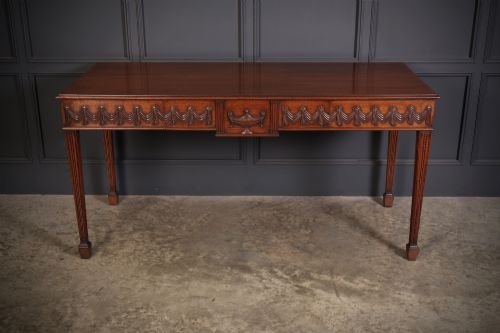
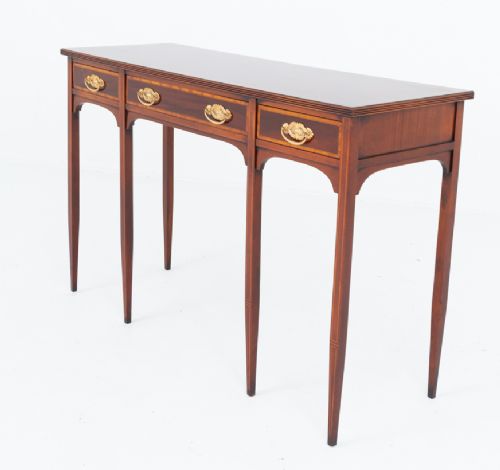
A sheraton serving table represents the lighter, more elegant furniture forms developed during the Georgian period. These pieces function as servers, sideboards, or console tables designed to display silver and assist with dining.
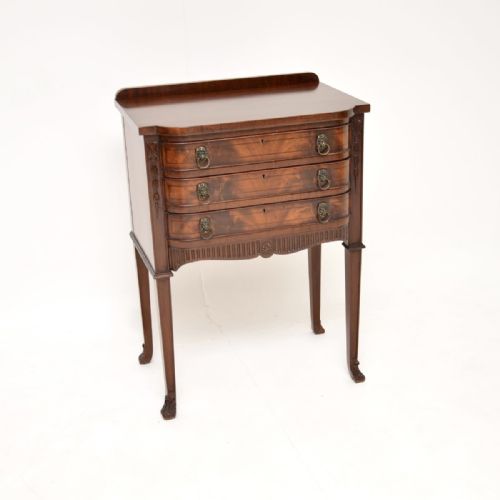
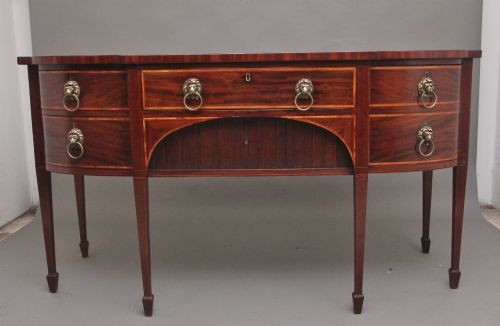
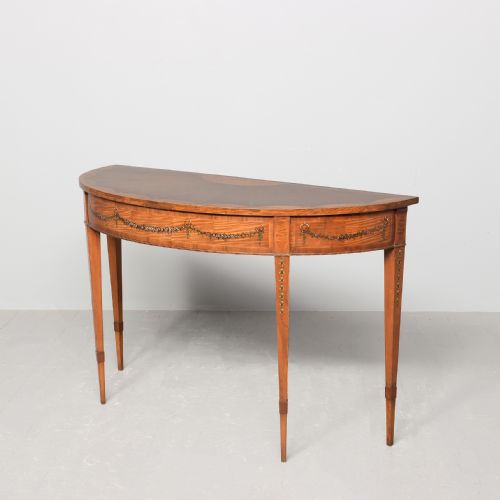
The versions most commonly met on this page span from authentic late eighteenth-century examples to later Sheraton Revival interpretations produced through the nineteenth and early twentieth centuries. They feature straight, bowfront, or serpentine shapes set upon tapered legs.
Materials and Construction
Cabinetmakers built these tables primarily using mahogany, often selecting figured flame veneers for the drawer fronts and top surfaces. Satinwood and boxwood provided contrasting borders and stringing.
Inlay and painted decoration define the aesthetic, incorporating geometric banding and classical motifs. Brass hardware, including ring handles and escutcheons, completes the construction.
Some tables double as dumb waiters, proving that even eighteenth-century furniture knew how to multitask during a long dinner.
Judging Quality and Craftsmanship
Quality rests upon the crispness of the woodwork, the subtlety of the contrasting stringing, and the integrity of the timber. Finer examples display carefully matched grain patterns across the drawer fronts and top.
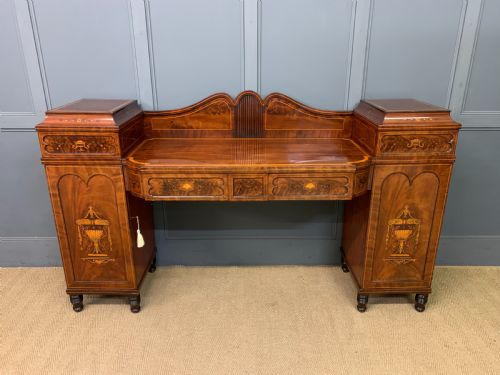
Later revivals range from substantial architectural pieces to lighter decorative items, where the depth of carving, the precision of the boxwood inlay, and the choice of primary timber separate standard production from superior work.
The Sheraton Serving Table Glossary
- Bowfront
- A curved front convex in shape, typical of refined dining room servers from the Georgian period.
- Satinwood
- A durable, lustrous timber native to India and Ceylon, used extensively for contrasting inlay and banding.
- Stringing
- Thin lines of contrasting wood inlaid into the primary surface to create geometric borders and panels.
- Serpentine
- A front contour characterised by a convex centre flanked by concave curves, demanding high cabinetmaking skill.
- Serving Table
- A formal table used in dining rooms for holding dishes before service or displaying silver plate.
Sheraton Serving Table: Frequently Asked Questions
What is the difference between a serving table and a sideboard?
A serving table typically stands on open legs with drawers beneath the surface, offering a lighter visual weight within the dining room.
Sideboards often incorporate cupboards and pedestals, providing enclosed storage alongside the serving surface.
How do I distinguish an eighteenth-century piece from a revival piece?
Eighteenth-century examples show construction methods, timber ageing, and hand-cut joinery consistent with the period of manufacture.
Revival pieces, made around the late nineteenth or early twentieth century, utilise machine-sawn elements and distinct secondary woods beneath the mahogany veneer.
Where should I place a serving table in a modern home?
These tables suit dining rooms, hallways, or living spaces where their shallow depth allows them to sit flush against a wall.
They provide a practical surface for lamps and objects while maintaining an open feel in the room.
What maintenance do these mahogany surfaces require?
Maintenance involves dusting with a soft cloth and applying traditional beeswax periodically to nourish the dry timber.
Avoid placing these tables in direct sunlight or near heat sources to prevent the mahogany and satinwood veneers from splitting.