




Sheraton Satinwood Chest
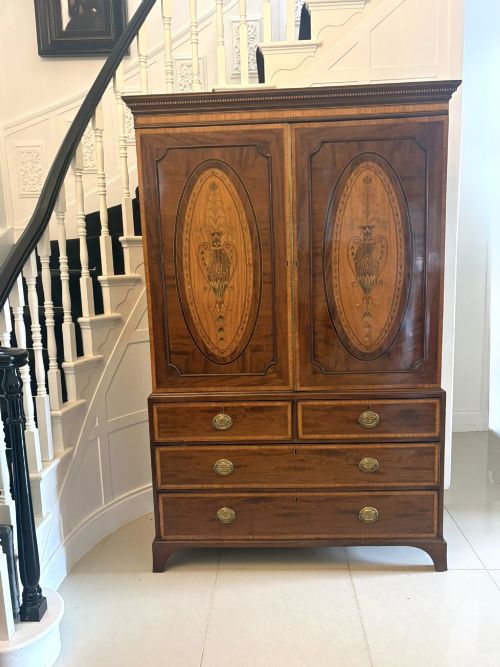
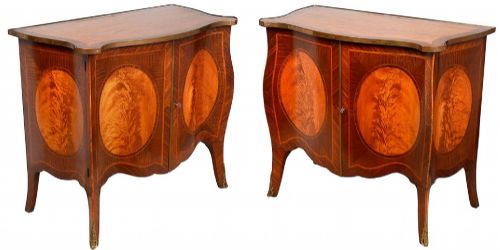
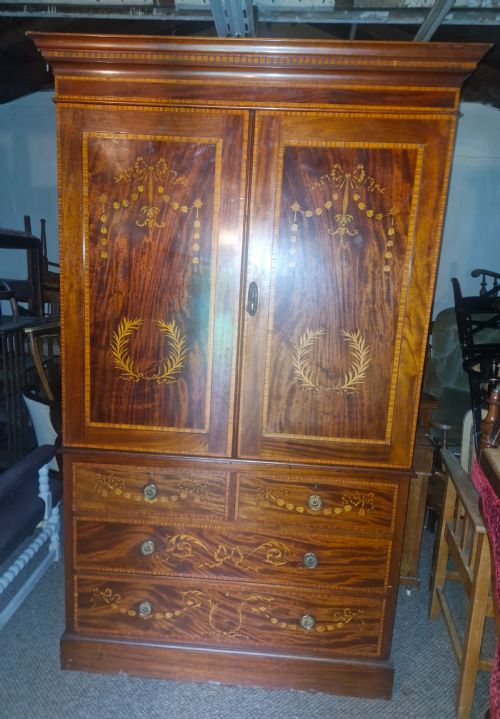
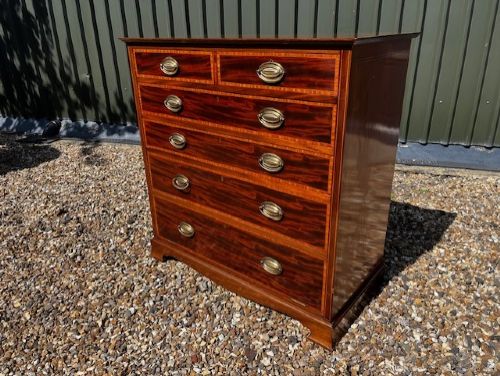
A sheraton satinwood chest brings pale timber and delicate inlay into a room, offering functional storage with classical proportion.
Sheraton Satinwood Chest
A sheraton satinwood chest spans forms from large drawers and tallboys to smaller commodes and dressing tables, appearing across the Georgian, Edwardian, and Victorian periods.
The version most commonly met on this page is the Edwardian revival piece or the 18th century original, utilising satinwood alongside mahogany and harewood.
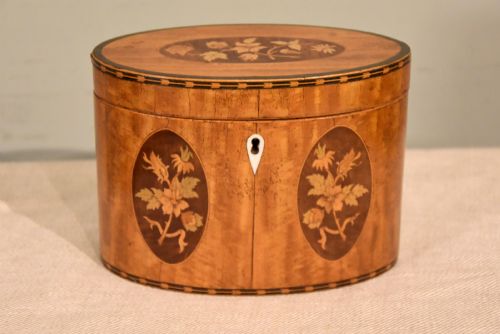
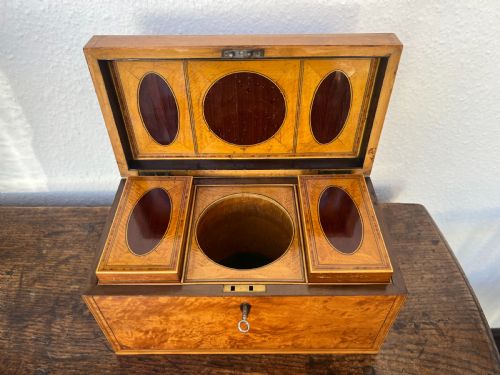
Makers such as Druce and Co., Edwards and Roberts, and Gillows appear among the listings, alongside tea caddies, bureaux, and linen presses sharing similar classical vocabulary.
Materials and construction
Craftsmen built these pieces using satinwood veneers laid over stable secondary woods, incorporating mahogany and boxwood for structural strength and contrast.
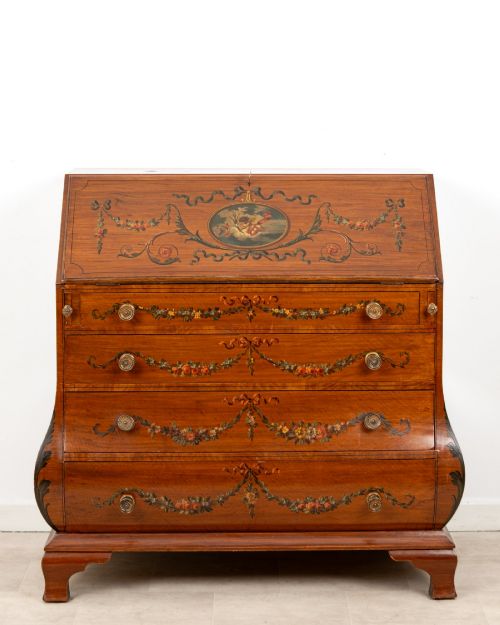
Decoration relied upon intricate wood inlay, hand painting, and shell motifs, complemented by brass hardware and ebony or harewood banding.
Listings span the 18th century, Georgian period, and Edwardian revival, uniting satinwood, mahogany, boxwood, and brass in chests, caddies, and commodes.
Judging quality
Quality rests in the precision of the wood inlay and the crispness of the painted details, where superior pieces display seamless alignment and harmonious grain patterns across every drawer front.
The selection of timbers dictates overall merit, separating standard production from exceptional examples through the depth of the satinwood figure and the careful choice of contrasting bandings like ebony and boxwood.
Druce and Co.·Edwards and Roberts·Gillows
The Sheraton Satinwood Chest Glossary
- Satinwood
- A lustrous tropical timber known for its golden, reflective sheen and smooth grain. It forms the primary visible surface on fine classical case furniture.
- Marquetry
- The art of creating decorative patterns on furniture using thin veneers of different coloured woods. It requires precise cutting and fitting by hand.
- Serpentine
- A curved shape reminiscent of a snake, featuring a convex centre flanked by concave ends. This contour adds movement to drawer fronts and commodes.
- Teapoy
- A small stand or caddy designed specifically to hold tea leaves and caddies. These boxes often feature elaborate interior compartments and fine exterior inlay.
- Banding
- A narrow strip of contrasting timber inlaid around the edges of drawer fronts or tabletops. It defines the geometric borders typical of classical design.
Sheraton Satinwood Chest: Frequently Asked Questions
How do I date a satinwood chest?
Dating relies upon construction methods, secondary timbers, and stylistic markers such as the presence of painted decoration or specific banding styles.
Eighteenth-century examples typically show hand-cut dovetails and native secondary woods, whereas Edwardian revival pieces often reveal later manufacturing signatures and machine-cut elements.
What is Sheraton style?
Sheraton style draws on neoclassical geometry, straight lines, tapered legs, and contrasting veneer bandings popularised in the late eighteenth century.
Revival pieces produced during the Edwardian era adopted these exact proportions and decorative motifs, applying them to chests, commodes, and writing desks.
How should I clean satinwood?
Maintenance requires gentle dusting with a dry, soft cloth to protect the delicate veneer and historical wax finishes.
Harsh chemical cleaners and excessive moisture must remain absent, as water penetrates old timber and lifts fragile inlay work.