

Sheraton Satinwood Bureau
A sheraton satinwood bureau brings refined 18th-century elegance and intricate cabinetmaking into a room through pale timbers and delicate classical decoration.
Sheraton Satinwood Bureau
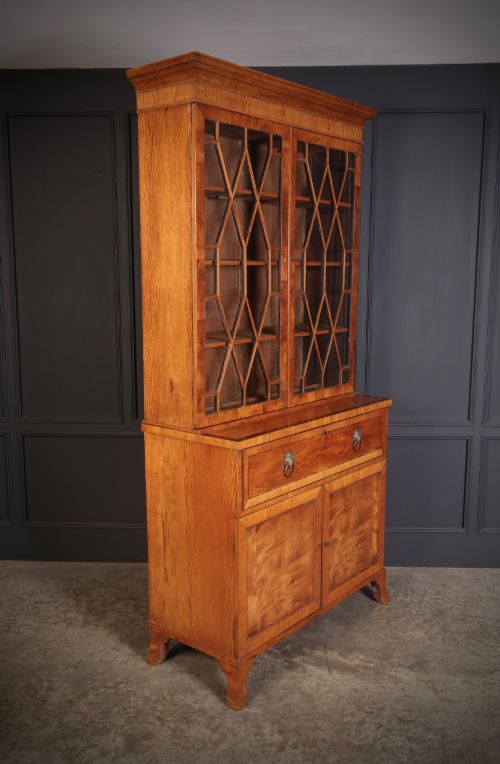
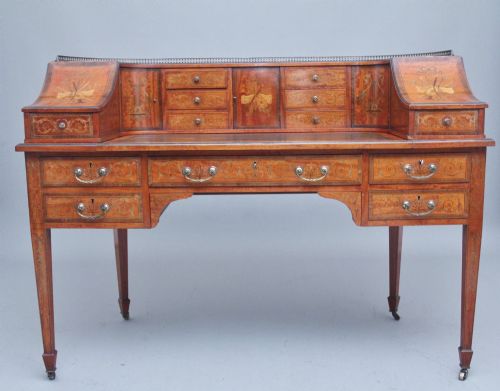
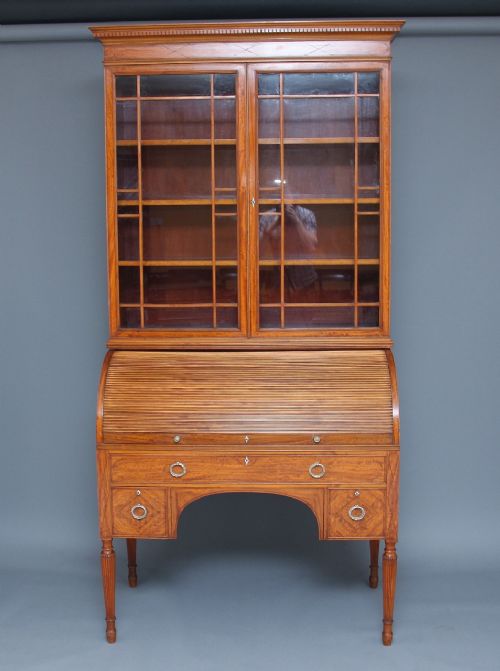
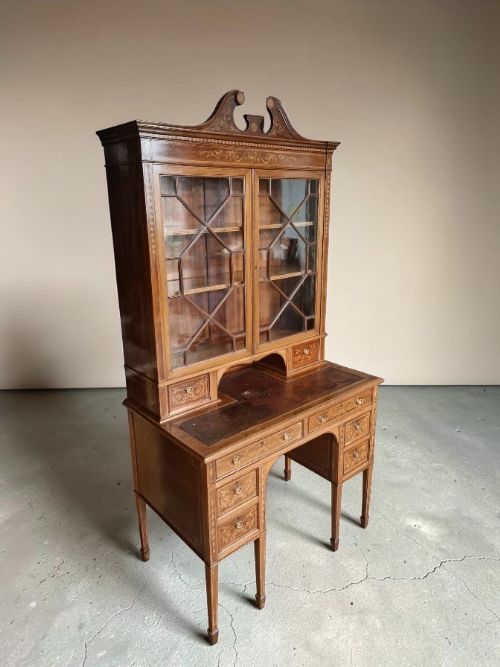
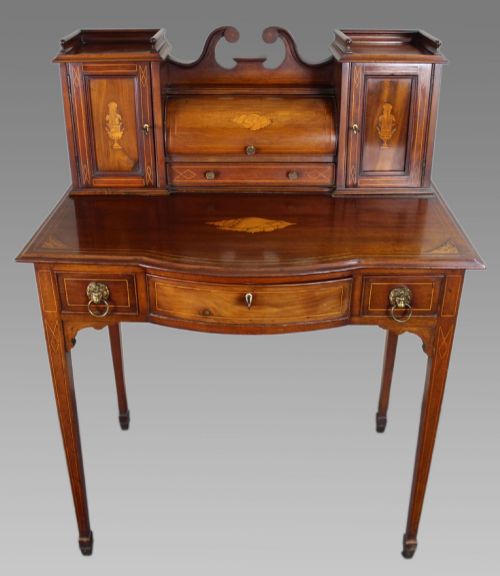
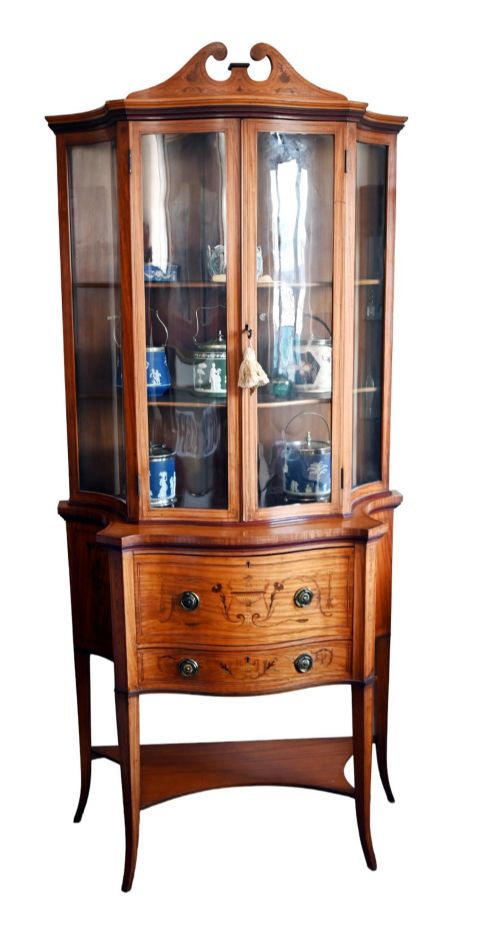
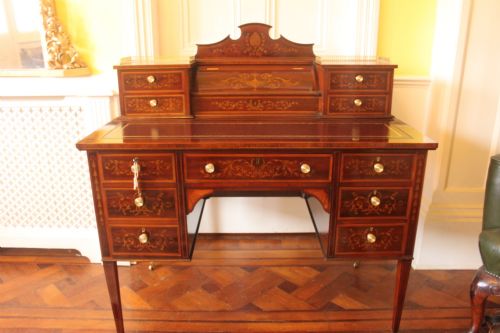
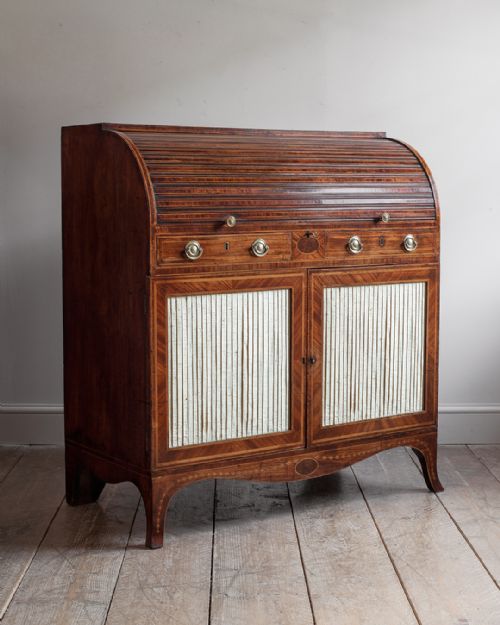
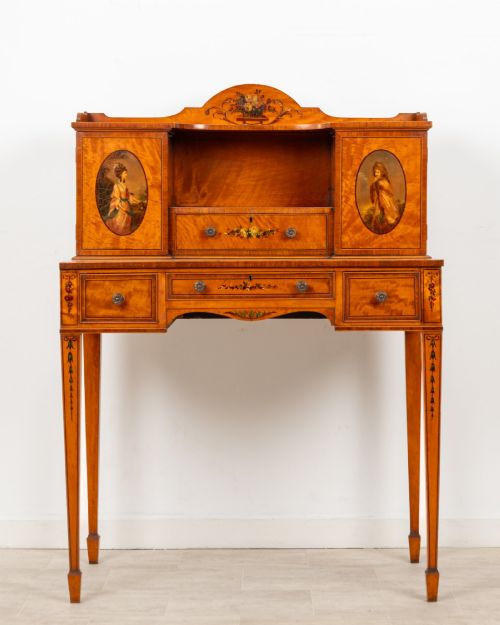
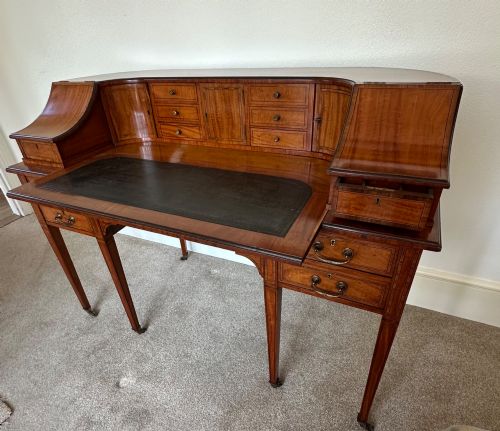
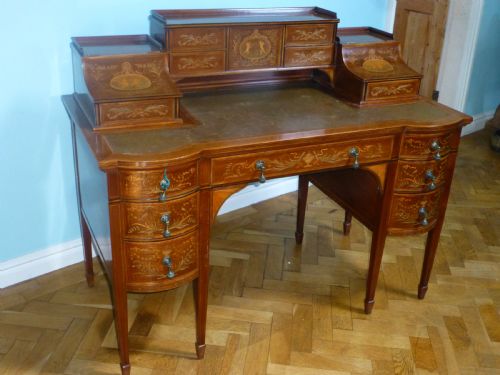
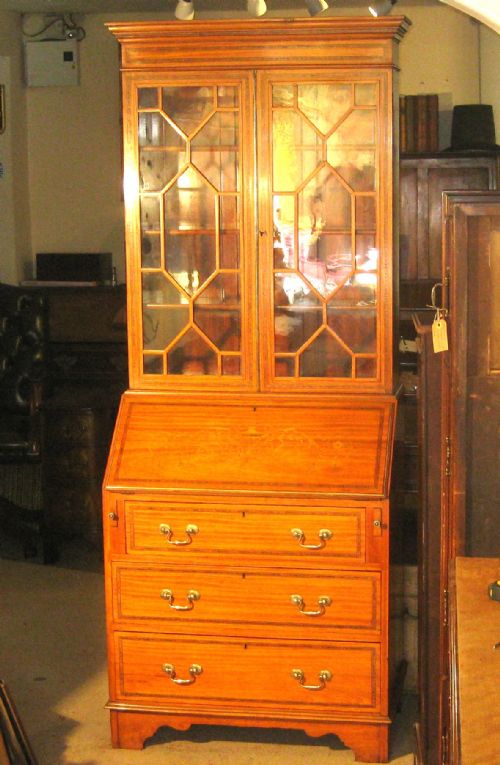
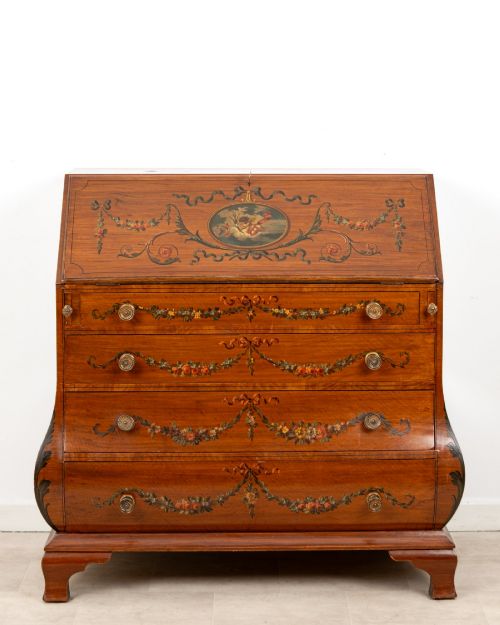
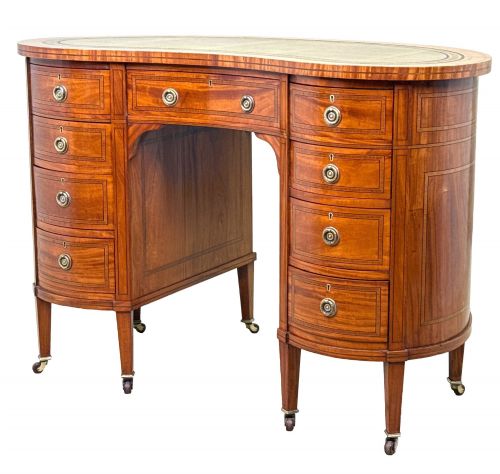
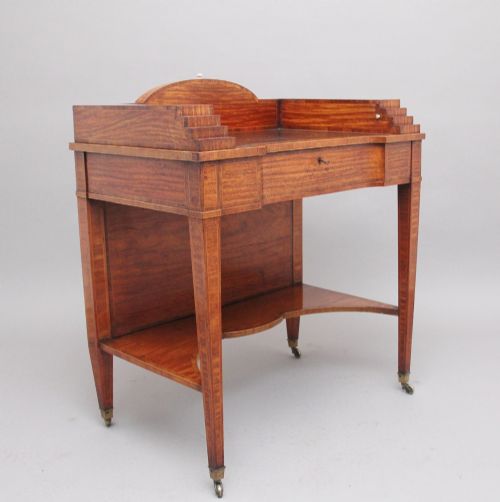
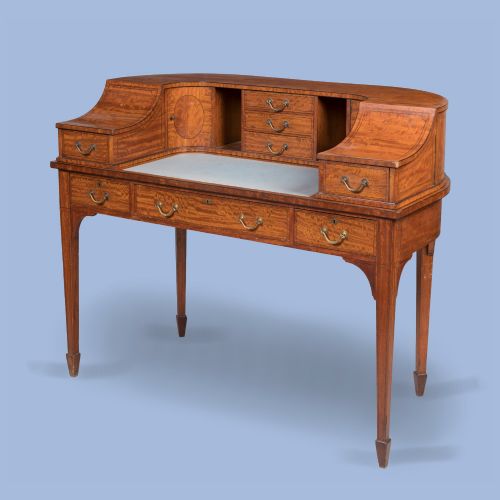
A sheraton satinwood bureau encompasses writing furniture built during the Georgian period and revived extensively through the Victorian and Edwardian eras. Buyers encounter various forms on this page, ranging from slope-front desks and bureau bookcases to cylinder desks and Carlton House tables.
The aesthetic relies on the light, golden hue of satinwood often contrasted with darker timber stringing, marquetry, and hand-painted motifs. Many examples follow the Sheraton Revival style, echoing the classical proportions and restrained neoclassical ornament popularised in the late 18th century.
Materials and construction
Cabinetmakers utilised satinwood veneers laid over secondary woods like mahogany, applying fine brass hardware and leather writing inserts. Inlay work frequently incorporated contrasting woods and shell motifs to define the architectural lines of the writing compartments.
Cylinder tops and tambour mechanisms demanded precise carpentry to ensure smooth operation of the rolling shutters that concealed internal drawers and pigeonholes. Hand-painting and marquetry ornamentation were applied to upper panels and desk lids to catch the light in formal reception rooms.
Sheraton Satinwood Bureau Retail Price Guide 2026
Typical asking prices for sheraton satinwood bureau among the pieces listed under this phrase on Sellingantiques today, from the lower quarter to the upper quarter. They describe what is for sale here now, not the wider market.
Materials appearing across the inventory include solid mahogany, brass fittings, leather writing surfaces, and glass-fronted bookcase doors.
Judging quality
The distinction between standard production and exceptional work rests on the crispness of the marquetry and the figure of the satinwood veneer. Finer pieces demonstrate meticulous matching of timber grains across drawer fronts and curved surfaces.
Makers known for high-end cabinetmaking achieved superior structural integrity in sliding mechanisms and internal stationery fittings. Hand-painted details on superior pieces show genuine artistic precision rather than stencilled repetition.
Edwards and Roberts·James Shoolbred·Gillows of Lancaster·Maple and Co·Henry Samuel
The Sheraton Satinwood Bureau Glossary
- Satinwood
- A durable hardwood noted for its lustrous, golden-yellow sheen and smooth texture. It served as the primary veneer for elite neoclassical furniture.
- Carlton House desk
- A horseshoe-shaped writing desk featuring a raised superstructure of small drawers and compartments around the back and sides. This form originated in the late 18th century and returned during the Sheraton Revival.
- Marquetry
- Decorative patterns formed by fitting together small pieces of coloured veneers into wood panels. Artisans used this technique to create floral and classical urn motifs.
- Cylinder top
- A quarter-circle wooden shutter that rolls back into the body of the desk to reveal the writing surface and interior drawers. It requires exacting joinery to function smoothly.
- Secretaire
- A piece of furniture containing a concealed writing drawer or fold-down writing flap. These often disguise themselves as standard chests of drawers or bookcase lower sections.
Sheraton Satinwood Bureau: Frequently Asked Questions
How do I identify a Sheraton Revival piece?
Sheraton Revival furniture dates primarily from the late 19th and early 20th centuries, imitating the light neoclassical forms of the 1700s. Look for machine-sawn veneers and secondary timbers that differ from genuine 18th-century stock.
The style relies heavily on satinwood, painted floral garlands, and tapering legs. Examining the interior construction usually reveals the later manufacturing date.
Where should I place a satinwood desk?
Satinwood benefits from placement away from direct sunlight, which can darken or bleach the golden timber over time. A position receiving indirect ambient light highlights the natural chatoyancy of the wood grain.
Because these desks often feature finished backs or refined panelling, many work well freestanding in the middle of a study.
How do I care for antique satinwood?
Maintain satinwood surfaces by dusting with a soft, dry cloth and avoiding modern silicone-based polishes. Occasional application of quality beeswax preserves the historical polish without building up a sticky residue.
Keep the room at a stable humidity level to prevent the fine veneers from lifting or cracking over the secondary wood base.