



Sheraton Revival Side Chairs
Sheraton revival side chairs bring lightness and crisp classical form to a room, drawing on eighteenth-century elegance through nineteenth- and twentieth-century craft.
Sheraton Revival Side Chairs
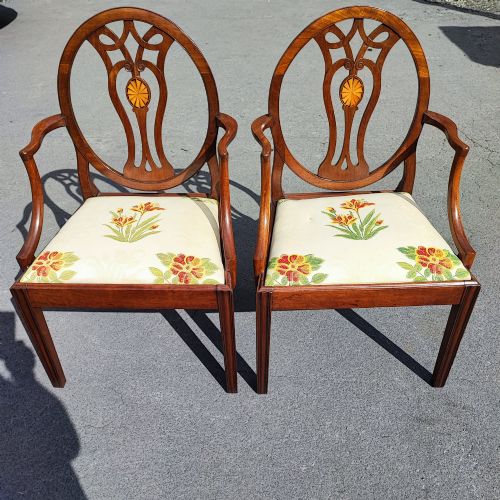
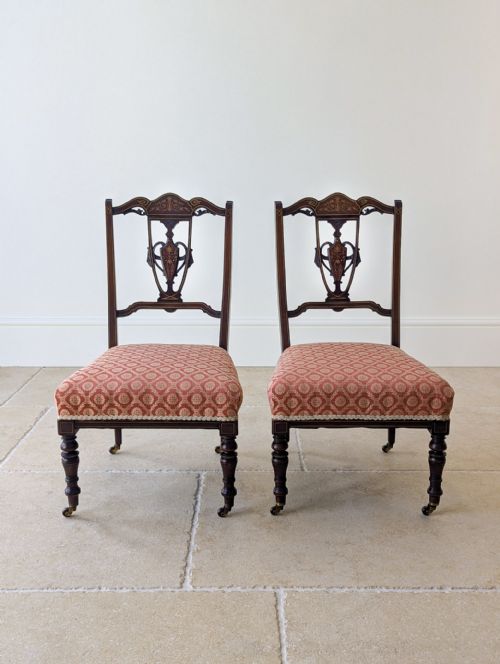
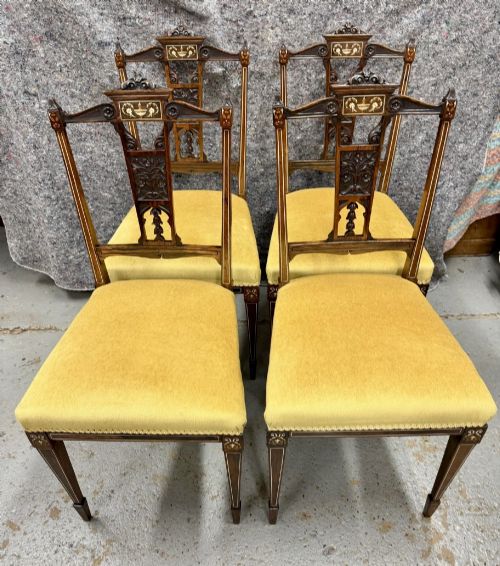
These pieces encompass dining chairs, salon chairs, and bedroom chairs created during the late nineteenth and early twentieth centuries under the influence of the Sheraton style and Georgian revival.
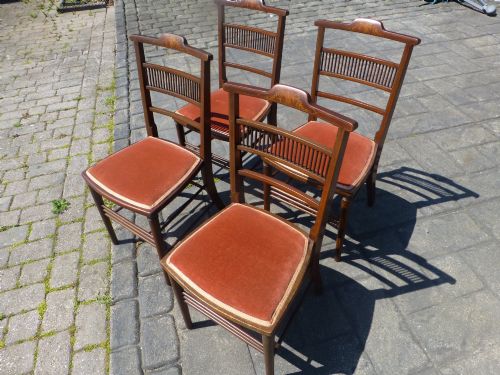
The version most commonly met on this page is the Edwardian mahogany side chair, often displaying satinwood inlay and delicate tapering legs.
Makers drew heavily on earlier pattern books, adapting formal dining seating for lighter domestic spaces such as bedrooms and drawing rooms.
Materials and construction
Workshops relied predominantly on mahogany and satinwood as primary timbers, frequently enriched by contrasting wood inlay and marquetry.
Frames were shaped using traditional joinery techniques, paired with upholstered pads covered in fabric or velvet.
Listings span the Victorian, Edwardian, and early twentieth-century periods, showing a strong preference for mahogany and satinwood.
Evaluating the standard
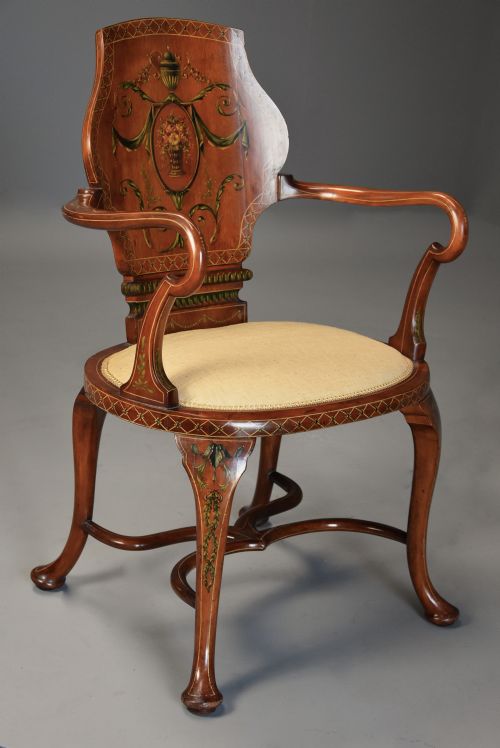
Distinctions in standard rest upon the crispness of the inlay and the depth of the carved or painted enrichment across the mahogany frame.
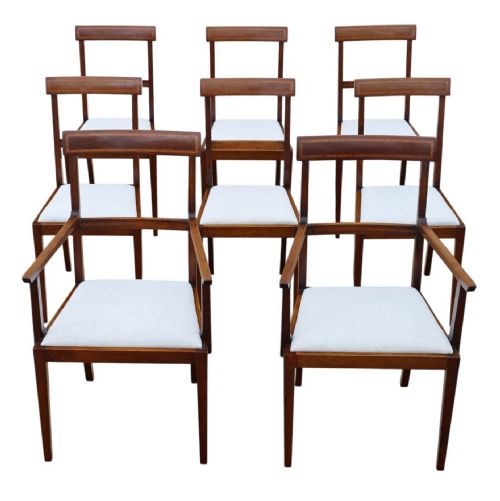
Matched sets display greater consistency in timber selection and upholstery execution than assembled groups gathered over time.
Brights of Nettlebed·Maple & Co
The Sheraton Revival Side Chairs Glossary
- Sheraton Revival
- A late nineteenth- and early twentieth-century design movement inspired by the neoclassical furniture of Thomas Sheraton. It favours slender proportions, straight legs, and delicate classical ornament.
- Marquetry Inlay
- The art of applying pieces of veneer to a structure to form decorative patterns and pictorial designs. This technique adds pictorial richness to the wood surface.
- Satinwood
- A durable, lustrous timber with a yellowish sheen used extensively for cabinetwork and contrasting stringing. It provides a bright visual accent against darker mahogany.
- Bergere
- An enclosed upholstered armchair with a wooden frame and woven cane panels on the back and sides. This form appears in select library and drawing room seating.
Sheraton Revival Side Chairs: Frequently Asked Questions
How do I date these chairs?
Dating relies on timber characteristics, construction methods, and the style of inlay work. Edwardian pieces often show lighter satinwood accents and softer patination than their nineteenth-century counterparts.
Examining the underside of the seat frame reveals tool marks and assembly clues that help place the chair within its correct period.
Are these suitable for daily dining use?
Most side chairs and dining chairs from this period remain sturdy enough for regular seating if the frame joints are secure. Proper maintenance of the wood and upholstery ensures longevity in daily settings.
Care should be taken with delicate satinwood inlay and painted surfaces when placing chairs in high-traffic areas.
What is the difference between salon and dining chairs?
Salon chairs are typically lighter in scale and designed for decorative placement in drawing rooms or bedrooms rather than heavy dining use. They often feature more elaborate painted decoration or marquetry.
Dining chairs prioritise structural stability and upright support for placement around a table.
How should I care for inlaid wood?
Inlaid surfaces benefit from regular dusting with a soft, dry cloth and occasional application of appropriate furniture wax to nourish the timber. Direct sunlight and sudden temperature changes can cause veneers to lift.
Keeping the room humidity stable protects both the mahogany structure and the delicate marquetry details.