


Sheraton Revival Mirror
A sheraton revival mirror brings refined neoclassical elegance to a room, using delicate marquetry and polished timber to catch the light.
Sheraton Revival Mirror
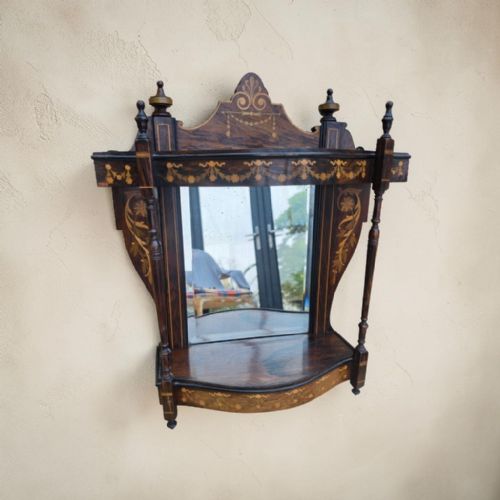
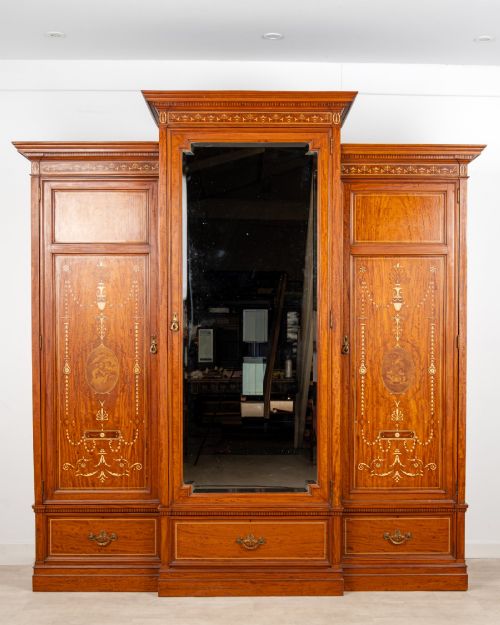
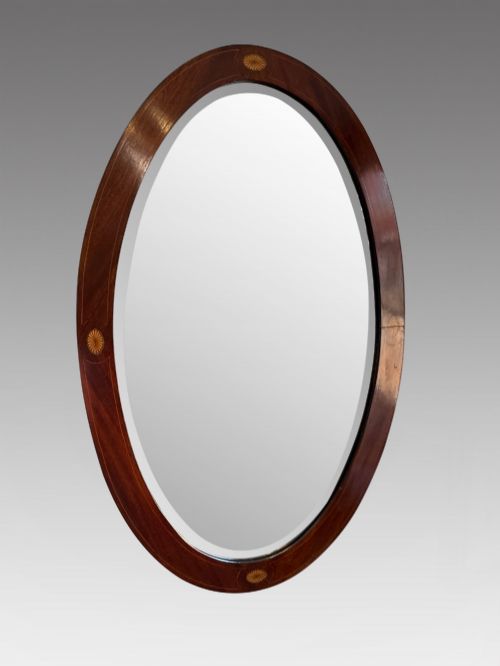
A sheraton revival mirror represents a deliberate return to eighteenth-century lightness, taking the form of wall-hung glasses, dressing table mirrors, and freestanding cheval mirrors. These pieces date predominantly from the Edwardian era and the late nineteenth century, reflecting a sustained Victorian and Edwardian fascination with refined neoclassical furniture.
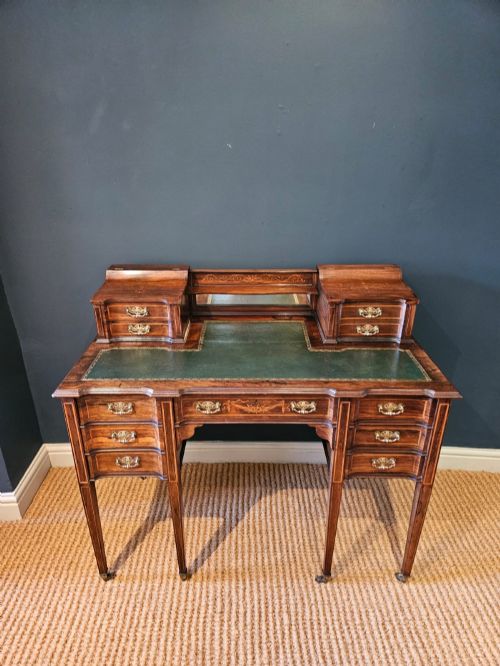
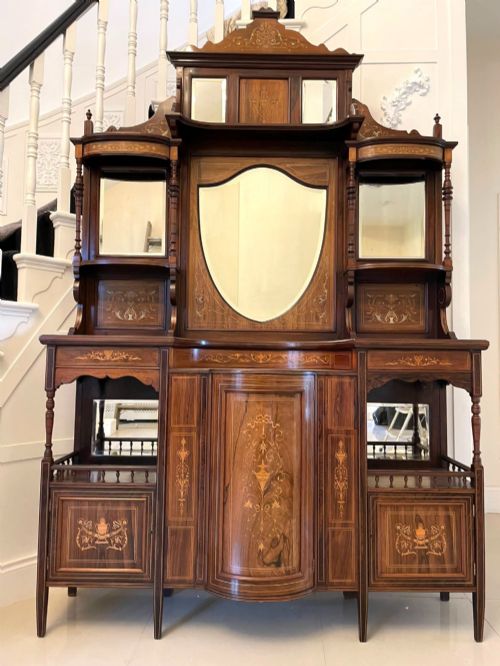
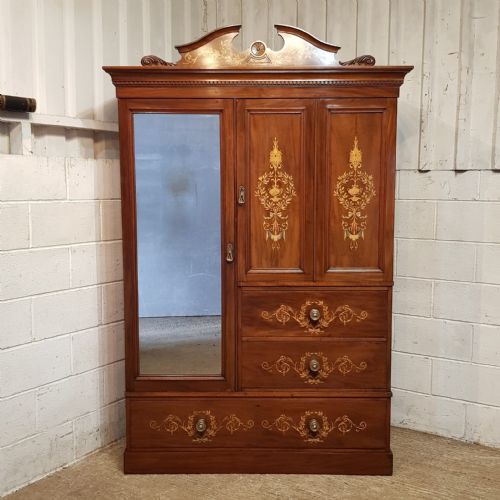
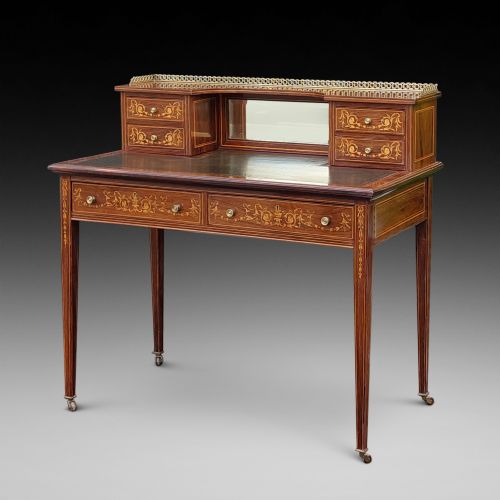
Most examples encountered here are constructed from mahogany or satinwood, frequently enhanced with contrasting wood inlays and marquetry motifs. Alongside dedicated mirrors, the selection includes related bedroom and reception furniture such as wardrobes, dressing tables, and display cabinets that incorporate glass panels within their overall designs.
How they were made
Cabinetmakers constructed these pieces using solid timbers and supportive veneers of mahogany, satinwood, and rosewood, applying precise crossbanding and contrasting stringing to define the geometric panels. Marquetry decoration added floral or classical urn motifs, contrasting light and dark woods to achieve the characteristic neoclassical aesthetic.
The glass elements consist of bevelled mirror plates set securely within rebated frames, accompanied by brass hardware such as pivoting pivots on swing mirrors and decorative handles on associated drawers.
Several pieces include hidden compartments and small swing drawers designed to keep secret letters safe behind the mirror frame.
What varies in quality
The distinction between standard and exceptional pieces rests primarily upon the crispness of the marquetry and the choice of primary timber. Finer examples display tightly figured satinwood or rich rosewood, where the inlaid details remain sharp and precisely fitted without excessive filler.
Structural refinement also separates the tiers, seen in the proportion of the frame supports, the depth of the bevel on the mirror plate, and the retention of original brass fittings rather than later replacements.
Maple & Co·Gillows
The Sheraton Revival Mirror Glossary
- Marquetry
- Decorative veneer work assembled in geometric or pictorial patterns using various coloured woods. This technique requires considerable skill to ensure the individual pieces fit seamlessly together.
- Satinwood
- A dense, lustrous timber with a yellow sheen frequently utilised for high-status neoclassical furniture. It provides a bright surface that reflects light effectively in domestic interiors.
- Cheval mirror
- A full-length mirror suspended on a freestanding vertical frame that pivots to adjust the viewing angle. These pieces typically incorporate sturdy floor stands with scroll feet.
- Crossbanding
- A border of veneer laid with the wood grain running perpendicular to the main panel. This method frames the central field of the furniture and adds visual definition.
- Overmantel mirror
- A large mirror designed to hang directly above a fireplace mantelpiece. They often feature extended wooden frames intended to anchor the visual weight of a chimney breast.
Sheraton Revival Mirror: Frequently Asked Questions
How do I date a sheraton revival mirror?
Dating relies on examining the secondary woods, the construction of the mirror backboards, and the style of the bevel on the glass. Late nineteenth and early twentieth-century examples often display machine-sawn framing components alongside hand-cut dovetails in associated drawer boxes.
Comparing the specific marquetry patterns and timber choices against documented pieces from periods like the Edwardian era helps narrow the timeframe of manufacture.
Where should I hang a wall mirror?
Wall mirrors function effectively above fireplaces, sideboards, or console tables where they can reflect natural light and create a sense of expanded depth in a room. Ensuring the wall fixings match the weight of the timber frame is essential for secure placement.
Positioning the glass at an appropriate eye level enhances both the functional use and the decorative balance of the interior wall.
Are cheval mirrors stable on carpets?
Freestanding cheval mirrors require a level surface to balance correctly on their pivoted side supports without wobbling. Placing them on thick carpets may require subtle shims beneath the feet to maintain an even vertical alignment.
The weight of the heavy mahogany or satinwood frame generally anchors the piece securely when adjusted properly.
How do I care for the polished wood?
Maintenance involves dusting the timber surfaces regularly with a soft, dry cloth to prevent the accumulation of abrasive particles. Avoiding direct sunlight and sustained dampness protects the delicate satinwood and mahogany veneers from fading or lifting.
Periodic application of appropriate wax polish helps nourish the grain and preserves the characteristic lustre of the antique finish.