




Sheraton Revival Ladies Bureau
These sheraton revival ladies bureau pieces combine delicate inlaid woods and compact writing surfaces, offering an elegant workspace for private correspondence.
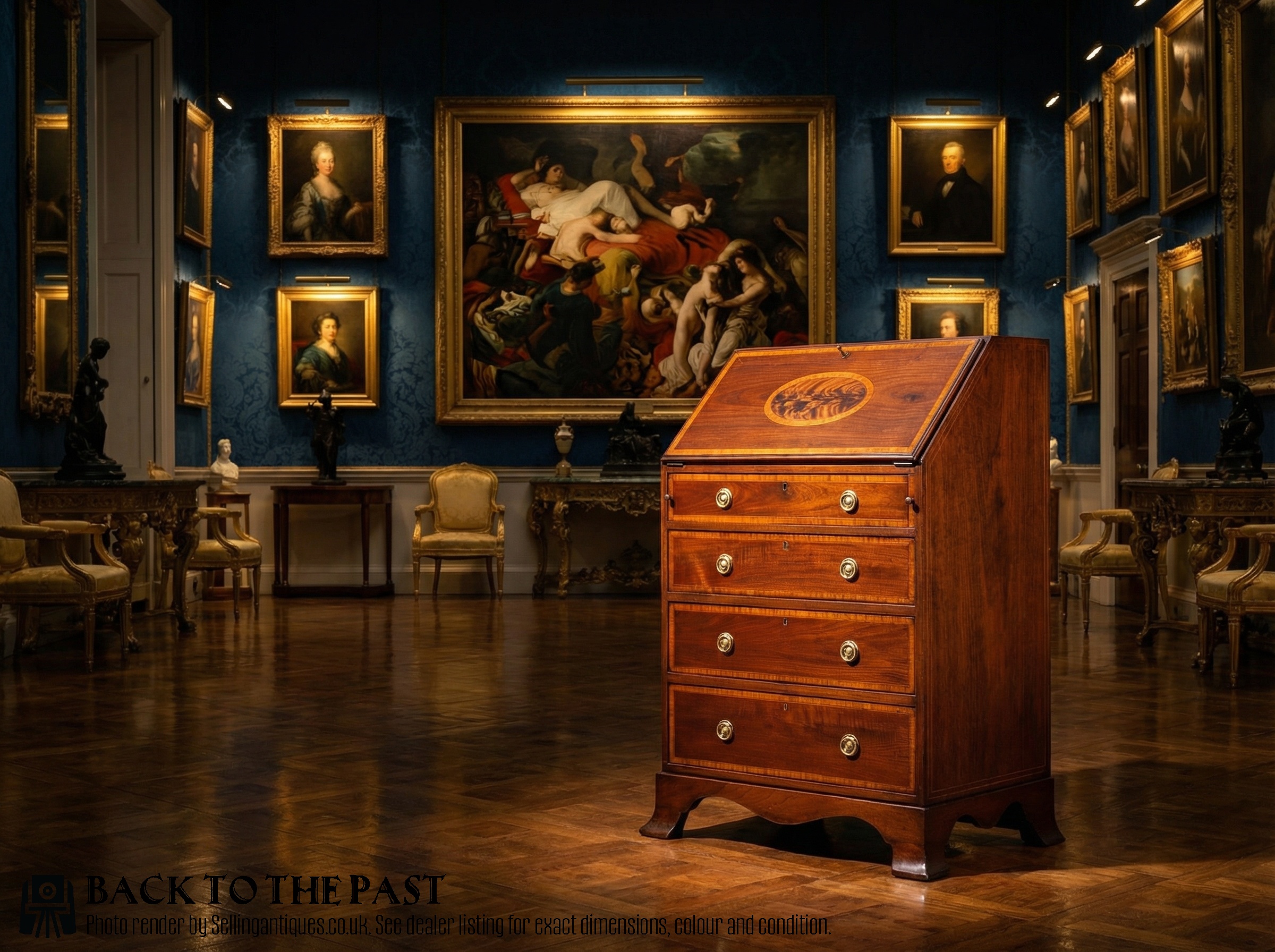
Sheraton Revival Ladies Bureau
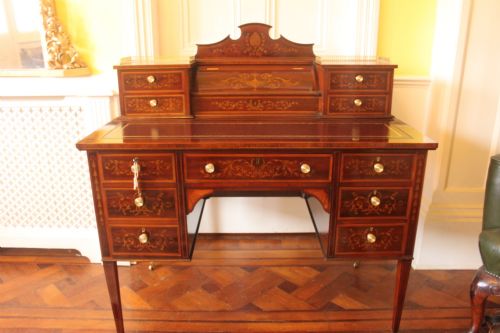
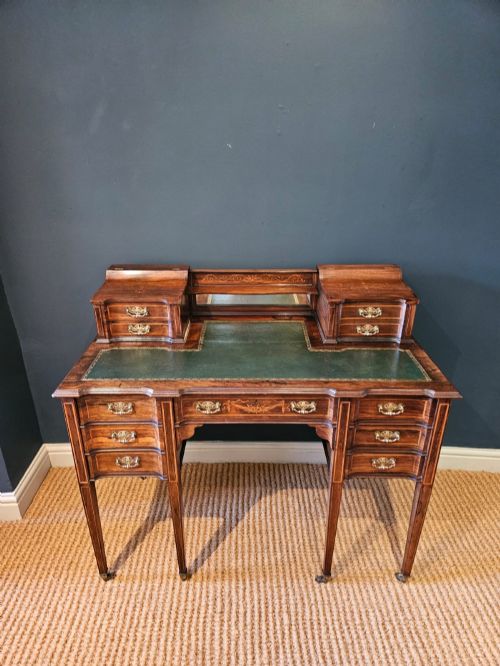
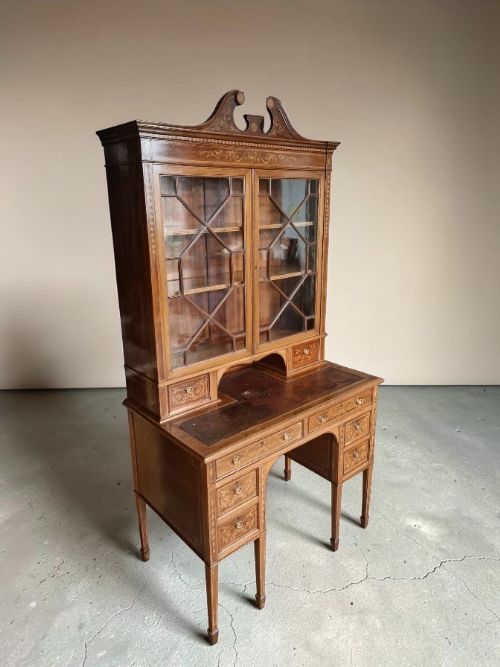
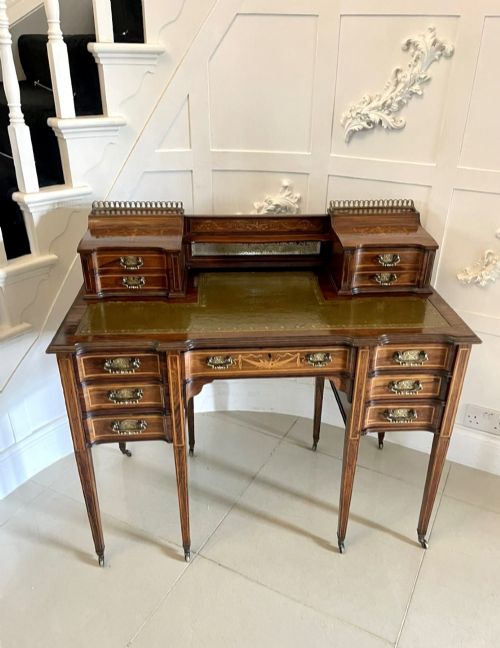
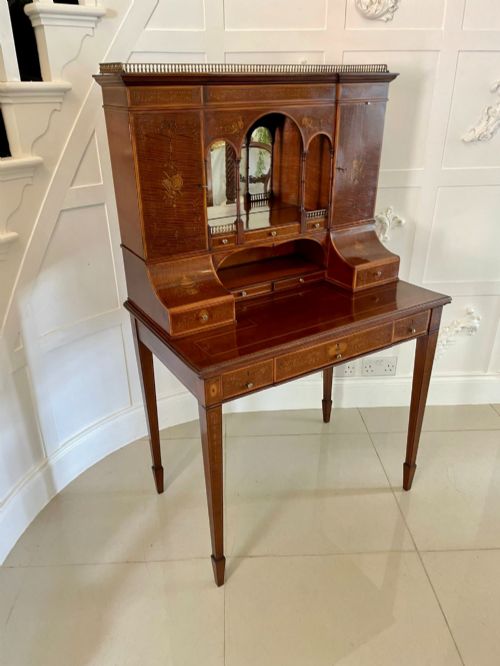
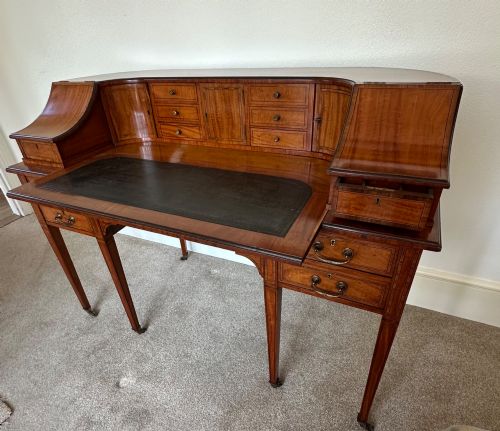
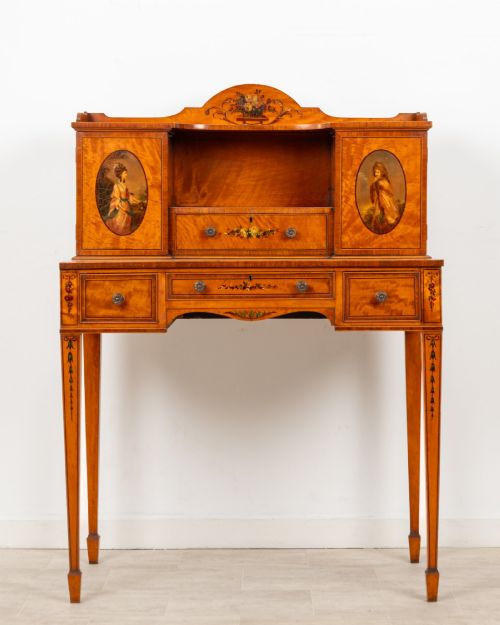
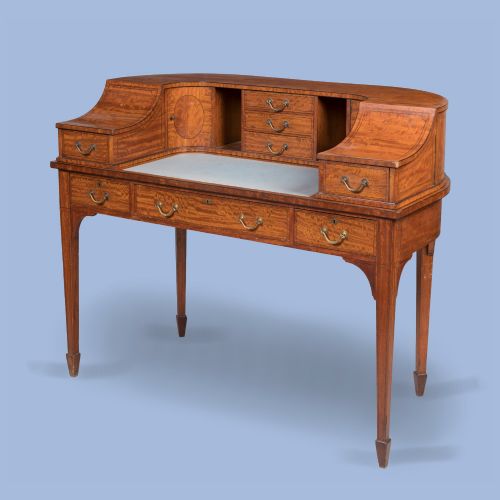
When you examine a sheraton revival ladies bureau on this page, you are looking at compact writing furniture originating primarily from the Edwardian period and late Victorian era. These pieces draw direct inspiration from eighteenth-century neoclassical designs, translated into lighter writing desks, fall-front bureaux, and bonheur du jour forms.
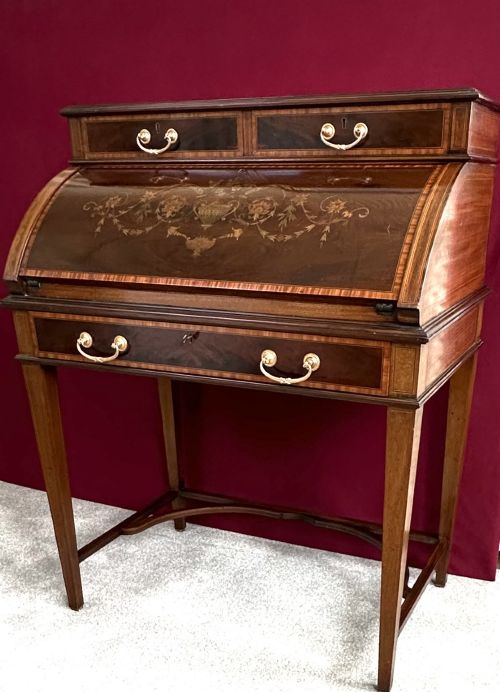
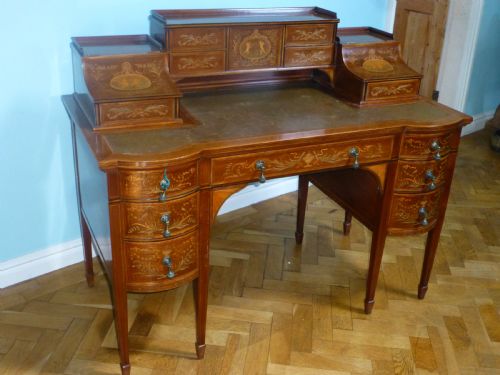
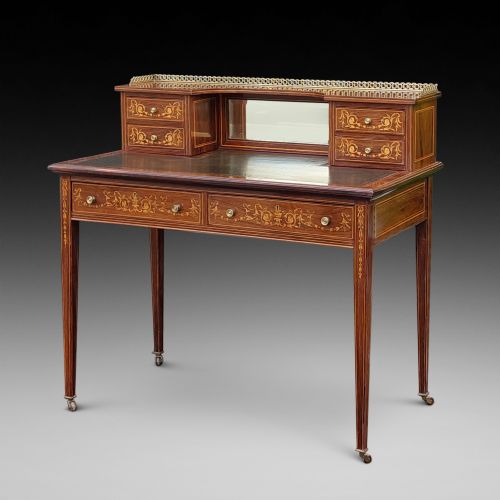
The versions you meet most frequently here feature satinwood or mahogany timbers, often enhanced by intricate marquetry and contrasting inlay. They appear in diverse formats including kidney-shaped tables, cylinder desks, and compact writing cabinets equipped with fitted interiors for stationery.
Originating in the nineteenth and early twentieth centuries, these writing pieces served domestic writing rooms and boudoirs. Their scaled-down proportions suit modern interior spaces while retaining period craftsmanship.
How they were made
Cabinetmakers utilised primary timbers such as mahogany, satinwood, and rosewood, applying fine veneers over stable secondary woods. Boxwood and various contrasting dark timbers supplied the linear stringing and pictorial marquetry characteristic of the style.
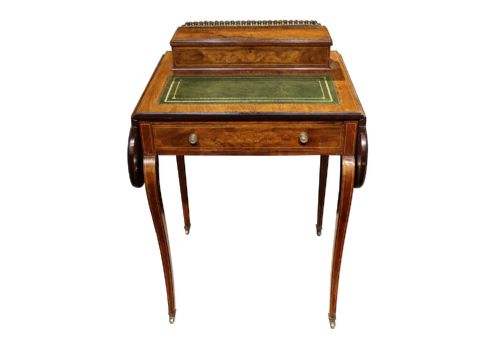
Surface decoration frequently incorporated hand-painted motifs alongside detailed woodwork, while brass fittings secured drawers and drops. Writing surfaces often integrated panels of tooled leather to provide a durable writing plane.
What varies in quality
The refinement of the marquetry inlay and the crispness of hand-painting separate standard production from exceptional examples. Cabinetmakers who executed intricate floral swags and precise crossbanding achieved a significantly higher artistic standard.
The choice and figuring of the timber veneers dictate visual depth, with select cuts of satinwood and rosewood commanding greater visual presence. Additionally, the complexity of internal fittings, such as secret drawers and miniature pigeonholes, reflects the original maker's investment of labour.
Maple and Co·Edwards and Roberts
The Sheraton Revival Ladies Bureau Glossary
- Satinwood
- A lustrous hardwood with a natural golden sheen, frequently used as a primary veneer in neoclassical revival furniture. It accepts fine inlay and painted decoration with exceptional clarity.
- Marquetry
- The art of forming decorative patterns using fitted pieces of various wood veneers, often depicting floral motifs or classical urns. Master craftsmen shaded individual pieces with hot sand to create a three-dimensional effect.
- Bonheur du jour
- A small, light ladies writing desk featuring a small cabinet or set of pigeonholes superstructure above the main writing surface. The term translates from French as daylight joy.
- Cylinder desk
- A writing desk featuring a quarter-cylinder rolling shutter that encloses the fitted interior and writing slide. When closed, it conceals papers and writing implements neatly.
- Stringing
- Thin lines of contrasting timber inlaid into the surface of furniture to create geometric borders and panels. This technique defines the edges of drawers and tabletops.
Sheraton Revival Ladies Bureau: Frequently Asked Questions
What is a bonheur du jour?
A bonheur du jour is a light writing desk featuring a small superstructure of shelves and drawers above the writing surface.
Cabinetmakers designed these compact pieces specifically for ladies' boudoirs during the nineteenth and early twentieth centuries.
How do I identify Sheraton Revival furniture?
Sheraton Revival pieces display neoclassical motifs such as tapered legs, urns, satinwood veneers, and delicate floral marquetry.
These items date predominantly from the late Victorian and Edwardian eras, reinterpreting eighteenth-century designs for modern homes.
Were these desks meant for daily writing?
These desks served for writing letters, managing household accounts, and storing personal stationery.
Their fitted interiors and small drawers provided organised compartments for inkwells, pens, and correspondence.
What is satinwood inlay?
Satinwood inlay involves setting pale, lustrous wood veneer into contrasting darker timbers like mahogany or rosewood.
Craftsmen used this technique to create geometric borders and decorative centrepieces on tabletops and fall-fronts.