

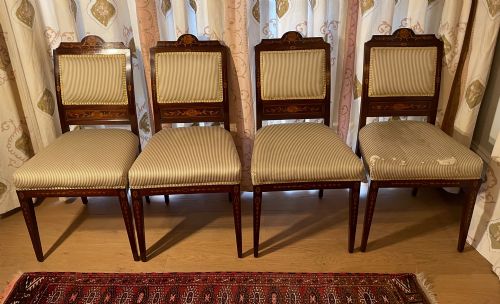
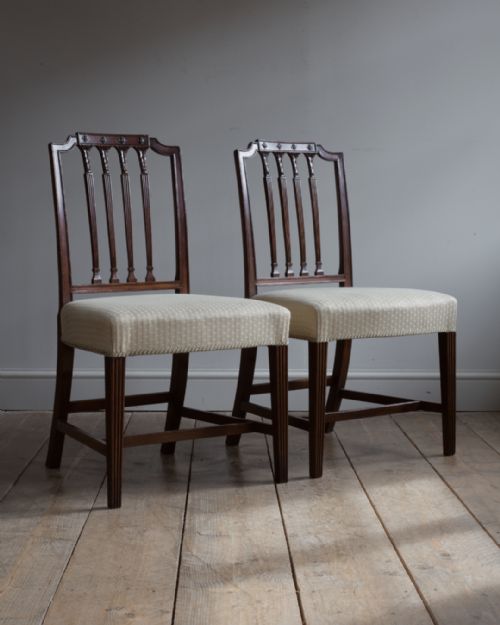
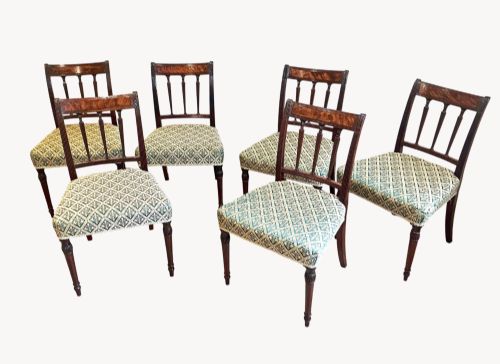
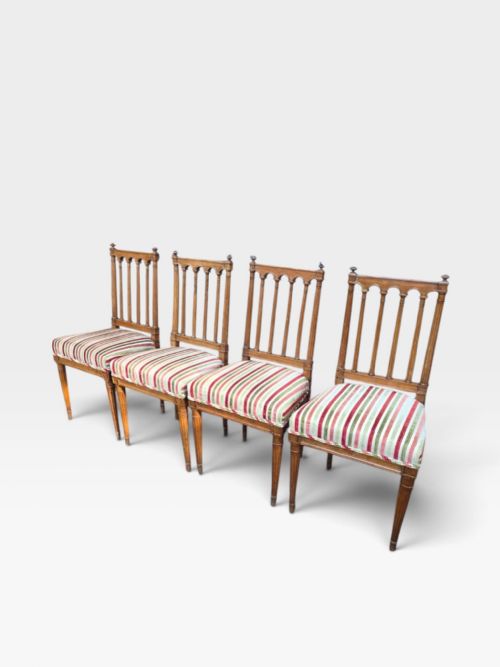

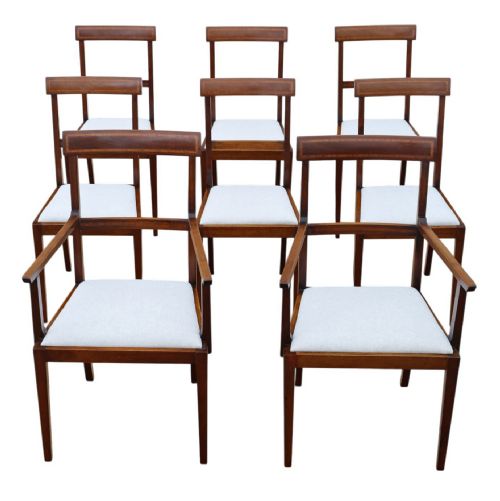


Sheraton Period Side Chairs
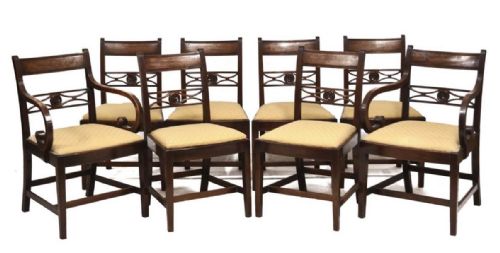
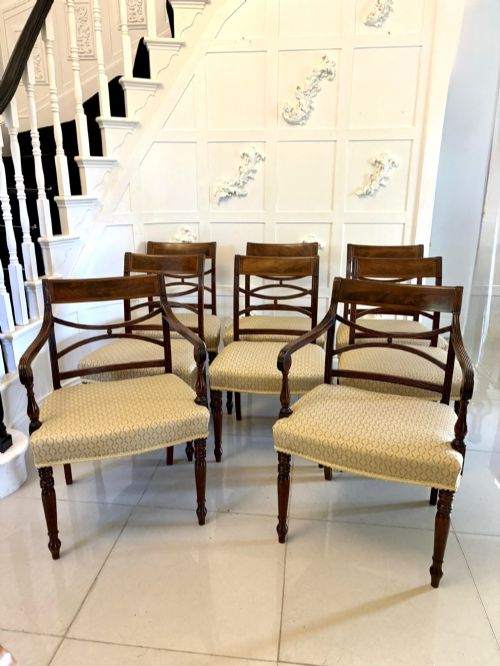
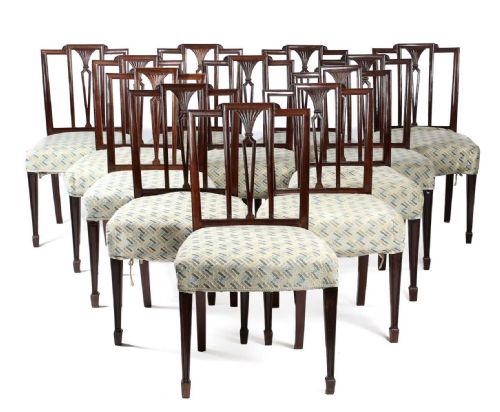
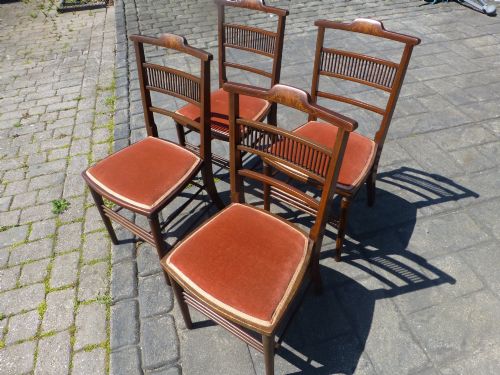
Sheraton period side chairs bring refined late eighteenth and early nineteenth-century elegance to a dining table.
Sheraton Period Side Chairs
Sheraton period side chairs represent the classic dining seating of the late eighteenth and early nineteenth centuries, spanning George III and Georgian eras as well as later Edwardian revivals. These pieces combine straight lines with classical geometry, offering a formal yet restrained silhouette for the dining room.
Buyers encountering this selection will find original eighteenth-century sets alongside Edwardian interpretations from around nineteen hundred and nineteen ten. These range from substantial sets of twelve down to intimate pairs, accommodating both large dining spaces and smaller rooms.
The designs draw on the aesthetic associated with Thomas Sheraton, executed in regional workshops and urban centres alike. Whether looking at a townhouse chair or country variations, the form remains disciplined and upright.
How they were made
Cabinet makers constructed these dining chairs primarily from mahogany, utilising its strength to achieve slender supports and delicate backrests. Artisans enhanced the timber surfaces with contrasting boxwood inlay to create fine geometric lines and classical motifs.
Seating portions feature various textile treatments, incorporating period upholstery, fabric, and velvet over pad or drop-in frames. These materials reflect the decorative tastes of both the Georgian era and the Edwardian revival period.
Sheraton Period Side Chairs Retail Price Guide 2026
Typical asking prices for sheraton period side chairs among the pieces listed under this phrase on Sellingantiques today, from the lower quarter to the upper quarter. They describe what is for sale here now, not the wider market.
The selection includes both urban George III townhouse designs and country Sheraton dining chairs.
What varies in quality
The standard of a set rests upon the crispness of the joinery and the precision of the boxwood inlay. Finer examples display meticulous attention to the tapering of the legs and the secure construction of the back splats.
Scale and proportion also dictate the standing of a piece, with superior chairs maintaining structural integrity without unnecessary bulk. The harmony between the wood grain and the chosen upholstery fabric completes the assessment.
The Sheraton Period Side Chairs Glossary
- Sheraton
- A late eighteenth-century neoclassical style defined by straight lines, rectangular backs, and contrasting string inlay. It draws inspiration from the design books published by Thomas Sheraton.
- George III
- The period spanning the reign of George the Third from seventeen sixty to eighteen twenty. Furniture from this era is noted for its classical proportions and fine mahogany construction.
- Edwardian Revival
- A phase around nineteen hundred when cabinet makers looked back to eighteenth-century models. These later interpretations often incorporate delicate inlay and lighter framing.
- Side chair
- A dining or occasional chair built without arms designed to sit at the sides of a table. These pieces prioritise a compact footprint to allow multiple chairs to fit comfortably.
- Boxwood inlay
- A decorative technique where pale wood is inserted into recesses within a darker timber base. This method creates fine contrasting lines along the crest rails and legs.
Sheraton Period Side Chairs: Frequently Asked Questions
How many come in a set?
Sets vary widely from pairs up to twelve pieces, often comprising six singles alongside armchairs. Buyers can select sizes that match their specific dining table requirements.
Larger groupings frequently originate from the eighteenth century, while smaller pairs often date to the Edwardian revival period.
What is the difference between original and revival pieces?
Original eighteenth-century pieces date directly from the Georgian era and show the tool marks and ageing of the period. Edwardian revival chairs date from around nineteen hundred and emulate those earlier eighteenth-century forms.
Both categories utilise mahogany and inlay, but the later pieces reflect the manufacturing standards and textile choices of the early twentieth century.
Are these chairs suitable for daily dining?
These dining chairs were built for formal domestic use and remain practical for everyday seating when structurally sound. Their upright proportions provide comfortable support during meals.
Care should be taken to match the height of the chair to standard modern dining tables.
What wood was used?
Mahogany serves as the primary timber across the majority of these listings, chosen for its durability and rich dark grain. Boxwood is frequently employed alongside it for contrasting inlay details.
This combination provides the characteristic linear definition associated with the style.