
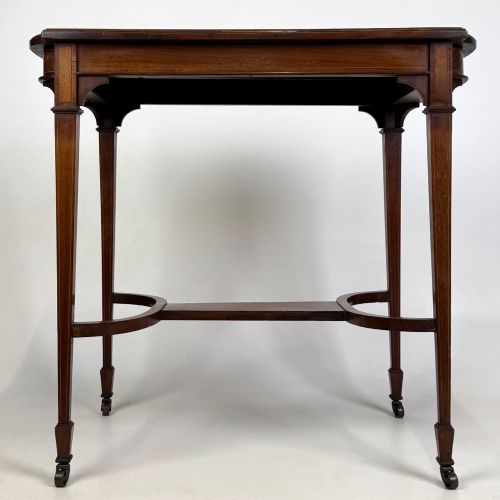
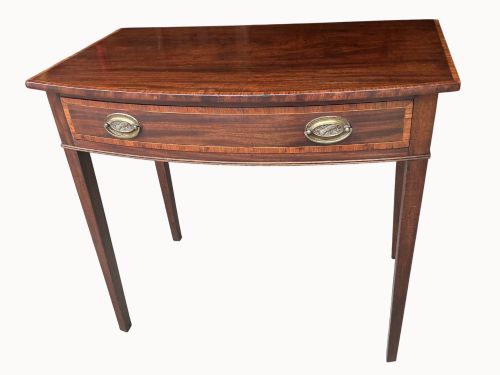
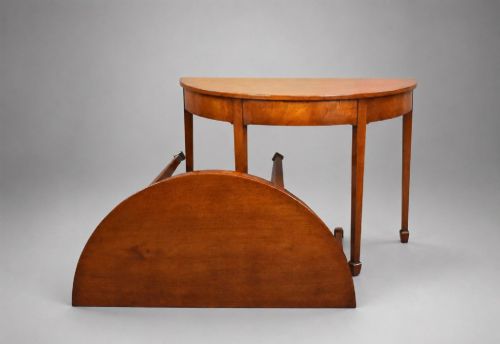

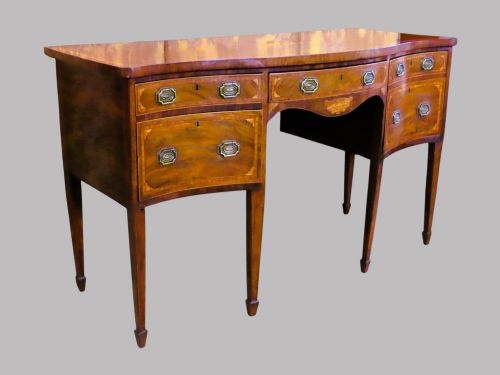
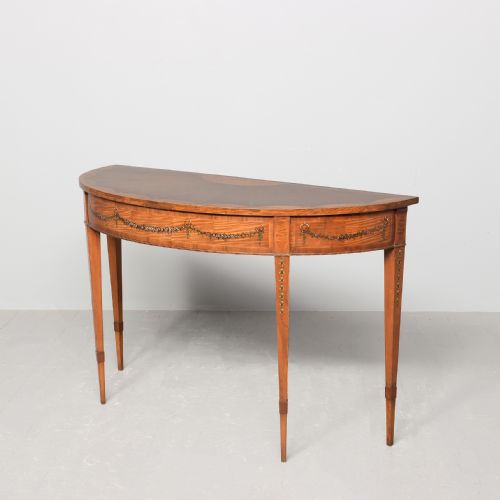


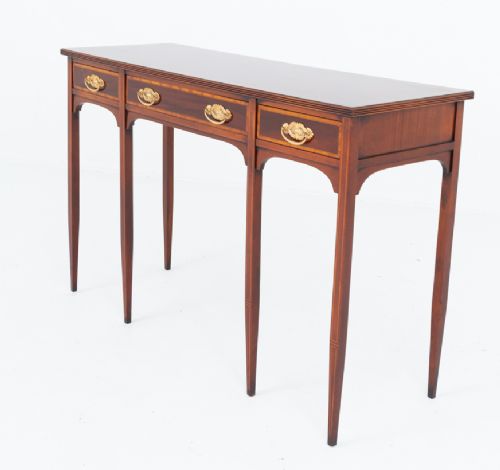

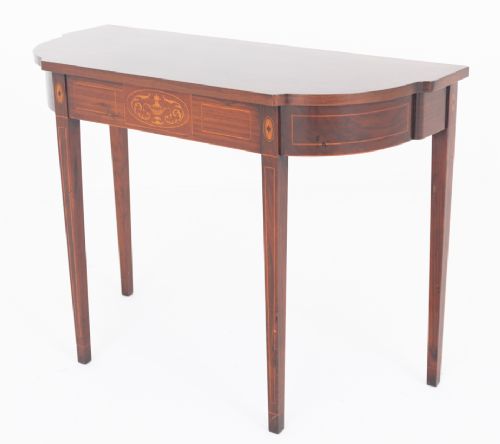

Sheraton Mahogany Hall Table
Sheraton mahogany hall tables bring refined Neoclassical lines and rich timber figuring to an entrance.
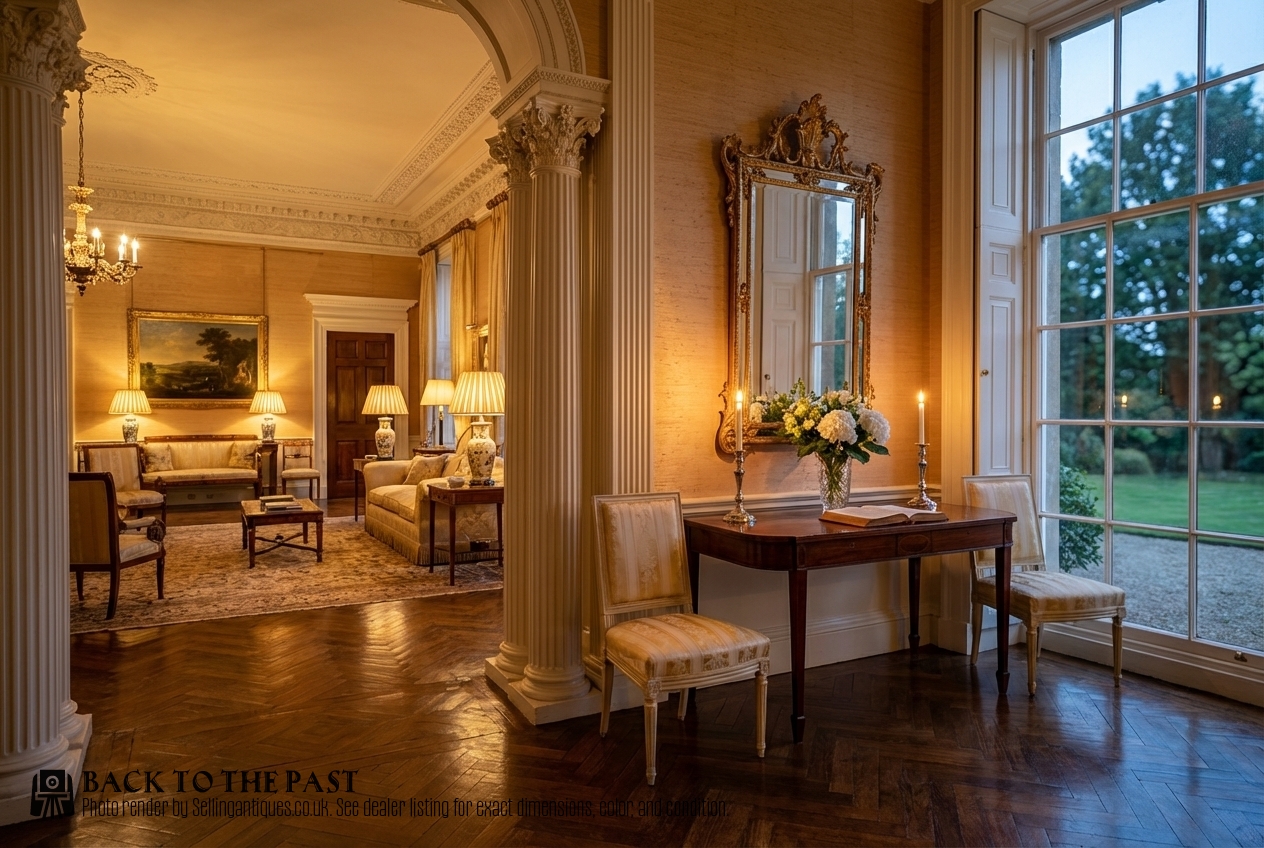
Sheraton Mahogany Hall Table
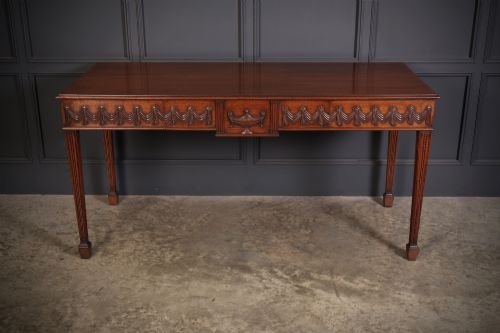
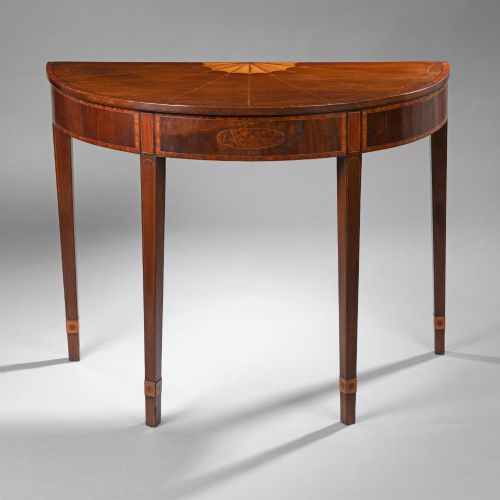
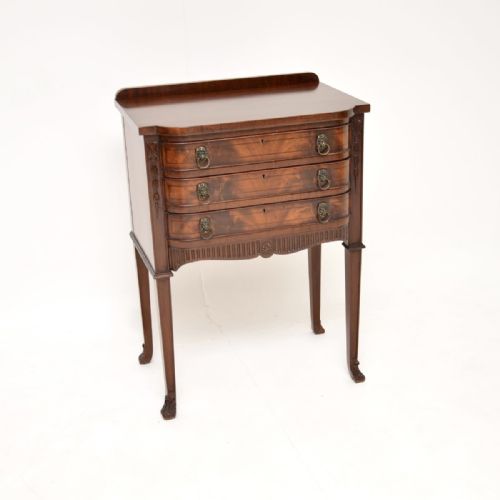
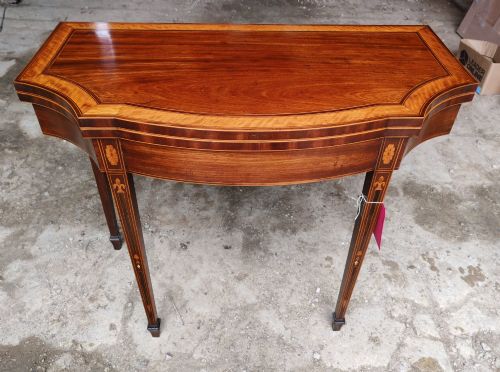
A Sheraton mahogany hall table provides a formal surface for an entryway, balancing utility with strict geometric proportion. These pieces appear in forms such as demi-lune console tables, side tables, and servers, often shaped with bow fronts or straight edges.
The pieces on this page span several periods, from authentic Georgian examples dated to the eighteenth century through nineteenth-century pieces down to Edwardian and Sheraton Revival revivals. The surviving record includes demilune shapes designed to fit flush against a wall as well as fold-over card and tea tables.
Makers and workshops from the Edwardian era onwards reinterpreted these eighteenth-century designs, applying satinwood and boxwood inlay to rich mahogany carcasses. Buyers will encounter both period originals and later revival pieces intended to bring classical elegance into domestic hallways.
How they were made
Construction relies heavily on dense mahogany timber, selected for deep grain patterns and stability. Craftsmen shaped these woods into curved demi-lune frames and straight console tables using traditional joinery.
Decoration is achieved through contrasting timbers and meticulous woodworking techniques. Boxwood and satinwood inlay create crisp geometric borders and fan motifs, while occasional painted surfaces add delicate colour to Edwardian tops.
Several tables include hidden fold-over leaves, ready to transform a narrow hallway console into an impromptu card table.
What varies in quality
Quality rests upon the crispness of the boxwood and satinwood inlay and the careful selection of the mahogany veneer. Better pieces display precise hand-cut stringing and balanced grain matching across curved demi-lune tops.
Structural integrity and proportion distinguish superior examples from simpler ones. Finer tables maintain slender, tapered legs that support the weight of the top without heavy bracing, showing a refined understanding of Neoclassical balance.
Edwards & Roberts
The Sheraton Mahogany Hall Table Glossary
- Demi-lune
- A half-moon shape used for console and hall tables designed to stand flat against a wall. This profile saves floor space while offering a decorative surface.
- Boxwood inlay
- Light-coloured wood inserted into darker mahogany to create contrasting lines and geometric patterns. It defines the edges and panels of Sheraton furniture.
- Console table
- A table supported by wall brackets or legs, intended to stand against a wall in a hall or receiving room. These pieces hold lamps or decorative objects.
- Sheraton Revival
- A late nineteenth and early twentieth-century movement that recreated the lightness and classical ornamentation of late eighteenth-century furniture. It relies on mahogany and satinwood veneers.
- Stringing
- Thin lines of contrasting wood inlaid into channels cut into the solid timber or veneer. This linear decoration frames table tops and drawer fronts.
Sheraton Mahogany Hall Table: Frequently Asked Questions
How do I spot a revival piece?
Sheraton Revival tables typically date from the late nineteenth or early twentieth century and show machine-cut precision in their boxwood stringing. The mahogany grain and interior secondary woods often appear lighter and more uniform than eighteenth-century stock.
Examining the construction methods underneath helps separate an Edwardian interpretation from a Georgian original.
What is the difference between a console and a side table?
Console tables traditionally stood against a wall, sometimes relying on the wall or brackets for stability, though many freestanding versions exist in later periods. Side tables are self-supporting furniture pieces designed to stand against any room perimeter.
In hall settings, the terms often overlap depending on whether the back edge is finished to stand away from the wall.
How do I care for mahogany surfaces?
Mahogany responds best to occasional applications of beeswax and gentle buffing with a soft cloth. Avoid placing tables in direct sunlight or near heat sources to prevent the timber and veneers from drying out.
Keeping humidity stable protects both the solid wood and the delicate boxwood inlay.