
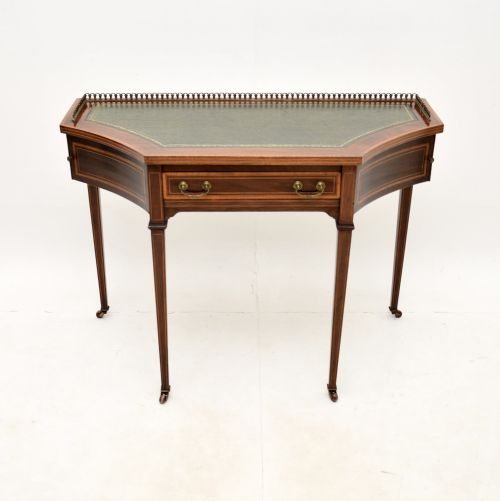
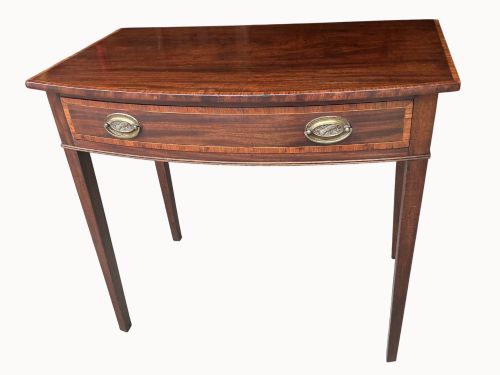

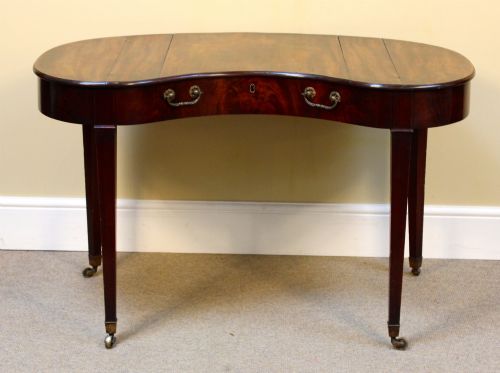


Sheraton Mahogany Dressing Table
A sheraton mahogany dressing table brings refined classical proportion and delicate inlay into a bedroom.
Sheraton Mahogany Dressing Table
When you search for a sheraton mahogany dressing table, you encounter pieces spanning from the late eighteenth century through the Edwardian Sheraton Revival period. These items typically feature polished mahogany surfaces, often enhanced with contrasting stringing or satinwood details.
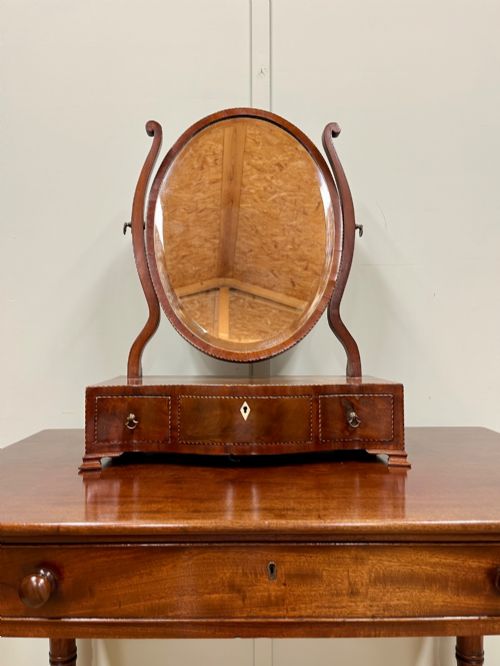
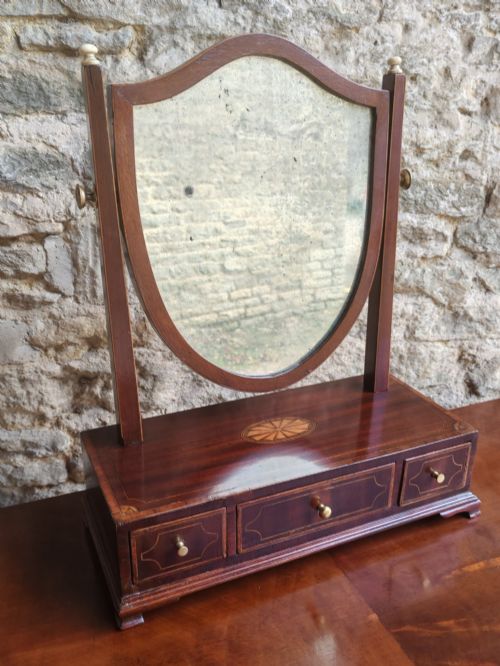
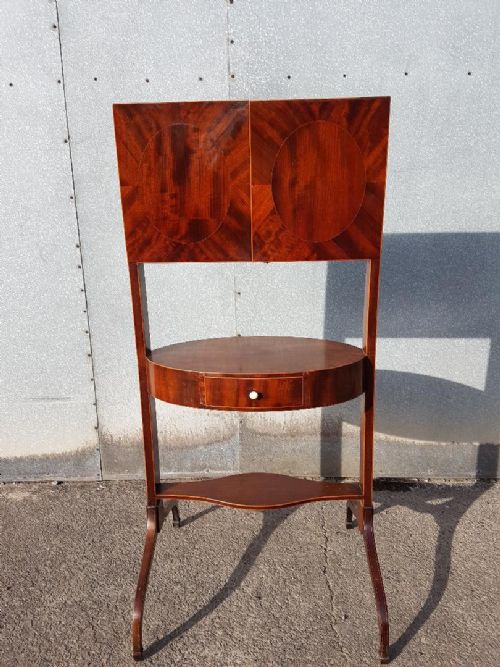
The most common forms on this page include cheval mirrors, table-top swing mirrors, and full dressing units equipped with drawers. Many examples reflect the lighter, more graceful lines that define the Sheraton style, moving away from heavier earlier designs.
How they were made
Cabinet makers constructed these pieces using solid mahogany and mahogany veneers over secondary timbers, frequently selecting flame mahogany for drawer fronts to create figured patterns. Surfaces were then hand-polished to a warm sheen.
Inlay work relied on contrasting timbers such as boxwood and satinwood, cut meticulously and set flush into channels carved into the primary wood. Brass fittings, including ring handles and swing brackets, secured the mirrors and drawers.
Many dressing mirrors include tiny hidden compartments behind the drawer banks, originally intended for concealing secret correspondence.
What varies in quality
The standard of a sheraton mahogany dressing table rests upon the crispness of its inlay and the selection of the timber. Finely figured flame mahogany and precise, unbroken boxwood stringing indicate superior workshop production.
Structural integrity also dictates worth, visible in the dovetail joinery of the drawers and the stability of the mirror frames. Pieces retaining their original brass hardware and glass hold greater integrity than later replacements.
James Shoolbred of London·Edwards & Roberts·Maple & Co.
The Sheraton Mahogany Dressing Table Glossary
- Sheraton Revival
- A late nineteenth and early twentieth century design movement that recreated the lighter classical forms of the eighteenth century. It often utilised mahogany with delicate satinwood inlay.
- Boxwood Inlay
- The practice of embedding narrow strips of pale boxwood into contrasting darker wood to form geometric or floral borders. This technique highlights the edges of drawers and tabletops.
- Toilet Mirror
- A smaller mirror designed to sit atop a dressing table or chest of drawers, frequently featuring small storage drawers in the base. These pieces swing on pivot pins.
- Flame Mahogany
- Timber cut from the fork of the mahogany tree where the branch meets the trunk, producing a distinctive flickering grain pattern. Cabinet makers reserved this veneer for prominent drawer fronts.
- Kneehole Desk
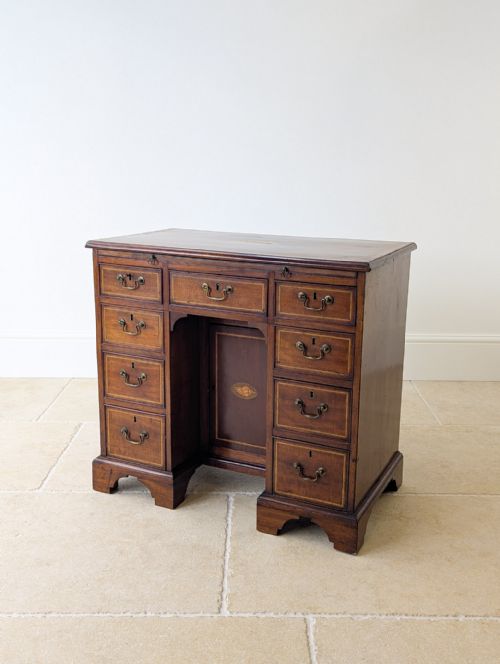
- A writing table or dressing table featuring a central recess for the user's legs, flanked by pedestals of small drawers. This form provides organised storage while maintaining a compact footprint.
Sheraton Mahogany Dressing Table: Frequently Asked Questions
How do I date a sheraton mahogany dressing table?
Examine the secondary timbers inside the drawers and the style of the dovetails, as Georgian pieces show hand-cut joints while Edwardian examples reveal machine precision.
Check the glass in the mirror; bevelled edges and heavier backing boards often point to the revival period around nineteen hundred rather than the eighteenth century.
What is the difference between an original and a revival piece?
Eighteenth-century originals display the specific wear patterns and timber ageing appropriate for their age, constructed with hand-sawn boards. Revival pieces from the Edwardian era emulate these classical lines using contemporary workshop methods.
Both categories utilise mahogany and inlay, but the internal construction details and secondary woods reveal the true period of manufacture.
How should I care for the mahogany surface?
Keep the wood away from direct sunlight and strong heat sources to prevent the mahogany finish from fading or the veneer from drying out. Dust the surface regularly with a soft, dry cloth.
Apply a quality beeswax polish occasionally to nourish the timber and maintain the warm sheen without building up a heavy residue.
Can I use a dressing table mirror on a modern chest?
A toilet mirror sits securely on most flat surfaces provided the depth of the chest matches the footprint of the mirror stand. Ensure the weight is evenly distributed.
Protect the surface of your modern furniture with felt pads beneath the feet of the mirror frame to prevent scratching the wood.