



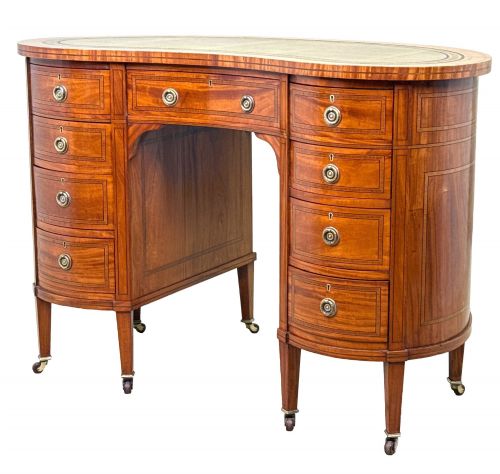
Sheraton Inlaid Writing Table
A sheraton inlaid writing table combines refined geometry with delicate marquetry, offering an elegant workspace rooted in classical design.
Sheraton Inlaid Writing Table
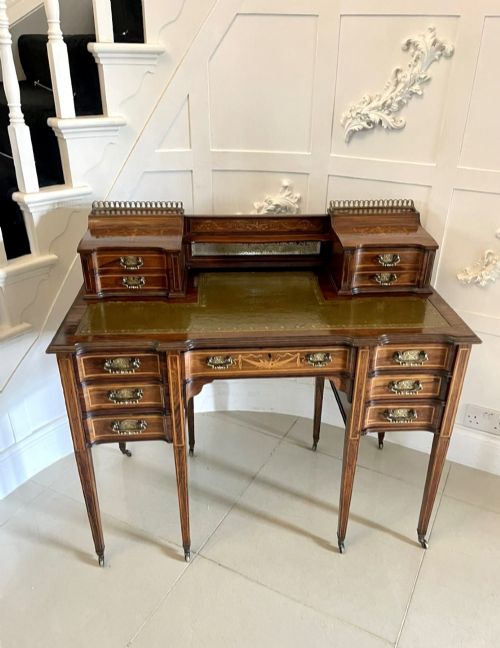
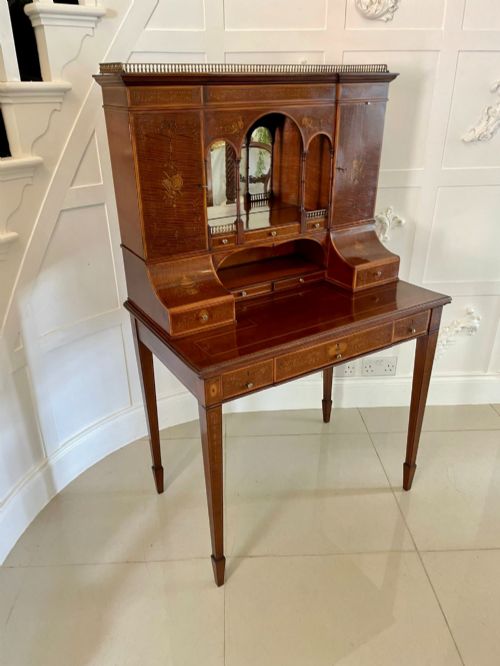
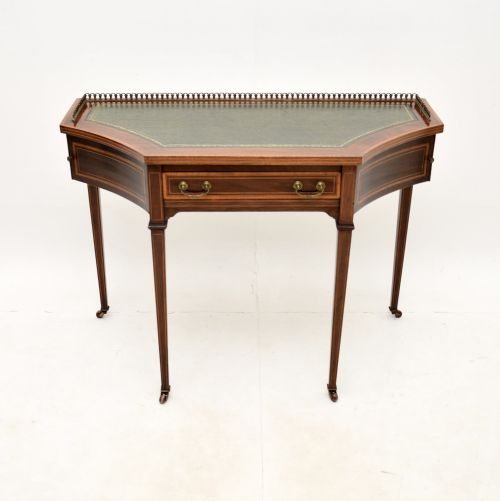
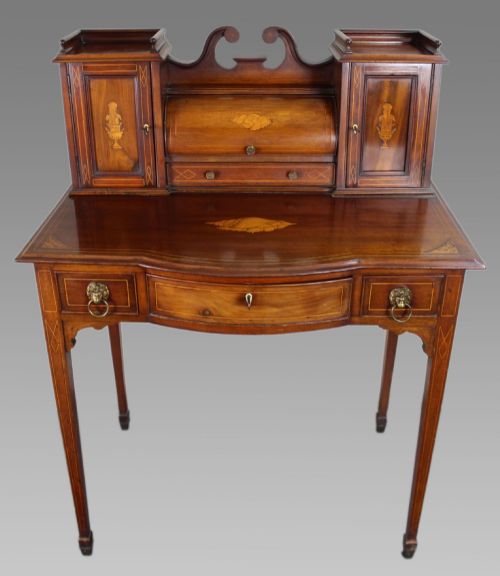
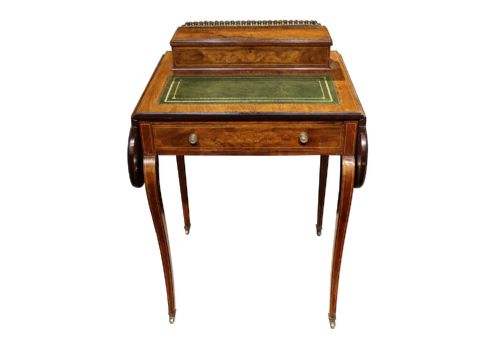
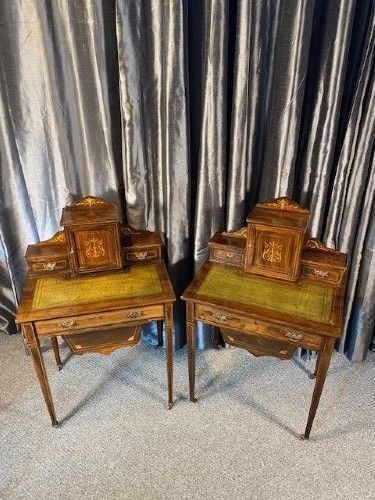
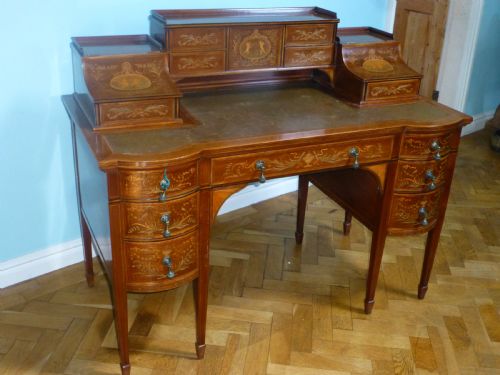
A sheraton inlaid writing table represents the lighter, more graceful furniture forms popularised during the late eighteenth century and later reinterpreted during the Edwardian and Victorian eras. These pieces typically take the form of freestanding desks, writing tables, or kidney-shaped desks designed for domestic correspondence rather than heavy administrative work.
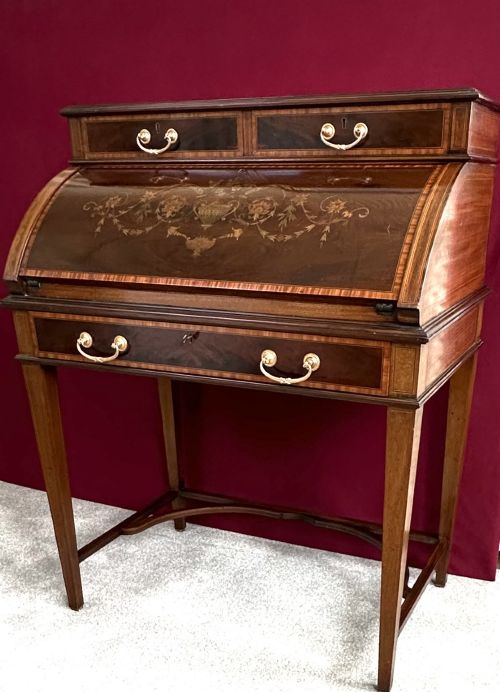
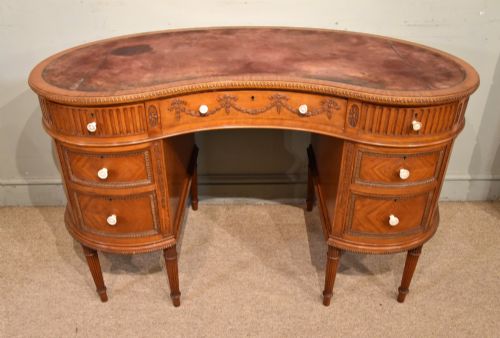
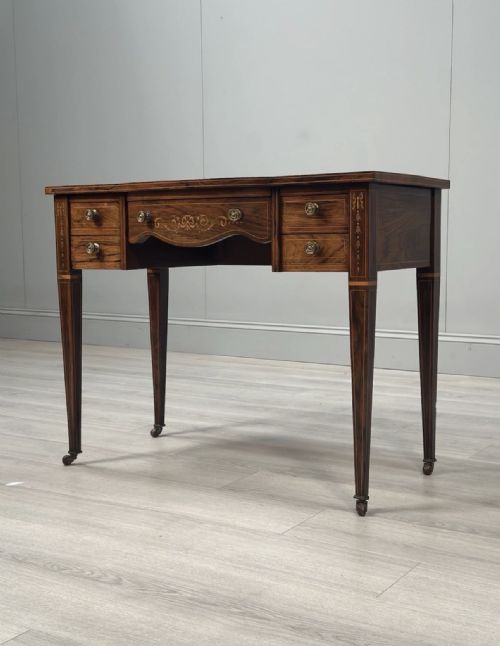
Forms vary from straightforward rectangular two-drawer tables to sophisticated kneehole desks, fall-front bureaux, and curving kidney shapes. Each type brings a specific character to a room, balancing functional surface area with decorative inlay.
Materials and Construction
Cabinet makers relied on stable timbers such as mahogany and rosewood as a foundation, frequently overlaying them with satinwood veneers. These primary woods provide a smooth visual plane for detailed decorative work.
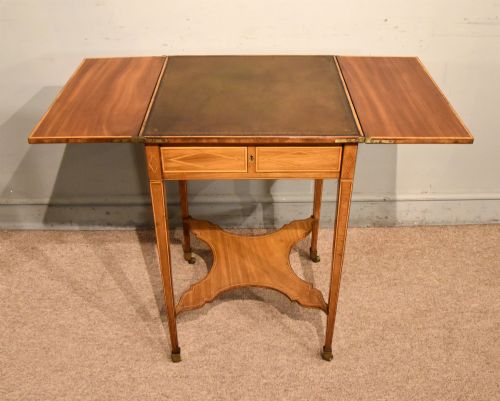
Surface decoration relies heavily on contrasting stringing and banding using boxwood and general fruitwoods. Inlayers cut fine channels into the carcase to set these pale contrasting lines into the darker timber, creating crisp geometrical borders.
Internal elements such as drawer linings often utilise oak or pine, while working surfaces frequently incorporate inset tooled leather. Joinery combines traditional dovetailing for drawers with precise framing to maintain structural integrity over centuries.
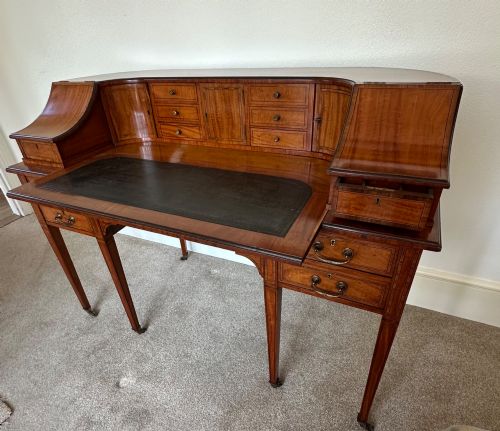
The selection spans compact occasional tables to elaborate Carlton House desks and tambour-front writing cabinets.
Assessing Quality and Execution
Quality rests significantly on the crispness of the inlay and the selection of veneer figures. Superior pieces display tightly grained satinwood and sharp, unbroken boxwood lines without lifting or clumsy filler.
The structural refinement of the legs and undercarriage dictates the overall elegance of the piece. Finer examples exhibit well-proportioned tapering legs, often ending in original brass castors, whereas lesser items can feel heavier and less balanced.
Interior fittings reveal the hand of a more accomplished workshop. Fitted compartments, secret drawers, and neatly dovetailed carcases distinguish bespoke furniture from mass-produced late revival pieces.
Maple and Co·Edwards and Roberts
The Sheraton Inlaid Writing Table Glossary
- Marquetry
- A decorative technique of applying veneers of different woods to form pictures or ornamental patterns. It differs from simple inlay by covering the entire surface in a mosaic design.
- Stringing
- A thin, narrow strip of contrasting wood inlaid into the surface of furniture to form delicate borders. It defines the edges of drawers and tabletops in Sheraton design.
- Satinwood
- A lustrous, hard timber native to Ceylon and the West Indies with a golden-yellow sheen. It became a defining material for light furniture in the late eighteenth century.
- Kneehole
- A desk or table configuration featuring a central recess for the sitter's legs, flanked by pedestals of drawers. This layout allows for comfortable seated writing.
- Tambour
- A sliding door or shutter made of narrow vertical strips of wood glued to a canvas backing. It conceals pigeonholes and small drawers on cylinder-top desks.
Sheraton Inlaid Writing Table: Frequently Asked Questions
How do I distinguish original Georgian pieces from later Sheraton Revival items?
Original pieces from the eighteenth century generally display secondary timbers consistent with the period, such as oak drawer linings and hand-cut dovetails that show slight irregularities.
Revival pieces from the Victorian and Edwardian eras often utilise machine-sawn components and standardised internal fixings, alongside timber ageing that looks more uniform.
What is a Carlton House desk?
A Carlton House desk is a specialised writing table featuring a curved superstructure of small drawers and pigeonholes wrapping around the back and sides of the writing surface.
First created around the late eighteenth century, this form provides extensive compartmentalised storage while maintaining a compact, elegant footprint in a study or drawing room.
How should I care for the leather writing surface?
The inset leather top requires gentle maintenance using specialised leather dressings or soft microfibre cloths to prevent the material from drying and cracking over time.
Avoid applying excess moisture or commercial chemical cleaners, as these can stain the surrounding mahogany or satinwood veneer and damage antique gold tooling.
Can I use a kidney-shaped writing table freestanding in a room?
Kidney-shaped writing tables are typically finished on all sides, making them ideal for placement in the middle of a room rather than pushed flat against a wall.
Their curved backs and polished timber carcases allow them to function successfully as decorative centrepieces while remaining fully accessible for writing.