


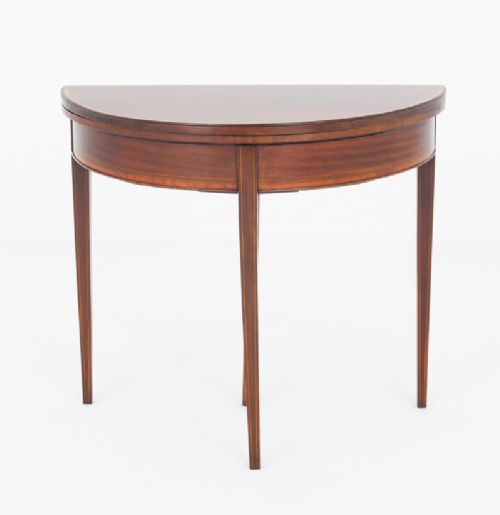


Sheraton Fold Over Table
A sheraton fold over table adapts from a compact console to a polished surface for cards or tea.
Sheraton Fold Over Table
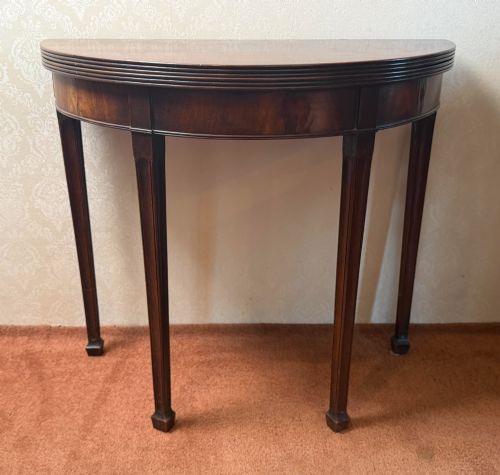
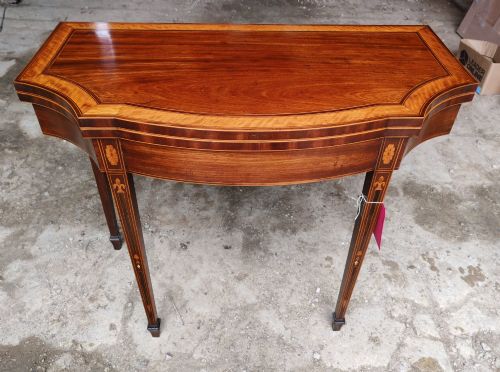
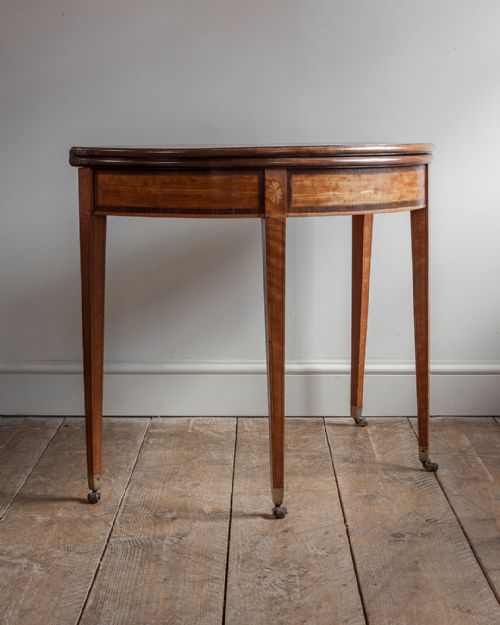
When you search for a sheraton fold over table, you encounter versatile furniture designed for the Georgian, Regency, and Edwardian periods. These pieces function primarily as card tables, tea tables, or games tables with hinged leaves that double the surface area when opened.
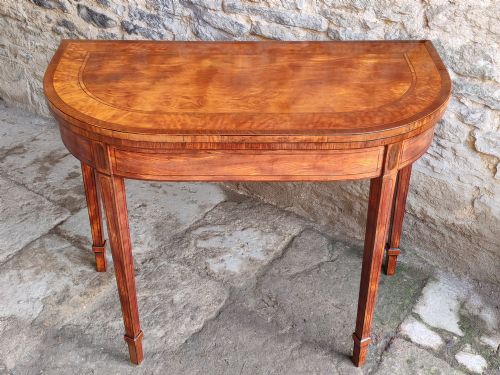
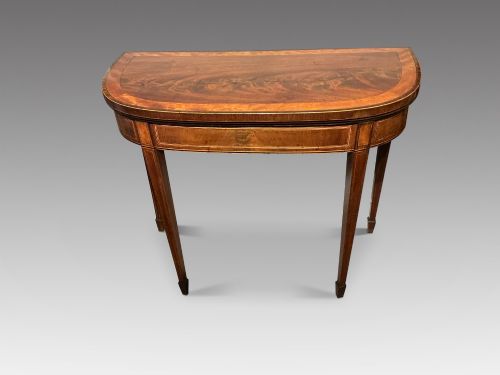
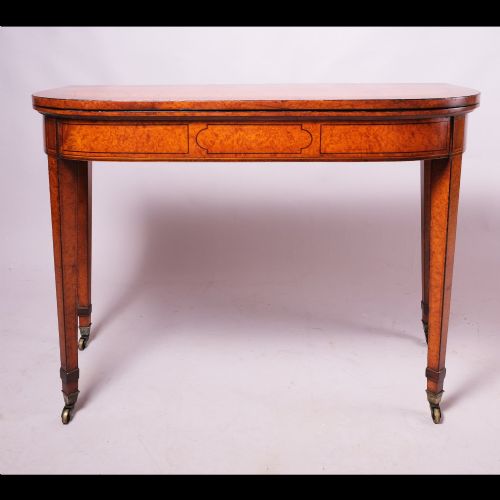
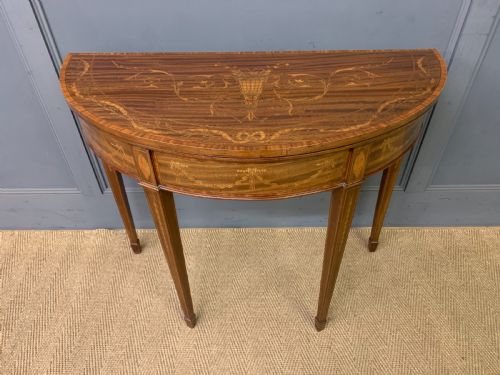
Many items display boxwood inlay or marquetry, reflecting the classical proportions and restrained ornamentation associated with the Sheraton style. Card tables and tea tables dominate the selection, offering practical elegance for modern rooms.
Materials and construction
Cabinet makers utilised dense timbers like mahogany and rosewood as foundational materials, often applying figured satinwood veneers to the visible surfaces. Contrasting stringing in boxwood and ebony defines the edges and geometric borders.
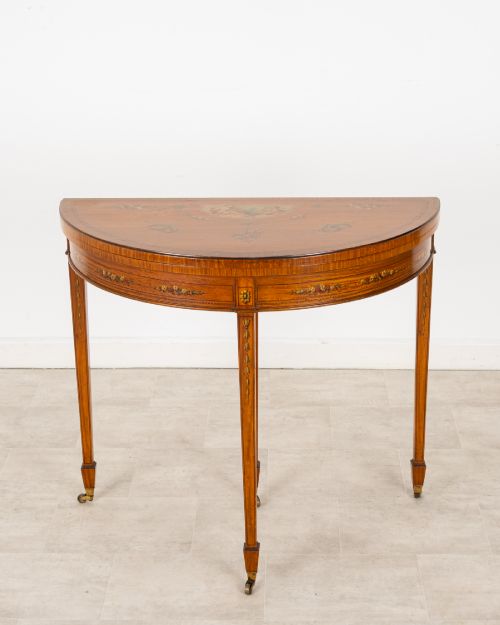
Inlaid decoration and hand painted details appear across various examples, particularly on Edwardian revivals and late eighteenth century pieces. Brass hinges and swing leg mechanisms support the pivoting top leaves securely.
Listings feature mahogany, satinwood, and rosewood alongside boxwood inlay and brass fittings across Georgian and Edwardian periods.
Judging execution
Quality rests on the crispness of the timber figuring and the precision of the boxwood inlay. Grain alignment across the fold over joint indicates careful planning by the maker.
The stability of the gate leg or swing action when the top is open distinguishes finer examples. Subtle hand painting and balanced proportions elevate certain card tables above standard production.
The Sheraton Fold Over Table Glossary
- Demi lune
- Half moon shape popular for tables designed to stand flat against a wall when closed. This silhouette suits entrance halls and sitting rooms.
- Cross banded
- A border of veneer laid with the grain running perpendicular to the main surface. It frames the top of the table.
- Marquetry
- Decorative patterns formed by fitting together small pieces of coloured wood veneer. This technique creates floral or classical motifs.
- Stringing
- Thin lines of contrasting wood inlaid into channels in the primary timber. It outlines panels and table edges.
- Turn over leaf
- The hinged top section that swings open to reveal a baize lined surface or polished wood interior. It rests on an extending rear leg.
Sheraton Fold Over Table: Frequently Asked Questions
How were these tables used?
These tables served multiple functions in the Georgian and Regency home, transitioning from a slim console against the wall into a full surface for tea or card games.
Opening the fold over leaf provided adequate space for social gatherings, whilst closing it restored a compact footprint for daily living.
How do I spot a revival piece?
Edwardian and later revival pieces often exhibit brighter interior finishes, standardised brass hardware, and machine cut stringing compared to eighteenth century originals.
Examining the underside, timber shrinkage, and hand cut joinery helps determine whether a table dates to the Georgian period or the later nineteenth century.
Will a card table hold a lamp?
A sturdy card table supports lamps and decorative objects comfortably when closed against a wall.
When open, the weight should rest evenly on the pivoting leg mechanism to prevent strain on the hinges.
What is satinwood?
Satinwood is a durable exotic timber prized for its golden colour and natural sheen, frequently used in high grade cabinet making.
It forms striking contrast borders and veneered panels on late eighteenth century and revival tables.