



Sheraton Corner Cabinet
A sheraton corner cabinet brings neoclassical line and figured timber to an empty room, making the most of neglected wall space.
Sheraton Corner Cabinet
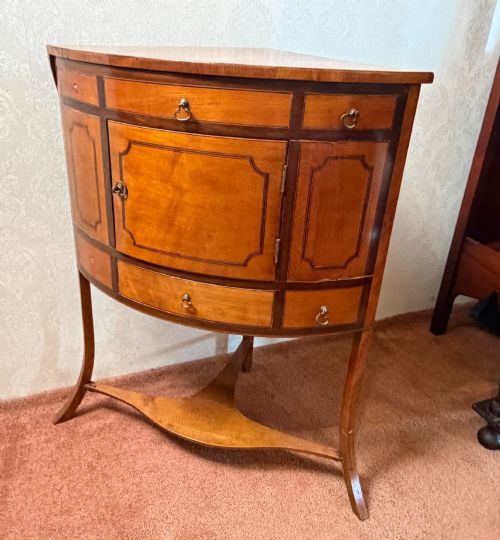
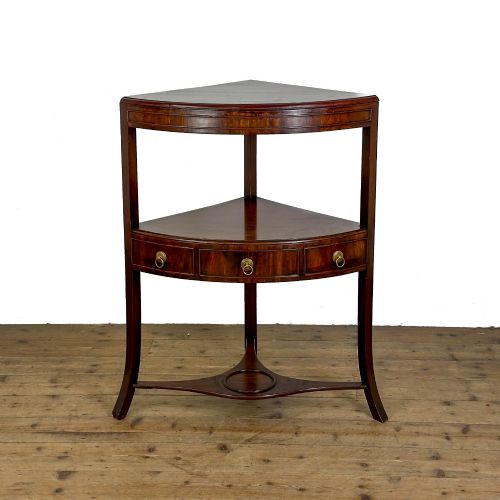
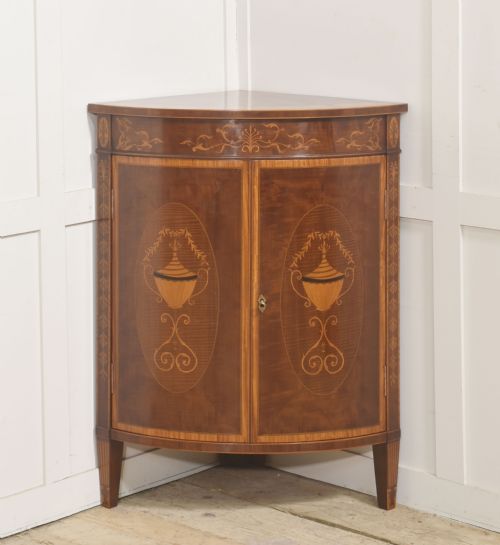
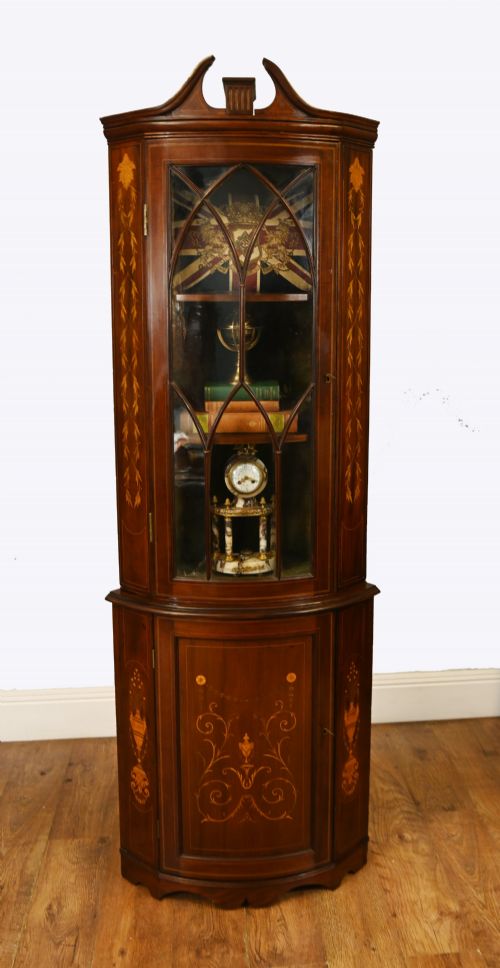
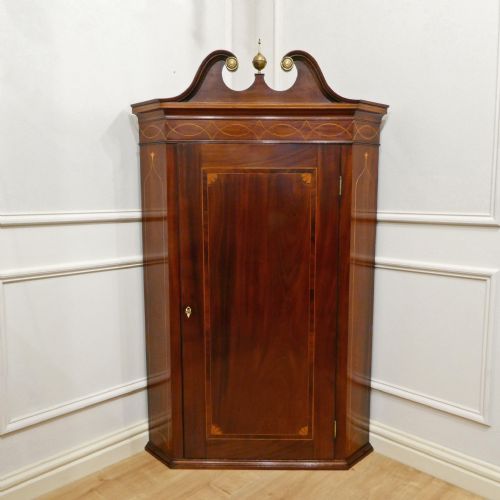
A sheraton corner cabinet uses strict geometry and refined woodwork to occupy the dead angle of a room. These pieces appear primarily as Edwardian Sheraton Revival examples from nineteen hundred, alongside genuine Georgian pieces and later nineteenth-century interpretations.
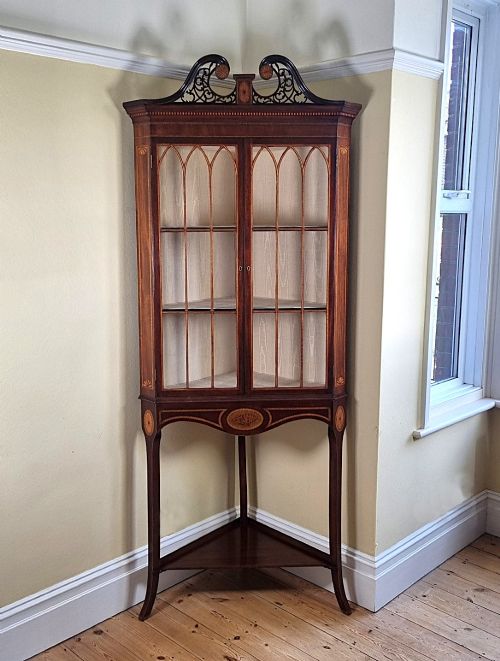
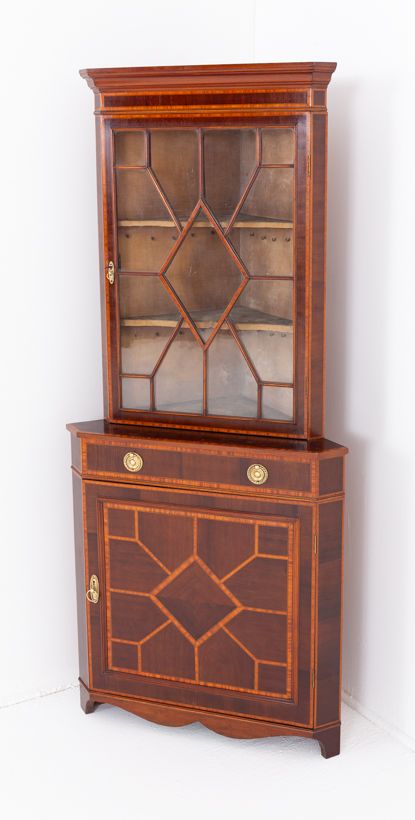
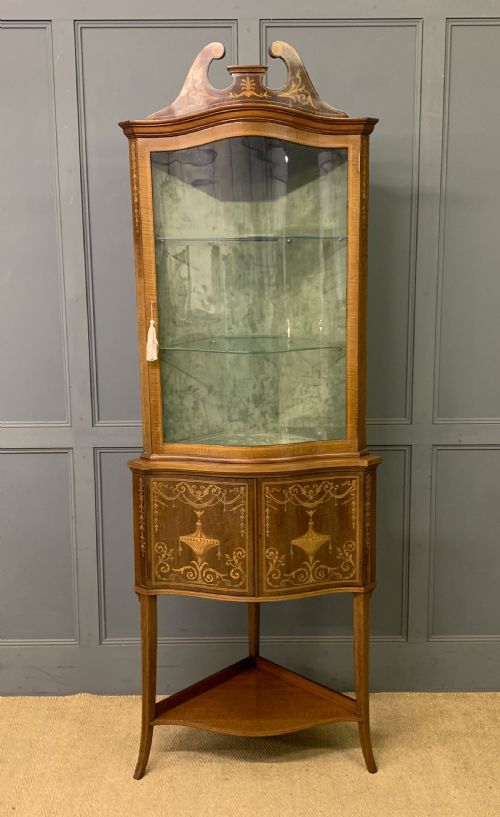
The form divides between hanging cupboards intended to be mounted on a wall and standing or floor-standing variants, some raised on a stand or combined with display shelving. Glazed doors, bow fronts, and double-door configurations all occur regularly across the inventory.
How They Were Made
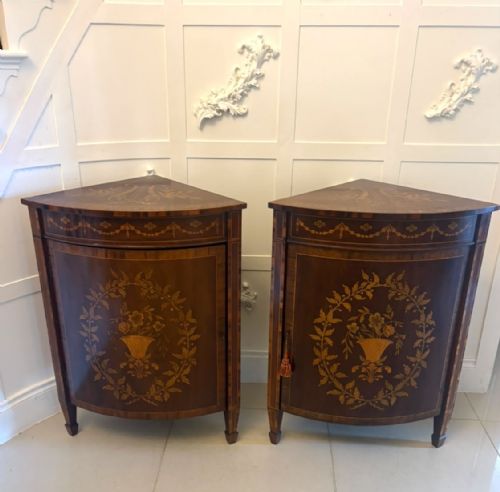
Cabinet makers built these carcasses chiefly in mahogany, rosewood, and satinwood, applying contrasting stringing and boxwood and satinwood inlay to define panels and borders. Marquetry pictorial motifs and brass hardware complete the surface detail.
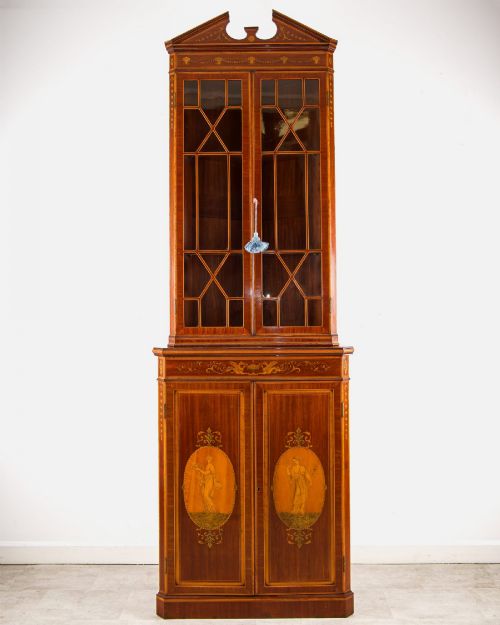
Glazing takes the form of astragal bars dividing the glass into geometric panes, while bow-front doors require steam-bent timber to maintain a smooth curve. Stands and legs integrate tapering supports characteristic of the neoclassical idiom.
Materials recorded across the inventory include mahogany, rosewood, satinwood, brass, and boxwood inlay.
What Varies in Quality
Quality rests upon the choice of timber and the precision of the inlay work rather than mere age alone. Finely figured mahogany and intricate, tightly cut marquetry distinguish superior examples from plain utility pieces.
Construction details such as the delicacy of the astragal glazing bars and the alignment of the mitred joints demonstrate the hand of a skilled workshop. Original brasses and unblemished glass elevate an individual cabinet.
The Sheraton Corner Cabinet Glossary
- Astragal glazing
- Timber glazing bars forming a grid over a glass door. These thin strips hold individual panes in place.
- Bow front
- A convex curved cabinet front. This shape softens the hard lines of a room corner.
- Marquetry
- Veneers cut into decorative pictorial patterns. Cabinet makers assemble different woods to create contrasting surface pictures.
- Sheraton Revival
- A late nineteenth and early twentieth century style mimicking eighteenth century neoclassical designs. This movement revived light timbers and classical geometry.
- Satinwood inlay
- Contrasting yellowish wood inserted into darker timber backgrounds. It creates sharp borders and panel outlines.
Sheraton Corner Cabinet: Frequently Asked Questions
Where should I place a corner cabinet?
These cabinets fit directly into the ninety-degree junction of two walls, utilising space that standard rectangular furniture cannot occupy.
They work effectively in dining rooms, studies, and hallways to display ceramics or store books.
How do I distinguish Georgian from Edwardian pieces?
Eighteenth-century Georgian pieces display authentic period construction, timber oxidation, and hand-cut dovetails developed during the original neoclassical era.
Edwardian Sheraton Revival pieces date around nineteen hundred and reproduce those earlier proportions with machine-assisted precision.
Are hanging or standing cabinets better?
Hanging models mount directly to the wall at eye level, leaving the floor space completely clear underneath for other items.
Standing cupboards rest on the floor, offering greater internal capacity and sometimes incorporating a lower tier or stand.
What is astragal glazing?
Astragal glazing refers to the timber framework dividing the glass door into smaller panes.
These wooden bars provide structural support and create the distinctive geometric window patterns seen on display cabinets.