

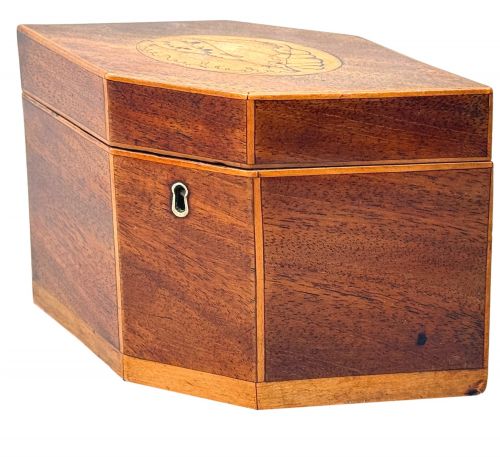


Shell Inlay Tea Box
These shell inlay tea box examples are refined storage vessels crafted to protect precious dry leaves, offering tangible echoes of Georgian and Regency domestic elegance.
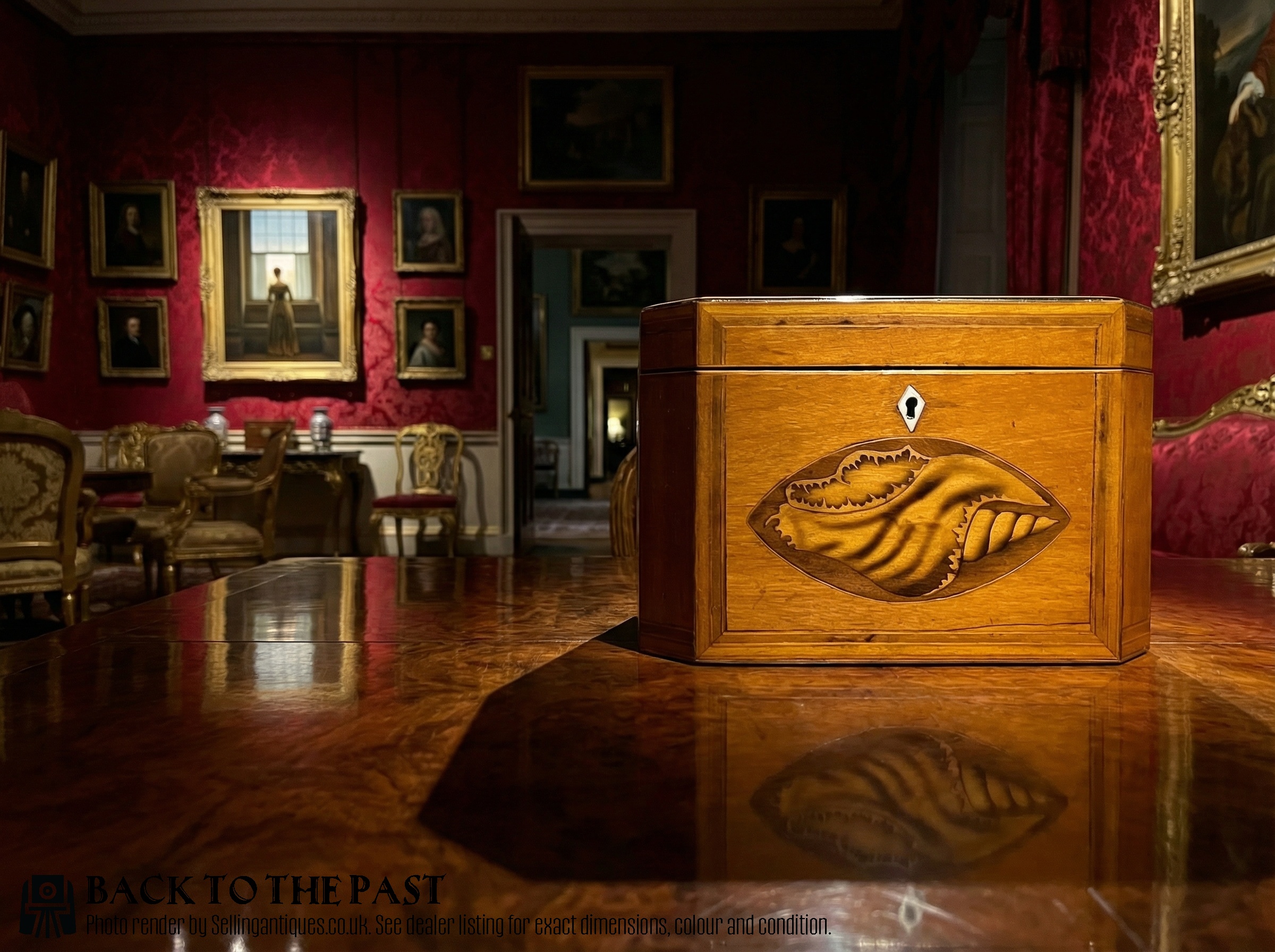
Shell Inlay Tea Box
When you search for a shell inlay tea box, you encounter refined wooden caddies and decorative containers designed during the Georgian, Regency, and Victorian eras. These items served a practical domestic purpose in storing expensive tea leaves under lock and key.
The versions you are most likely to meet on this page include mahogany, rosewood, and satinwood tea caddies featuring marquetry shells, butterfly motifs, or tortoiseshell surfaces. Many retain their internal compartments, canisters, or sugar dishes from the eighteenth and nineteenth centuries.
How they were made
Cabinet makers utilised dense hardwoods such as mahogany, rosewood, and satinwood as the foundational carcases for these boxes. Artisans then applied intricate decorative elements including bone, brass, boxwood, and shell inlay to create contrasting geometric or pictorial designs on the lids and panels.
Specialist techniques involved precise wood inlay and marquetry, alongside tortoiseshell application, often paired with French restoration methods or classic Sheraton Revival styling. Interior fittings frequently incorporated lidded cannisters and glass sugar dishes nestled within fitted compartments.
Shell Inlay Tea Box Retail Price Guide 2026
Typical asking prices for shell inlay tea box among the pieces listed under this phrase on Sellingantiques today, from the lower quarter to the upper quarter. They describe what is for sale here now, not the wider market.
Listings feature items spanning the Georgian, Regency, and Victorian periods, alongside French Napoleon III and French Restoration styles.
What varies in quality
Quality depends heavily on the precision of the cabinet work and the delicacy of the decorative shell or wood inlay. Pieces displaying crisp butterfly motifs, complex geometric borders, and well-figured grain mark the upper echelon of domestic boxes.
The choice of primary timber also dictates standing, with rich satinwood and figured rosewood commanding attention over simpler carcases. Furthermore, the survival of internal fittings such as original inner cannisters elevates a piece above standard containers.
The Shell Inlay Tea Box Glossary
- Tea Caddy
- A box or container specifically designed for storing loose tea leaves. These vessels often featured internal lidded compartments to keep different tea varieties separate.
- Marquetry
- The art and craft of applying pieces of veneer to a structure to form decorative patterns. Artisans used various woods, bone, and shell to create intricate pictorial designs.
- Satinwood
- A durable and lustrous timber native to India and Ceylon, prized for its golden sheen and smooth texture. It became a favoured material for fine Georgian and Regency furniture.
- Tortoiseshell
- The shell of certain sea turtles utilised as a decorative veneer on luxury boxes. Craftsmen often backed the translucent material with metallic foil to enhance its warm, mottled appearance.
- Regency
- An architectural and decorative style spanning the early nineteenth century in Britain. Characterised by classical restraint and refined proportions, it followed the Georgian period.
Shell Inlay Tea Box: Frequently Asked Questions
What was a tea box used for?
These boxes served to store valuable dry tea leaves securely away from moisture and household pests. Because tea was an expensive commodity during the eighteenth and nineteenth centuries, the containers were typically kept locked.
Inside, the vessels often contained multiple compartments or inner cannisters to separate different grades of black and green tea. Wealthy households displayed them prominently in reception rooms to signal refinement and hospitality.
How do I identify a Georgian tea box?
Georgian tea boxes typically display classical proportions, beautiful timber grains like mahogany or satinwood, and subtle decorative elements such as shell or butterfly inlay. Their construction reflects the prevailing craftsmanship styles of the eighteenth and early nineteenth centuries.
Examining the construction methods, such as dovetail joints and secondary woods, helps confirm the period. Many also feature period brasses and escutcheons consistent with eighteenth-century cabinet making.
Are these boxes suitable for daily use?
While these antique boxes are robustly constructed from hardwoods like rosewood and mahogany, their age warrants careful handling. Storing modern items inside is entirely possible, though delicate veneers and tortoiseshell require protection from excessive humidity and direct sunlight.
Treating them as decorative objects or careful storage pieces ensures their historical integrity remains preserved. Maintaining stable room temperatures prevents the wood and inlay from warping or shrinking over time.
What is shell inlay?
Shell inlay involves setting thin pieces of natural shell into recessed channels within a wooden surface to create decorative patterns. Artisans carefully shaped the marine material to catch the light against darker woods like mahogany or rosewood.
This technique required immense skill to match the natural curvature and thickness of the shell to the wooden carcase. It frequently appeared on luxury items such as tea caddies and decorative boxes during the Georgian era.