







Sheraton Style Caddy
A Sheraton style caddy brings refined neoclassical proportion and delicate marquetry to your collection, offering both tactile beauty and historical function.
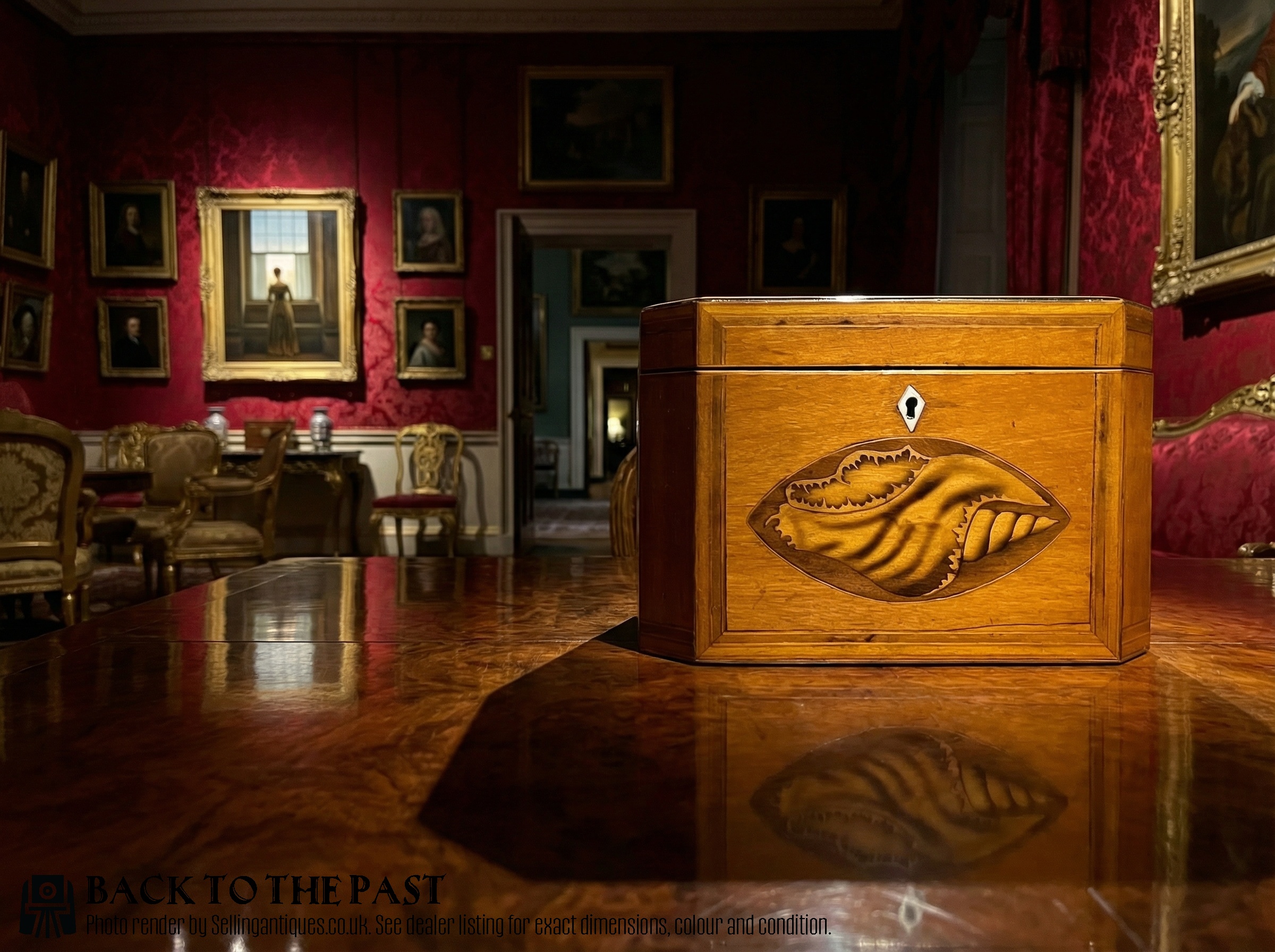
Sheraton Style Caddy
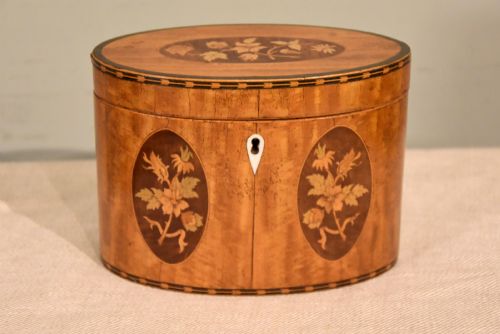
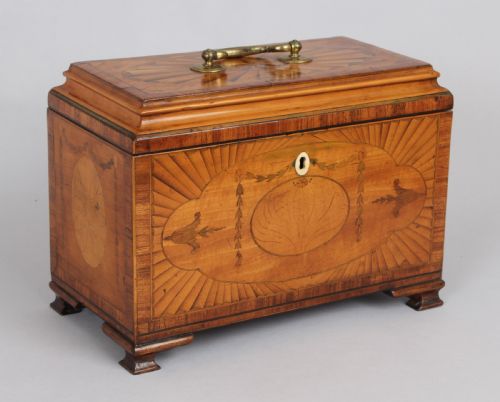
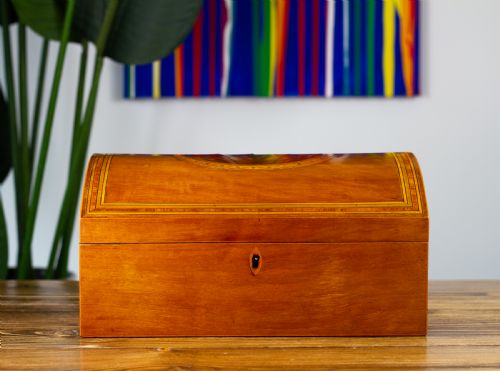
When you search for a Sheraton style caddy, you encounter refined Georgian and revival tea storage vessels defined by symmetrical geometry and delicate veneers. The examples most commonly met on this page are oval or octagonal tea caddies fashioned from figured timbers.
Makers of these caddies utilised classic forms originating in the late eighteenth century, incorporating satinwood, mahogany, and partridge wood. Surviving pieces span from original Georgian periods through Victorian revivals and Edwardian interpretations.
The primary forms take the shape of tea caddies and decorative boxes, frequently ornamented with butterfly or shell inlays. Buyers also encounter related occasional furniture and coolers sharing the same vocabulary of design.
How they were made
Craftsmen built these pieces using solid wood carcasses overlaid with fine veneers of satinwood and mahogany. Surfaces were further enhanced through contrasting stringing in boxwood, ebony, and bone to delineate panels and borders.
Decoration relied heavily on intricate wood inlay and marquetry, depicting motifs such as shells and butterflies. Brass fittings, including escutcheons and hinges, provided structural reinforcement and functional closure.
Sheraton Style Caddy Retail Price Guide 2026
Typical asking prices for sheraton style caddy among the pieces listed under this phrase on Sellingantiques today, from the lower quarter to the upper quarter. They describe what is for sale here now, not the wider market.
The listings here span the Georgian period, the nineteenth century, and Edwardian revivals, employing satinwood, mahogany, partridge wood, and harewood.
What varies in quality
Quality rests upon the selection of timber veneers and the precision of the marquetry work. Finer examples display lively grain patterns in satinwood alongside meticulously fitted brass hardware.
The execution of the inlay distinguishes superior workshops from standard production. Sharp alignment in boxwood and ebony stringing marks the distinction between competent cabinet work and exceptional artistry.
The Sheraton Style Caddy Glossary
- Satinwood
- A lustrous timber with a golden sheen, frequently employed as the primary veneer on neoclassical and revival pieces. Its reflective grain added brightness to drawing room furniture.
- Marquetry
- The art of forming decorative patterns by fitting together dissimilar veneer slices. Craftsmen used contrasting woods to create pictorial motifs like shells.
- Stringing
- Thin inlays of contrasting timber let into grooves in the wood surface. This technique outlines drawers, lids, and panels with crisp linear definition.
- Escutcheon
- A protective plate surrounding a keyhole, usually fashioned from brass. It prevents the timber surrounding the lock from wearing down through repeated use.
Sheraton Style Caddy: Frequently Asked Questions
What is a Sheraton style caddy?
It is a small lidded box designed for storing dry tea leaves, following the neoclassical furniture designs associated with Thomas Sheraton.
These pieces typically feature symmetrical proportions, geometric or curved outlines, and contrasting wood veneers.
How were tea caddies used?
Tea was a costly commodity in the Georgian period, so the mistress of the house kept the caddy locked to control access.
Inside, the box was often divided into compartments to separate different varieties of tea leaf.
How do I date a tea caddy?
Dating relies on identifying timber choices, construction techniques, and the style of brass hardware fitted to the piece.
Original eighteenth-century examples feature distinct timber ageing and hand-cut dovetails compared to later Victorian revivals.
How do I care for satinwood?
Satinwood requires stable indoor humidity and protection from direct sunlight to prevent the golden veneer from fading.
Gentle dusting with a dry cloth maintains the surface without the need for heavy modern polishes.